Kanjeevaram vs Mulmul Saris: 2026 Ceremonial & Everyday Guide
The Duality of the Drape: Ceremonial vs. Everyday Wear in 2026
The South Asian sari remains one of the most versatile and enduring garments in global fashion history. As we navigate the sartorial landscape of 2026, the distinction between ceremonial and everyday traditional wear has never been more pronounced. While modern fusion wear and pre-draped silhouettes continue to rise in popularity, the authentic, handwoven sari holds its ground as a marker of cultural identity, heritage craftsmanship, and personal expression. For the contemporary wardrobe, understanding the dichotomy between heavy, opulent ceremonial silks and lightweight, breathable everyday cottons is essential for building a functional, culturally rich, and sustainable closet.
Building a traditional South Asian wardrobe in 2026 requires a strategic balance. You need garments that can withstand the grandeur of multi-day wedding festivities, alongside pieces that offer comfort and elegance for a day at the office or a casual weekend gathering. This guide explores the two pillars of the sari wardrobe: the ceremonial Kanjeevaram silk and the everyday Mulmul cotton, providing actionable advice on styling, purchasing, and maintaining these timeless textiles.
The Ceremonial Standard: Kanjeevaram Silk Saris
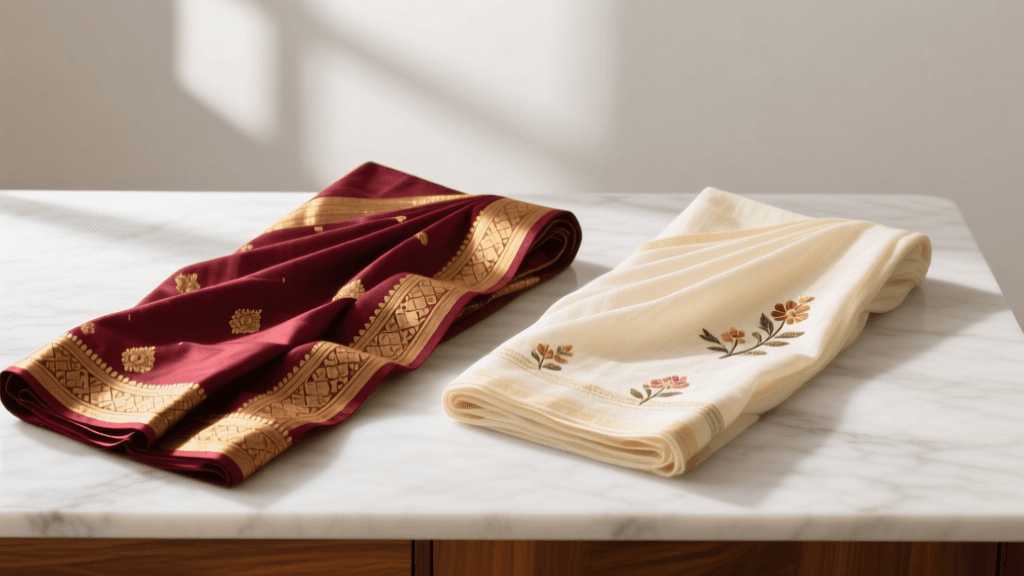
Originating from the temple town of Kanchipuram in Tamil Nadu, the Kanjeevaram sari is the undisputed queen of South Indian ceremonial wear. Woven from pure mulberry silk and adorned with intricate zari (metallic thread), these saris are considered heirloom pieces, often passed down through generations. In 2026, the Kanjeevaram continues to be the mandatory attire for brides, close family members at weddings, and attendees of major religious festivals like Diwali and Pongal.
Weaving Techniques and 2026 Innovations
The hallmark of an authentic Kanjeevaram is its complex weaving technique. The body and the border are woven separately and then interlocked using the korvai technique, while the pallu (the decorative end piece) is attached using the petni method. This creates a remarkably strong joint that can withstand significant weight and tension.
In 2026, weavers are innovating to meet modern aesthetic demands while preserving traditional integrity. While classic temple borders and peacock motifs remain popular for bridal trousseaus, there is a massive surge in demand for "minimalist Kanjeevarams." These feature solid, vibrant bodies with micro-zari borders and subtle, tone-on-tone jacquard patterns, making them slightly lighter and more versatile for evening receptions. Furthermore, the industry has seen a shift toward oxidized silver and copper zari, moving away from the traditional bright gold to complement contemporary pastel and jewel-toned silk palettes.
Investment and Pricing in 2026
A genuine Kanjeevaram is a significant financial investment. Due to the rising costs of raw mulberry silk and the scarcity of skilled master weavers, prices in 2026 reflect the garment's luxury status. A standard ceremonial Kanjeevaram with tested silver zari typically ranges from $400 to $900 USD (approximately ₹35,000 to ₹75,000 INR). Heavily embellished bridal pieces with pure gold zari can easily exceed $2,500 USD (₹2,00,000+ INR). When purchasing, always look for the official certification provided by Silk Mark India, a government-backed quality assurance label that guarantees the authenticity of the silk and protects consumers from synthetic blends.
The Everyday Essential: Mulmul and Linen Saris
If the Kanjeevaram is the armor for grand celebrations, the Mulmul (muslin) and linen sari is the breathable, effortless uniform for daily life. Historically revered as "woven wind," Mulmul is a finely woven, lightweight cotton that originated in the Indian subcontinent. Today, it is the cornerstone of the everyday traditional wardrobe, favored by professionals, artists, and educators for its unparalleled comfort in humid and tropical climates.
Thread Counts and Office-Appropriate Styling
When shopping for everyday cotton saris in 2026, thread count and weave density are your primary metrics for quality. Premium Mulmul saris typically range from 80 to 120 count, offering a drape that feels almost like liquid against the skin. For corporate environments where a crisper silhouette is preferred, handwoven linen and linen-silk blends have become the standard. Linen saris provide a matte finish, excellent moisture-wicking properties, and a structured drape that looks highly professional when paired with a tailored blouse.
The 2026 trends for everyday wear heavily feature artisanal surface ornamentation. Hand-block printing (such as Bagru and Ajrakh), natural indigo dyeing, and subtle Kalamkari painting are highly sought after. These techniques add visual interest and artisanal value to the garment without adding the physical weight of embroidery or zari. Organizations like the Crafts Council of India continue to champion these rural artisan clusters, ensuring that everyday cotton weaves remain economically viable for the weavers while accessible to urban consumers.
Investment and Pricing in 2026
Everyday saris are highly accessible, allowing for a diverse and colorful capsule wardrobe. A high-quality, handloom Mulmul sari with basic block printing costs between $30 and $70 USD (₹2,500 to ₹6,000 INR). Premium linen saris or those featuring intricate, natural-dye Kalamkari art can range from $90 to $180 USD (₹7,500 to ₹15,000 INR). Because they are affordable, collectors often curate them by color palette or regional craft technique.
Head-to-Head Comparison: Building Your 2026 Wardrobe
To help you allocate your clothing budget and plan your wardrobe, here is a direct comparison of the ceremonial Kanjeevaram and the everyday Mulmul/Linen sari based on current 2026 market standards.
| Feature | Kanjeevaram Silk (Ceremonial) | Mulmul / Linen (Everyday) |
|---|---|---|
| Primary Use | Weddings, major festivals, religious ceremonies | Office wear, casual outings, summer events |
| Fabric Weight | Heavy (600g to 1.2kg) | Ultra-light to Medium (250g to 450g) |
| Drape Quality | Stiff, structured, holds heavy pleats well | Fluid, breezy, requires pinning for structure |
| Maintenance | Professional dry clean only | Gentle hand wash or machine wash on delicate |
| 2026 Avg. Price | $400 - $2,500+ USD | $30 - $180 USD |
| Blouse Pairing | Heavy silk, brocade, or velvet with zari | Cotton, linen, or sleeveless denim for fusion |
Draping and Styling: Adapting to the Occasion
The way you drape and accessorize your sari fundamentally shifts depending on whether you are wearing a ceremonial silk or an everyday cotton. The physical properties of the fabric dictate the styling choices.
Styling the Ceremonial Kanjeevaram
For weddings and pujas, the classic Nivi drape (originating from Andhra Pradesh) is the most common. Because Kanjeevaram silk is heavy and the zari borders can be stiff, the pleats must be meticulously measured, folded, and pinned securely at the waist. The pallu is usually spread across the shoulder and pinned to showcase the intricate petni weaving. In 2026, it is highly fashionable to pair a Kanjeevaram with a contrasting "temple border" blouse, or even a velvet blouse in the winter months. Jewelry should be substantial—think antique gold temple jewelry, heavy jhumkas, and a traditional waist belt (vaddanam) to secure the heavy drape.
Styling the Everyday Mulmul
Mulmul and linen require a more relaxed approach. Because the fabric is fluid and prone to shifting, many professionals in 2026 opt for the Bengali drape, which eliminates waist pleats entirely and relies on the natural flow of the fabric, or they use a sleek leather belt over the pallu for a modern, bohemian office look. Blouse pairings for everyday wear have become incredibly experimental. It is common to see a hand-block printed Mulmul sari paired with a crisp white button-down shirt, a sleeveless denim vest, or a high-neck knit top in cooler weather. This fusion styling breathes new life into traditional cotton weaves, making them appropriate for global corporate environments.
Care, Storage, and Longevity
Proper maintenance is crucial to preserving the lifespan of both ceremonial and everyday garments. The care routines for silk and cotton are diametrically opposed.
Kanjeevaram Silk Care
Never attempt to wash a Kanjeevaram sari at home. Water and standard detergents will strip the silk of its natural sericin coating and tarnish the metallic zari. Always rely on a trusted professional dry cleaner who specializes in traditional textiles. For storage, wrap the sari in a clean, unbleached muslin cloth to allow the fibers to breathe while protecting it from dust. Store it in a dark, cool wooden chest. To prevent the zari from oxidizing and turning black, avoid plastic covers, and place natural camphor or dried neem leaves in the corners of the storage box to deter pests. Refold the sari every three months to prevent permanent crease marks along the fold lines, which can eventually cause the silk to tear.
Mulmul and Linen Care
Everyday cottons are remarkably resilient but require gentle handling to maintain their softness and color vibrancy. Hand washing in cool water with a pH-neutral liquid detergent is ideal. If using a washing machine, place the sari in a mesh laundry bag and use the delicate cycle. Never use harsh bleach or optical brighteners, especially on naturally dyed indigo or madder root prints, as this will strip the color. Line dry the sari in the shade; direct sunlight will cause the vibrant block prints to fade prematurely. A light application of starch spray before ironing on a medium-hot setting will give Mulmul a crisp, polished look perfect for the office.
Final Thoughts on Curating a Dual-Purpose Wardrobe
As documented in the historical textile archives of institutions like the Victoria and Albert Museum, the sari has always been a dynamic garment, evolving to meet the practical and social needs of its wearer. In 2026, the most stylish and culturally grounded wardrobes are those that respect this duality. By investing in a few high-quality, certified Kanjeevaram silks for your most important life milestones, and building a robust, colorful rotation of everyday Mulmul and linen saris for daily wear, you create a wardrobe that is both deeply traditional and perfectly adapted to modern life. Whether you are walking down a wedding aisle or navigating a busy workday, the right sari ensures you do so with grace, comfort, and undeniable elegance.