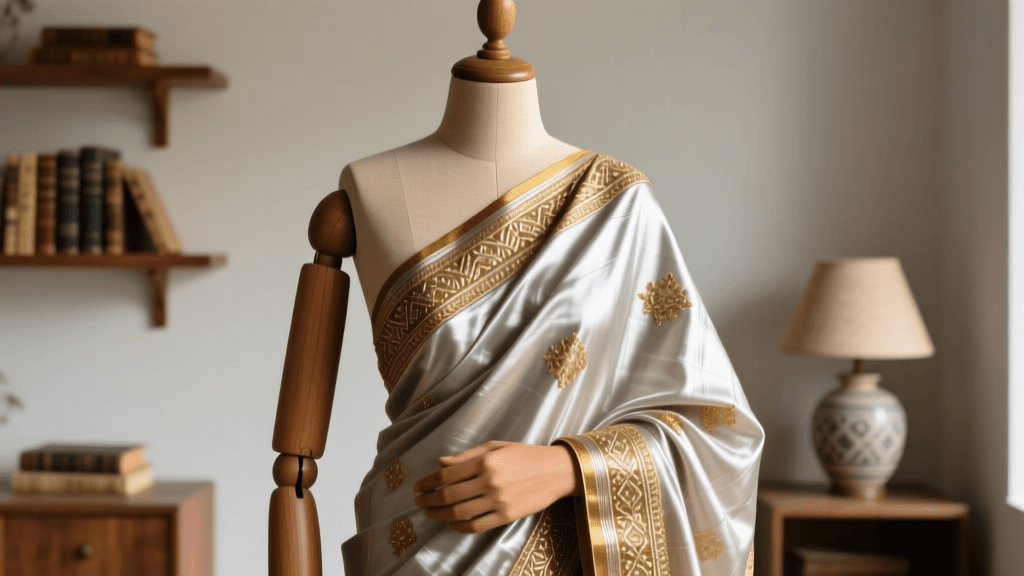
Kanchipuram Silk Zari Purity Guide for 2026 Bridal Wear
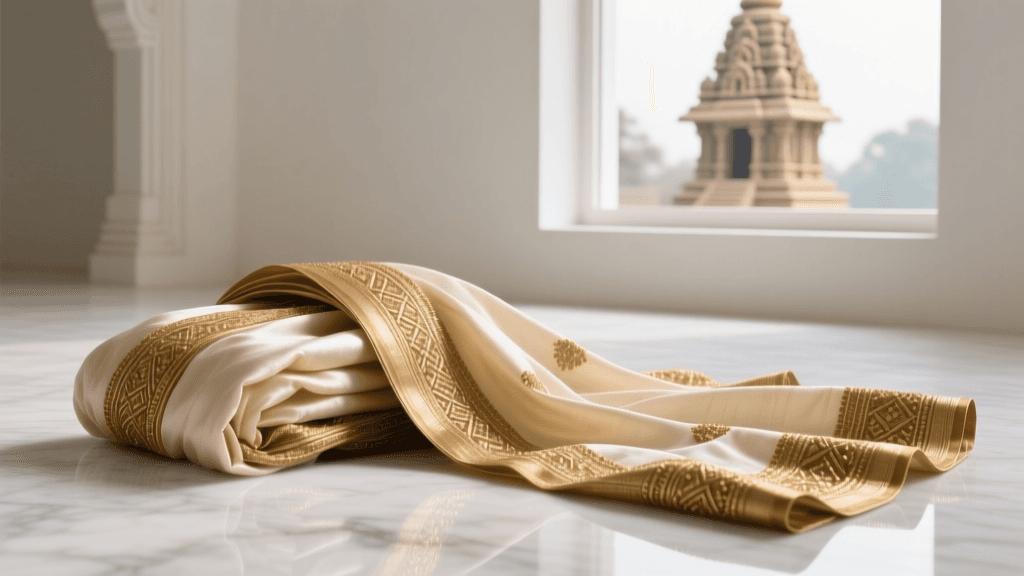
The Resurgence of Heirloom Textiles in 2026
As we navigate the 2026 bridal season, there has been a definitive shift in South Asian fashion: a move away from mass-produced, heavily embroidered fast-fashion lehengas toward the investment-worthy heritage of handwoven textiles. At the pinnacle of this movement is the Kanchipuram silk saree. Originating from the temple town of Kanchipuram in Tamil Nadu, India, these garments are not merely clothing; they are woven heirlooms designed to outlast generations. However, as the demand for authentic Kanchipuram silk surges, so does the market saturation of imitation textiles. For the modern bride and the discerning textile collector, understanding the nuanced fabric and textile choices—specifically silk denier, weave density, and zari (metallic thread) purity—is no longer optional; it is essential.
This comprehensive guide decodes the technical specifications of Kanchipuram silk in 2026, providing you with the actionable knowledge required to verify authenticity, assess structural integrity, and properly curate a bridal trousseau that will retain its structural and monetary value for decades.
The Anatomy of Authentic Kanchipuram Silk
The foundation of any Kanchipuram saree is its silk. Authentic pieces are woven exclusively from high-grade mulberry silk, specifically utilizing a 20/22 denier thread. Unlike the finer, lighter silks used in Chiffon or Georgette weaves, Kanchipuram silk relies on a robust ply-twisting technique. The warp (the longitudinal threads held in tension on the loom) typically consists of two twisted silk threads, while the weft (the transverse threads woven through the warp) consists of three twisted silk threads.
This specific 2-ply warp and 3-ply weft configuration is what gives the fabric its signature weight, stiff drape, and remarkable tensile strength. When you run your fingers across a genuine Kanchipuram textile, you should feel a distinct ribbed texture and a substantial, almost sculptural weight. In 2026, leading weaving cooperatives have standardized the use of Grade-A mulberry silk, ensuring that the natural sericin proteins are carefully degummed to produce a lustrous, yet highly durable, yarn that resists pilling and fraying.
Demystifying Zari: Pure, Tested, and Imitation
The most critical—and most frequently counterfeited—element of a Kanchipuram saree is the zari. Zari is the metallic yarn used to weave the intricate motifs, borders, and pallus (the decorative end piece). Historically, pure zari was made by wrapping a flattened silver wire around a silk core, which was then gilded with pure gold. However, with the skyrocketing market prices of precious metals in 2026, understanding the tiers of zari purity is vital for accurate valuation.
1. Pure Zari (Jari)
Pure zari features a red or yellow silk core, wrapped in a flattened silver wire (containing a minimum of 65% silver purity), and electroplated with 24-karat gold (minimum 0.2 microns thick). This is the only zari type approved for genuine heirloom investments. Over time, the gold gilding may wear slightly, revealing the bright silver beneath, which is a hallmark of authenticity.
2. Tested Zari (Half-Fine)
Tested zari replaces the pure silver core with copper or brass, which is then silver-plated and gold-gilded. While it offers a similar initial visual appeal and is significantly more affordable, tested zari is prone to oxidation. Within a few years, the copper core can react with atmospheric moisture, leading to a greenish-black tarnish that can permanently stain the surrounding silk fibers.
3. Imitation Zari
Imitation zari utilizes a polyester or plastic core wrapped in metallic-coated synthetic films. It lacks the weight, drape, and breathability of metal-wrapped yarns and is strictly used in mass-market, power-loom reproductions.
2026 Zari Purity Comparison Chart
| Zari Classification | Core Material | Wire Composition | Longevity & Tarnish Risk | 2026 Market Value Tier |
|---|---|---|---|---|
| Pure Zari (Jari) | Mulberry Silk | Min. 65% Silver, 24k Gold Gild | Generational; Low Tarnish Risk | Premium / Heirloom |
| Tested Zari | Silk or Cotton | Copper/Brass, Silver & Gold Plated | 5-10 Years; High Tarnish Risk | Mid-Range / Occasional |
| Imitation Zari | Polyester/Nylon | Metallic Plastic Film (Lurex) | 1-3 Years; Melts under Heat | Budget / Fast Fashion |
Advanced Structural Techniques: Korvai and Petni
Beyond the raw materials, the true value of a Kanchipuram silk garment lies in its structural engineering. The most revered techniques are Korvai and Petni, both of which require immense technical skill and time, often necessitating two weavers working simultaneously on a single handloom.
The Korvai Border Interlock
In a Korvai weave, the border of the saree is woven separately from the body and interlocked with it using a complex zigzag stitching technique. This means the border and the body can be entirely different colors. The structural benefit of Korvai is immense: it creates a reinforced edge that prevents the heavy zari border from pulling and distorting the lighter silk body. If you examine the reverse side of a Korvai border, you will see a distinct, slightly jagged interlocking line—a definitive mark of handloom craftsmanship that power looms cannot perfectly replicate.
The Petni Pallu Join
Similar to Korvai, the Petni technique is used to attach the heavily brocaded pallu to the main body of the saree. Because the pallu requires a much higher density of zari weft threads, weaving it as a continuous piece with the body would create severe tension imbalances. Petni allows the weaver to introduce a separate set of warp threads for the pallu, interlocking them seamlessly. This ensures the heavy pallu drapes elegantly without tearing the main fabric.
Understanding Silk Weight: Grams vs. Weave Density
A common misconception among buyers in 2026 is that a heavier saree is inherently superior. While traditional bridal Kanchipuram sarees often weigh between 800 and 1,200 grams, weight alone is a flawed metric for quality. Unscrupulous manufacturers can artificially inflate the weight of a saree by using thicker, lower-grade silk threads (higher denier) or by packing the weft with synthetic sizing agents (gum).
Instead of focusing solely on grams, expert textile appraisers evaluate weave density—measured in Ends Per Inch (EPI) for the warp and Picks Per Inch (PPI) for the weft. A high-quality Kanchipuram silk will have a dense, tight weave where the individual threads are fine but packed closely together. This results in a fabric that is heavy due to its structural density, not its thread thickness. A dense weave ensures the fabric holds its crisp pleats, resists snagging, and provides a smooth canvas for the zari motifs.
Navigating 2026 Certifications: Silk Mark and GI Tags
To protect consumers from synthetic blends and imitation zari, the Indian government and textile authorities have enforced strict certification protocols. When sourcing your garment, you must look for two distinct markers of authenticity:
- The Silk Mark: Administered by the Silk Mark Organisation of India, this is a globally recognized certification that guarantees the textile is 100% natural silk. In 2026, the Silk Mark label includes a secure, scannable QR code that instantly verifies the unique serial number against the central database, confirming the exact weaver cooperative and date of certification.
- The Geographical Indication (GI) Tag: Recognized internationally by bodies such as the World Intellectual Property Organization, the GI tag legally protects the Kanchipuram silk name. According to the Ministry of Textiles, only sarees woven within the specific geographic clusters of Kanchipuram, using traditional handloom methods and pure zari, can bear this mark. The GI tag ensures the preservation of indigenous techniques against industrial homogenization.
Actionable Sourcing and Heirloom Care Guide
Purchasing a Kanchipuram silk saree is a significant financial and emotional investment. To ensure your 2026 bridal trousseau remains pristine, follow these expert sourcing and conservation guidelines:
Sourcing Red Flags
- The Burn Test Evasion: If a retailer refuses to allow a microscopic burn test of a loose weft thread (pure silk smells like burning hair and turns to crushable ash; synthetic melts into a hard plastic bead), walk away.
- Uniform Perfection: Handloom textiles possess minor, beautiful irregularities. If the zari motifs are mathematically flawless and the reverse side of the fabric shows floating threads rather than a clean interlock, it is likely a power-loom jacquard reproduction.
Conservation and Storage Protocols
The greatest enemy of pure zari is oxidation, accelerated by humidity, light, and acidic environments. Never store Kanchipuram silk in plastic covers, as plastic traps moisture and emits volatile organic compounds (VOCs) that degrade silk proteins and tarnish silver.
'For long-term preservation of metallic brocades, always wrap the garment in unbleached, acid-free cotton muslin. Refold the saree along different axes every three months to prevent permanent crease lines from fracturing the silk fibers and snapping the delicate zari wires.' — Textile Conservation Guidelines, 2026
Instead of chemical naphthalene balls, which can react with the gold gilding and cause irreversible discoloration, use natural desiccants like silica gel packets and dried neem leaves to deter pests and control moisture. Store the wrapped garments in a dark, climate-controlled cedar or teak chest, ensuring the textiles can breathe while remaining protected from environmental pollutants.
Conclusion
Choosing a Kanchipuram silk garment in 2026 requires a discerning eye and an understanding of textile science. By prioritizing pure zari, verifying the Korvai interlock, demanding Silk Mark and GI certifications, and adhering to strict conservation protocols, you are not just buying a piece of clothing. You are acquiring a masterfully engineered artifact of Asian heritage, ready to be passed down as a flawless heirloom for the next generation.