Kanchipuram vs Banarasi Silk: 2026 Zari Purity Guide
Introduction to Heritage Silks in 2026
In the landscape of 2026 Asian traditional garments, the debate between Kanchipuram silk and Banarasi brocade remains at the absolute forefront of bridal and ceremonial fashion. As modern consumers shift away from mass-produced, fast-fashion ethnic wear, there is a profound resurgence in the demand for heirloom-quality, handwoven textiles. Brides, collectors, and cultural enthusiasts are increasingly prioritizing longevity, artisanal support, and textile purity over fleeting trends. Both Kanchipuram and Banarasi silks represent centuries of weaving mastery, yet they offer distinctly different drape, weight, and aesthetic experiences. Understanding the nuances of these fabrics, particularly the purity of their metallic zari threads, is essential for anyone looking to invest in authentic Asian traditional garments this year.
The Anatomy of Zari: Pure, Tested, and Imitation
Zari is the metallic thread that gives Indian brocades and silk saris their signature opulence and structural weight. In 2026, the market categorizes zari into three primary tiers, and understanding these distinctions is critical for evaluating a garment's true worth and longevity.
- Pure Zari (Pure Silver/Gold): The highest grade, consisting of a pure mulberry silk core wrapped in flattened, pure silver wire, which is then electroplated with pure gold. This is the standard for heirloom garments and will not tarnish or turn black over decades.
- Tested Zari (Half-Fine): Features a silk or cotton core wrapped in copper or brass wire, plated with silver and a thin layer of gold. While it offers a brilliant initial shine, tested zari is prone to oxidation and will darken over time if not stored meticulously.
- Imitation or Plastic Zari: Made from synthetic cores wrapped in metallic-colored plastic or polyester films. It lacks the weight, drape, and breathability of authentic metal threads and holds virtually no resale or heirloom value.
When shopping for ceremonial wear in 2026, always ask the weaver or retailer for the specific zari grade. According to the Silk Mark Organisation of India, verifying the 100% natural silk core and the authenticity of the metallic wrapping is the first step in ensuring you are purchasing a genuine heritage textile rather than a power-loom replica.
Kanchipuram Silk: The Heavyweight Champion of the South
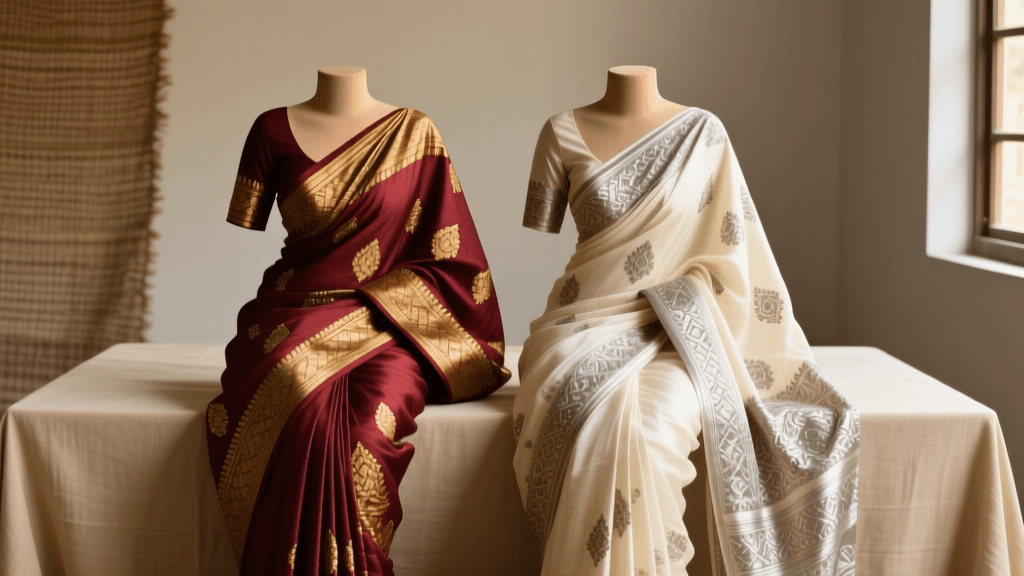
Originating from the temple town of Kanchipuram in Tamil Nadu, this silk is renowned for its formidable weight, vibrant color contrasts, and structural durability. The foundation of a true Kanchipuram sari is high-grade mulberry silk. In 2026, luxury weavers are increasingly utilizing 4-ply silk for both the warp and weft, resulting in a fabric that is incredibly dense, lustrous, and capable of holding heavy pure zari motifs without sagging.
The magic of Kanchipuram weaving lies in its interlocking techniques. The Korvai technique involves using three separate shuttles—one for the border and two for the body—allowing the weaver to create stark, contrasting color blocks between the border and the main field of the sari. The Petni technique is used to interlock the pallu (the decorative end piece) with the body of the sari, often requiring a master weaver to spend days just aligning the complex geometric transitions.
Kanchipuram Textile Specifications (2026 Standards)
| Feature | Standard Kanchipuram | Luxury / Heirloom Kanchipuram |
|---|---|---|
| Silk Ply | 2-ply warp, 2-ply weft | 3-ply or 4-ply warp and weft |
| Average Weight (6 Yards) | 600g - 800g | 900g - 1.3kg |
| Zari Content | Tested or Pure Zari | 100% Pure Gold/Silver Zari |
| Motif Style | Temple borders, checks, peacocks | Complex mythological scenes, pure gold buttis |
Banarasi Brocade: The Intricate Jacquard of the North
While Kanchipuram relies on bold color blocking and heavy structural silk, Banarasi brocade from Varanasi is celebrated for its intricate, all-over surface ornamentation and fluid drape. Banarasi weavers primarily use Katan silk—a plain-woven fabric made of twisted silk threads that gives the material a soft, luminous finish. In 2026, there is also a massive surge in demand for Banarasi Organza (Kora) and Tussar blends, which offer a lighter, more breathable alternative for summer weddings.
The hallmark of Banarasi textiles is the use of the jacquard mechanism (or traditional naksha pit looms) to weave elaborate motifs directly into the fabric. Popular design styles include the Jangla, which features dense, sprawling floral and vine patterns that cover the entire garment, and the Shikargah, which depicts intricate hunting scenes with animals and foliage. Another highly prized technique is Jamdani, a discontinuous weft method where motifs are added by hand during the weaving process, creating a beautiful, floating effect on sheer or lightweight silk bases.
Banarasi Weave Types and Best Uses
| Weave Type | Texture & Drape | Ideal Garment Use |
|---|---|---|
| Katan Silk | Soft, lustrous, medium weight | Bridal lehengas, heavy saris, formal wear |
| Organza (Kora) | Crisp, sheer, lightweight | Summer saris, overlay dupattas, contemporary gowns |
| Georgette | Fluid, matte, highly drapeable | Evening wear, modern sari drapes, party wear |
| Tussar Blend | Textured, porous, earthy sheen | Daytime ceremonies, sustainable fashion lines |
2026 Pricing, Sourcing, and Authentication
The cost of authentic, handwoven heritage silks has seen significant adjustments in 2026 due to the rising costs of raw mulberry silk, pure silver, and the preservation of artisan wages. A genuine, pure zari Kanchipuram sari now typically starts at ₹50,000 and can easily exceed ₹2,50,000 for complex, custom-commissioned pieces. Similarly, a pure zari Banarasi Katan sari ranges from ₹40,000 to ₹2,00,000, depending on the density of the brocade and the intricacy of the meenakari (color inlay) work.
To protect your investment, always look for official authentication markers. The Ministry of Textiles, Government of India continues to strictly enforce Geographical Indication (GI) protections, ensuring that only textiles woven in specific geographic regions can legally bear the Kanchipuram or Banarasi names. Furthermore, the Crafts Council of India emphasizes the importance of purchasing from registered cooperatives or certified master weavers to ensure that the premium you pay directly supports the pit-loom weaving communities rather than middlemen or power-loom factories.
Garment Care and Preservation of Heavy Zari Textiles
Owning a pure zari garment is an exercise in preservation. The metallic threads, while resistant to tarnishing if pure, are highly susceptible to friction and moisture. Never fold a heavy Kanchipuram or Banarasi sari along the same lines repeatedly, as this will cause the zari to crack and the silk warp to snap over time. In 2026, textile conservators recommend rolling heavy silks around acid-free archival tubes or padding the folds with unbleached muslin cloth.
Avoid plastic storage bins, which trap humidity and accelerate the oxidation of any copper or silver elements in the zari. Instead, store your garments in breathable cotton bags or cedar-lined trunks, and refold them in different directions every three months. When cleaning is necessary, dry cleaning is the only safe option; however, ensure the cleaner has specific experience with heavy metallic brocades, as standard chemical solvents can strip the gold plating from tested zari or dull the natural sheen of the mulberry silk.
Investing in pure zari and authentic handloom silk is not merely a fashion choice; it is the active preservation of Asian cultural heritage. By understanding the textile anatomy, you ensure these masterpieces survive for the next generation.