Kabuki, Noh, and Bunraku Theater Kimono Guide 2026
The Soul of Japanese Theater: Understanding Shozoku
When we discuss the kimono in the context of Japanese traditional arts, we must look beyond everyday wear and street fashion to the spectacular world of shozoku—theater costumes. In 2026, the intersection of centuries-old textile craftsmanship and modern stagecraft has reached a fascinating zenith. The kimono used in Kabuki, Noh, and Bunraku are not merely garments; they are vital storytelling devices, engineered for movement, visual impact under specialized lighting, and deep symbolic resonance. According to the Japan National Tourism Organization, international interest in traditional performing arts has surged, prompting theaters and museums to offer unprecedented behind-the-scenes access to their costume archives this year.
Unlike the standard kimono, which prioritizes seasonal motifs and formal etiquette, theater kimono are built for the extreme demands of the stage. They must withstand rigorous choreography, rapid transformations, and the intense heat of stage lights, all while conveying a character's social status, emotional state, and supernatural abilities. This comprehensive 2026 guide explores the distinct kimono traditions across Japan's three major classical theater forms.
Kabuki Costumes: Extravagance and Hidden Meanings
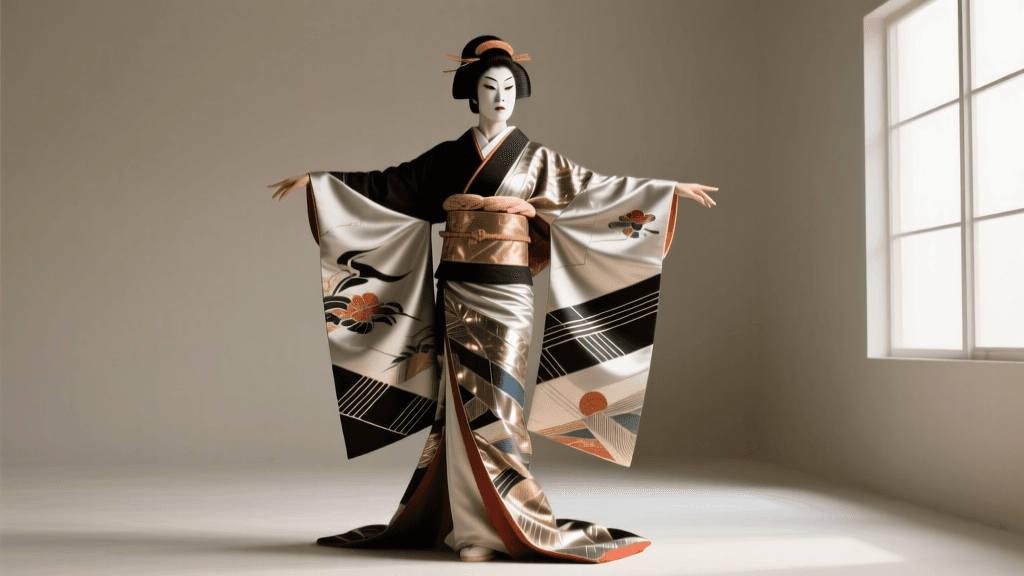
Kabuki is renowned for its bombastic energy, dramatic poses (mie), and lavish visual spectacle. The costumes, known as isho, are among the heaviest and most complex garments in the world of traditional textiles. A single Kabuki kimono can weigh up to 20 kilograms (44 pounds), utilizing layers of thick silk brocade, gold and silver leaf, and elaborate embroidery.
One of the most thrilling aspects of Kabuki costuming is the hikinuki technique. This is a rapid on-stage costume change where stage assistants (kuroko) pull specific basting threads, causing the outer kimono to instantly fall away or flip inside out, revealing a completely different garment and signaling a dramatic shift in the character's identity or emotional state. In 2026, Kabuki productions at Tokyo's Kabukiza Theatre continue to refine these quick-change mechanisms, utilizing modern, ultra-strong synthetic threads hidden within traditional silk garments to ensure flawless execution during high-stakes performances.
The motifs on Kabuki kimono are highly codified. For instance, a pattern of swirling water and dragons immediately denotes a character with supernatural or divine origins, while a kimono adorned with autumn grasses and melancholic poetry slips indicates a tragic heroine. The sheer volume of the sleeves (sode) is often exaggerated far beyond standard kimono proportions to amplify the actor's movements, creating sweeping arcs of color that captivate the audience from the upper balconies.
Noh Theater Garments: Subtle Elegance and Symbolism
If Kabuki is a thunderstorm, Noh is a quiet, creeping mist. Noh theater relies on extreme subtlety, and its costumes reflect this philosophy of yūgen (profound, mysterious grace). While Noh garments are equally expensive and meticulously crafted, their brilliance lies in their restrained elegance and the way they interact with the iconic Noh masks.
The primary outer garment in Noh is the karaori (Chinese-style brocade) or the surihaku (a garment with gold or silver foil pressed directly into the silk). Unlike the heavy, stiff brocades of Kabuki, Noh silk is woven to be incredibly supple, allowing the actor's minute movements—a slight tilt of the head or a subtle shift in posture—to create rippling shadows across the fabric. This interplay of light and shadow is crucial, as the Noh mask's expression changes entirely based on the angle of the actor's face and the surrounding shadows.
In 2026, the National Theatre of Japan has highlighted the importance of color symbolism in Noh shozoku. A red karaori signifies a young woman or a spirit of high passion, while a dark, unpatterned karaori indicates an older, dignified, or tragic figure. The layering of the kimono, particularly the exposure of the inner collar (eri), provides subtle clues about the character's true nature, sometimes revealing a demon or spirit hiding beneath the guise of a noble courtier.
Bunraku Puppet Wardrobes: Miniature Masterpieces
Bunraku, the traditional puppet theater of Japan, presents a unique set of challenges for kimono tailors. The puppets (ningyō) are approximately one-half to two-thirds the size of a human and are operated by three puppeteers in full view of the audience. The kimono worn by these puppets must be masterpieces of miniature tailoring, engineered not just for visual accuracy, but for complex mechanical manipulation.
The kimono in Bunraku cannot be tied or secured in the same manner as human clothing. Instead, the garments are constructed with hidden openings, specialized linings, and strategic weighting to allow the primary puppeteer (omozukai) to manipulate the head and right hand, while the secondary and tertiary puppeteers manage the left hand and feet. The silk used must be lightweight enough to drape naturally on a wooden and wire armature, yet heavy enough to fall realistically when the puppet 'kneels' or 'weeps'.
Furthermore, the textiles must withstand the friction of constant manipulation. In recent years, master Bunraku costumers in Osaka have begun integrating microscopic silk-weaving techniques that honor 17th-century aesthetics while providing the tensile strength required for modern, rigorous touring schedules. The visual effect is astonishing: when in motion, the Bunraku kimono breathes and folds with such lifelike fluidity that audiences routinely forget they are watching carved wood and silk.
Comparative Analysis: Kabuki vs. Noh vs. Bunraku Kimono
To understand the distinct engineering and artistic goals of each theater form, it is helpful to compare their primary costume characteristics side-by-side. The table below outlines the fundamental differences in shozoku construction and stage function as of the 2026 performance season.
| Theater Style | Primary Garment Name | Average Weight | Key Textile Technique | Stage Function & Manipulation |
|---|---|---|---|---|
| Kabuki | Isho (Heavy Brocade) | 10 - 20 kg | Gold thread embroidery, thick silk brocade | Visual spectacle, hikinuki quick-changes, amplifying actor poses |
| Noh | Karaori / Surihaku | 3 - 6 kg | Supple silk weaving, foil pressing (surihaku) | Shadow play, subtle movement amplification, mask integration |
| Bunraku | Ningyo Isho (Puppet Kimono) | 1 - 3 kg | Miniature tailoring, weighted hems, hidden access points | Allowing three puppeteers to manipulate limbs without snagging silk |
2026 Preservation and Textile Conservation Efforts
The preservation of antique shozoku is a critical focus for Japanese cultural institutions in 2026. Many surviving Noh and Kabuki garments date back to the Edo period (1603–1867) and are designated as National Treasures or Important Cultural Properties. The dyes used in these historical pieces—derived from safflower, indigo, and tree bark—are highly susceptible to fading and fiber degradation.
This year, the Kyoto National Museum and allied conservation labs have expanded their use of non-invasive X-ray fluorescence (XRF) spectroscopy and multispectral imaging. These technologies allow conservators to map the exact chemical composition of Edo-period dyes without touching the fragile silk. By understanding the precise degradation pathways of these natural dyes, museums can calibrate their climate-controlled display cases to the exact lux levels and humidity percentages required to halt further deterioration. Furthermore, digital archiving initiatives are creating ultra-high-resolution 3D models of these garments, allowing global researchers to study the complex internal stitching and layering techniques of historical theater costumes without risking physical handling.
Where to Experience Theater Kimono in 2026
For textile enthusiasts, fashion historians, and cultural travelers visiting Japan in 2026, experiencing these garments in their proper context is essential. Here is an actionable guide to viewing and understanding theater kimono this year:
- Attend a Single-Act Performance (Hitomaku-mi): At the Kabukiza Theatre in Tokyo, you do not need to commit to a full four-hour program. Purchase a single-act ticket to observe the vivid colors and quick-changes of Kabuki ishō up close. Bring opera glasses to appreciate the intricate metallic embroidery.
- Visit the National Noh Theatre in Tokyo: Located in Sendagaya, this venue frequently hosts exhibitions in its lobby and gallery spaces that display the actual karaori garments used in recent performances, allowing you to see the supple weave and foil techniques in natural light.
- Explore the Bunraku-za in Osaka: Check the 2026 schedule for backstage tours or special puppet-head and costume exhibitions. Seeing the internal armature and the specialized tailoring of the Bunraku kimono provides a profound appreciation for the mechanical engineering hidden beneath the silk.
- Textile Museum Tours: The Kyoto National Museum and the Tokyo National Museum regularly rotate their textile collections. Look for special 2026 exhibitions focusing on 'Edo Period Performing Arts' to view centuries-old shozoku that are too fragile for the modern stage.
The kimono of Kabuki, Noh, and Bunraku represent the absolute pinnacle of Japanese textile artistry. They are garments that transcend clothing, becoming the very skin of the characters they inhabit. By understanding the unique structural and symbolic requirements of each theater form, we gain a deeper appreciation for the master weavers, dyers, and tailors who continue to keep these magnificent traditions alive on the modern stage.