Kabuki, Noh & Bunraku Kimono Costumes: 2026 Stage Guide
The Living Textiles of Japan’s Classical Stage
When exploring the rich tapestry of Asian traditions, few elements are as visually arresting and deeply symbolic as the kimono costumes used in Japan’s three major classical theater forms: Noh, Kabuki, and Bunraku. As we navigate the 2026 theater season, these garments remain far more than mere clothing. They are vital storytelling devices, engineered to convey a character’s social status, emotional state, and supernatural nature before a single line of dialogue is spoken. For textile enthusiasts, cultural historians, and travelers planning a 2026 itinerary to Japan, understanding the structural and aesthetic distinctions between these stage garments offers a profound glimpse into Japanese artistry.
While the everyday kimono has evolved significantly over the centuries, stage costumes—collectively referred to as shozoku or isho—have preserved ancient weaving, dyeing, and draping techniques. In 2026, major cultural institutions are placing a renewed emphasis on the material preservation of these textiles, showcasing how the physical weight, color, and pattern of a kimono dictate the movement and emotional resonance of a performance.
Noh Theater: The Subtlety and Weight of Shozoku
Noh theater is defined by yugen—a profound, mysterious sense of beauty that is elegant and subdued. The costumes, known as Noh shozoku, reflect this philosophy through their immense weight, intricate layers, and subtle interaction with the dim lighting of the traditional cypress stage. Recognized globally for its cultural significance, the art form continues to draw scholars who study how the garments influence the actor's highly stylized, gliding movements.
The most iconic Noh garment is the karaori, a heavily brocaded kimono typically worn by female characters (who are traditionally played by male actors). Woven in the Nishijin district of Kyoto, a genuine karaori is so thick and stiff with silk and metallic threads that it stands away from the body, creating a majestic, bell-like silhouette. This stiffness forces the actor to move with deliberate, measured grace, embodying the spirit or aristocratic woman they are portraying.
Another vital textile technique seen on the Noh stage is nuihaku, which combines elaborate silk embroidery with surihaku (gold or silver leaf pressed directly into the fabric using rice paste). The color palette of a Noh kimono is strictly codified. For instance, a karaori featuring a red base indicates a young woman, while a darker, muted base signifies an older woman or a character harboring deep, hidden resentments. According to the UNESCO Intangible Cultural Heritage registry for Nogaku theatre, the integration of these masks and textiles creates a unified spiritual vessel, allowing the actor to transcend their physical form.
Kabuki Theater: Extravagance and the Art of Hikinuki
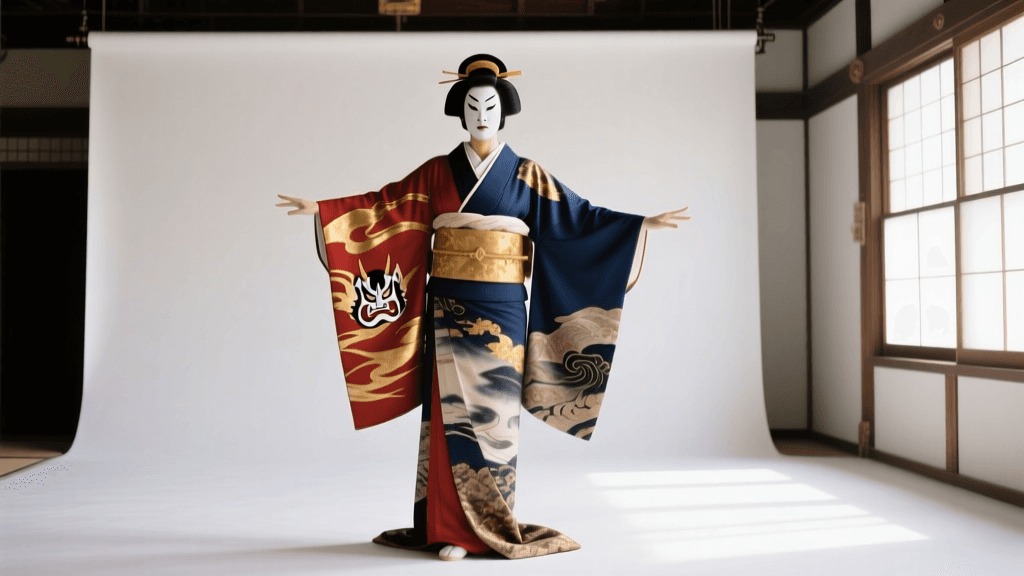
If Noh is a whisper, Kabuki is a shout. Emerging as a populist counterpart to the aristocratic Noh, Kabuki relies on visual spectacle, dramatic poses (mie), and larger-than-life costumes. The Kabuki isho (costumes) are designed to be seen from the furthest balconies of grand theaters like Tokyo’s Kabukiza, utilizing bold, oversized motifs and high-contrast colors.
One of the most thrilling aspects of Kabuki costuming is the hikinuki (quick-change) technique. During a performance, a character may undergo a dramatic emotional shift or reveal their true supernatural identity. Stage assistants dressed in black (kuroko) rush forward and pull specific basting threads holding the outer kimono together. In a fraction of a second, the outer garment falls away or flips inside out, revealing a completely different kimono underneath. This requires masterful engineering by the costume department, utilizing lightweight silk linings and precisely placed temporary stitching that must hold during vigorous dancing but release flawlessly on cue.
The patterns on Kabuki kimono are equally communicative. The jagame (snake-eye) pattern, featuring concentric circles, is traditionally reserved for villains or characters with dark intentions. Conversely, the aragoto (rough style) heroes wear heavily padded kimono with massive, exaggerated shoulders to project superhuman strength and moral righteousness. As noted by the Japan Arts Council at the National Theatre, the preservation of these specialized Kabuki textiles requires continuous collaboration between master dyers, weavers, and the theater's wardrobe masters to ensure the 2026 repertoires maintain their historical accuracy and visual impact.
Bunraku Puppet Theater: Scaling Kimono for the Stage
Bunraku, the traditional puppet theater of Osaka, presents a unique challenge for kimono artisans: dressing a non-human entity to look and move exactly like a living person. The puppets, which are roughly one-half to two-thirds the size of a human, are operated by three visible puppeteers. The kimono must be tailored not for a human body, but for a complex armature of bamboo, whalebone, and cotton padding.
The construction of a Bunraku kimono requires specific structural modifications. The sleeves and bodice feature hidden slits and specialized ties that allow the main puppeteer (omozukai) to insert their arm to manipulate the puppet's head and right hand, while the other puppeteers manage the left hand and the legs. The textiles used are often repurposed antique kimono or specially commissioned brocades that are scaled down or draped in a way that simulates the natural folds of human clothing.
Because the puppets do not have the physical mass to naturally drape heavy silk, the wardrobe masters use internal padding and strategic pinning to give the kimono a realistic volume. When a female puppet weeps or a warrior puppet draws a sword, the kimono must ripple and fold with realistic fluidity. The mastery lies in making the stiff, engineered bamboo skeleton appear as a soft, breathing human body wrapped in luxurious silk.
Comparative Analysis: Stage Textiles at a Glance
To better understand the functional and aesthetic differences between these three traditions, refer to the comparison table below:
| Theater Form | Costume Name | Primary Textile & Technique | Visual Purpose & Stage Impact |
|---|---|---|---|
| Noh | Shozoku (Karaori / Nuihaku) | Heavy Nishijin brocade, gold leaf (surihaku), dense embroidery. | Creates a stiff, bell-like silhouette; slows movement to evoke spiritual grace (yugen). |
| Kabuki | Isho (Odori-isho / Aragoto) | Lightweight silk, Yuzen dyeing, hikinuki (basted quick-change threads). | Bold, oversized patterns for distant visibility; engineered for rapid, dramatic transformations. |
| Bunraku | Ningyo-isho (Puppet garments) | Repurposed antique silks, scaled brocades, internal cotton padding. | Modified with hidden slits for puppeteer access; draped to simulate human anatomy and movement. |
2026 Preservation Initiatives and Modern Exhibitions
The survival of these theatrical kimono relies heavily on the aging population of master artisans in Kyoto and Kanazawa. In 2026, several major initiatives have been launched to document and fund the creation of stage textiles. The integration of digital archiving is allowing theaters to map the exact weave structures and dye formulas of centuries-old garments, ensuring that if a karaori degrades, a mathematically perfect replica can be woven by the next generation of Nishijin weavers.
Furthermore, contemporary exhibitions are increasingly moving these garments off the stage and into gallery spaces, allowing the public to appreciate the microscopic details of the embroidery. By examining a Kabuki hikinuki kimono up close, visitors can see the ingenious, almost invisible basting threads that make theatrical magic possible. This cross-pollination between the stage and the museum ensures that the cultural capital of these garments remains vibrant and relevant to modern audiences.
How to Experience Traditional Theater Costumes in 2026
For travelers visiting Japan in 2026, experiencing these textiles in their natural habitat is an essential cultural pursuit. Here is how you can integrate stage costume appreciation into your itinerary:
- Attend a Performance with English Audio Guides: Both the Kabukiza Theatre in Tokyo and the National Bunraku Theatre in Osaka offer comprehensive English audio guides. These guides specifically point out the symbolism of the kimono patterns and alert you to impending hikinuki quick-changes so you know exactly where to look.
- Visit the Kabukiza Gallery: Located on the fifth floor of the Kabukiza Theatre complex, this gallery frequently rotates actual costumes used in recent performances. It is one of the best places to examine the weight and texture of Kabuki silks without the distance of the stage.
- Explore Backstage Tours: Select venues offer behind-the-scenes tours during the off-season or between matinee and evening shows. These tours provide rare access to the wardrobe rooms (isho-beya), where you can observe the meticulous steaming, folding, and repair processes required to maintain the garments.
- Book a Noh Costume Fitting Experience: Several cultural centers in Kyoto now offer supervised experiences where visitors can learn how to properly fold and handle a Noh shozoku, gaining a physical appreciation for the immense weight and structural rigidity of the brocades.
Whether you are marveling at the subtle gold leaf of a Noh spirit, the explosive color shift of a Kabuki hero, or the lifelike drape of a Bunraku puppet, the kimono of Japan’s classical stage remains a masterclass in wearable storytelling. As the 2026 season unfolds, these textiles continue to bridge the gap between ancient craftsmanship and living, breathing performance art.