Hanfu on Global Runways: 2026 International Fashion Week Trends
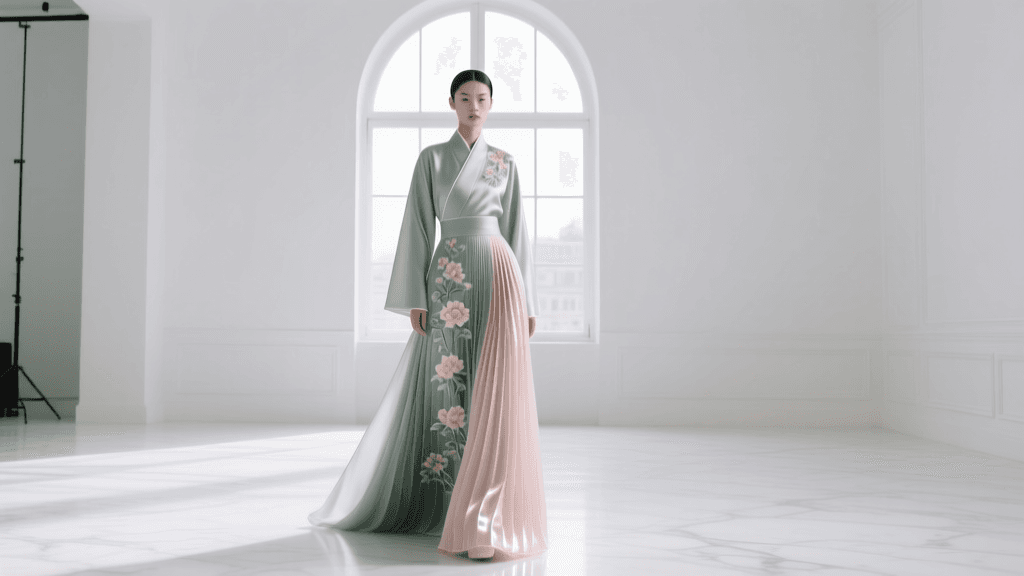
The Renaissance of Hanfu on the 2026 Global Runway
The global fashion landscape has undergone a seismic shift in 2026, moving decisively away from Westernized interpretations of 'Chinoiserie' and embracing the authentic, structural brilliance of traditional Chinese Hanfu. From the grand Palais in Paris to the industrial lofts of Milan, Hanfu is no longer relegated to cultural exhibitions or niche street style; it is the foundational architecture for some of the most talked-about haute couture and ready-to-wear collections of the Spring/Summer and Fall/Winter 2026 seasons. Leading fashion authorities, including the scheduling directories of the Fédération de la Haute Couture et de la Mode, have noted a record number of Asian heritage brands and diaspora designers integrating historical Chinese silhouettes into their primary runway lineups this year.
This 2026 runway renaissance is characterized by a deep respect for historical accuracy merged with avant-garde material science. Designers are meticulously studying Ming Dynasty weaving techniques and Song Dynasty minimalism, translating them into garments that meet the rigorous demands of international fashion weeks. According to market analyses tracked by The Business of Fashion, the export and global integration of luxury heritage textiles from China have surged, driven by an international clientele demanding garments with profound historical narratives and impeccable craftsmanship.
Key Hanfu Silhouettes Dominating International Fashion Weeks
The Mamianqun (Horse-Face Skirt) Evolution
Undoubtedly, the Mamianqun, or 'horse-face skirt,' is the breakout star of the 2026 runway circuit. Historically characterized by its flat front and back panels with intricately pleated sides, the Mamianqun offers a dramatic, architectural silhouette that translates beautifully to the runway. In 2026, we are seeing this traditional skirt reimagined through the lens of modern structuralism. Designers are manipulating the knife pleats using heat-set memory fabrics, allowing the skirt to flare dramatically under runway wind machines while snapping back into perfect, crisp lines when the model is at a standstill.
For collectors and fashion enthusiasts looking to source runway-grade Mamianqun pieces this year, the market has bifurcated into mass-produced fast fashion and ultra-luxury bespoke commissions. Authentic, hand-loomed Zhuanghua (brocade) Mamianqun skirts from master artisans in Suzhou and Nanjing currently command prices between $1,800 and $4,500 in 2026, reflecting the intense labor and genuine gold-thread integration required for haute couture standards.
Ruqun and Beizi Reimagined for Haute Couture
Beyond the skirt, the upper garments of Hanfu are providing fresh inspiration for international outerwear and eveningwear. The Beizi, a long, open-front jacket popularized during the Song Dynasty, is being utilized by European fashion houses as a sophisticated alternative to the traditional trench coat or duster. On the 2026 runways, the Beizi is frequently rendered in liquid organza or sheer, gambiered silks, worn over minimalist slip dresses or structured Western corsetry. This juxtaposition of historical Chinese modesty with contemporary European body-con silhouettes has become a defining visual motif of the year.
2026 Runway Adaptations: Traditional vs. Avant-Garde
To understand how traditional garments are being adapted for the rigorous environment of international fashion weeks, we must examine the specific modifications designers are making to historical patterns. Below is a comparison of traditional Ming Dynasty specifications versus their 2026 Paris runway adaptations.
| Feature | Traditional Ming Dynasty Hanfu | 2026 Paris Runway Adaptation |
|---|---|---|
| Fabric | Heavy silk brocade, woven gold, cotton linings | Recycled cupro, liquid organza, smart-textiles, Xiangyunsha |
| Pleating Structure | Hand-pressed knife pleats, flat front/back panels | Asymmetric draping, heat-set permanent micro-pleats, laser-cut hems |
| Fastening | Cotton ties, hidden fabric buttons, sashes | Concealed magnetic closures, structured corset-belts, titanium clasps |
| Styling Context | Worn with Ao (jacket), Yunjian (cloud shoulder) | Paired with oversized blazers, sheer bodysuits, architectural footwear |
| Hemline | Floor-grazing, requiring specific posture and gait | Adjustable via hidden drawstrings, tailored for rapid runway walking speeds |
Climate and Fabric Innovations for Global Shows
A critical challenge for traditional garments on the global stage is climate adaptation. International fashion weeks span diverse and often extreme environments—from the sweltering humidity of resort shows in Dubai and Southeast Asia to the biting cold of New York in February. Traditional heavy silks and layered Ruqun are ill-suited for high-heat, high-humidity runway environments, where models risk overheating and fabrics can warp from perspiration.
In 2026, material scientists working with heritage brands have pioneered the use of treated Xiangyunsha (gambiered silk). Traditionally a heavy, mud-dyed silk from Guangdong, the 2026 runway iterations are woven with ultra-fine micron threads and treated with a breathable, hydrophobic botanical coating. This allows the fabric to maintain its iconic structural drape and rich, earthy patina while actively wicking moisture and resisting the intense heat of runway lighting and tropical resort locations. For winter shows in Milan and New York, designers are integrating aerogel insulation into the linings of traditional Ao (padded jackets), providing sub-zero warmth without compromising the sleek, historical silhouette of the garment.
Sourcing and Styling Runway-Grade Hanfu in 2026
For fashion editors, stylists, and private clients attending international galas or fashion week after-parties in 2026, styling Hanfu requires a nuanced understanding of proportion and historical context. The days of simply throwing on a mass-market costume piece are over; the modern elite approach Hanfu with the same sartorial rigor as vintage Chanel or archival McQueen.
Actionable Styling Advice for Black-Tie Events
- The Corset Pairing: To adapt a traditional Mamianqun for a Western black-tie gala, bypass the traditional Ao jacket. Instead, pair the high-waisted skirt with a structured, bespoke corset. This honors the high waistline of the skirt while providing the formal eveningwear silhouette expected at international galas.
- Footwear Calibration: Traditional Hanfu skirts are designed to graze the floor, hiding the wearer's feet. On a runway or red carpet, tripping is a fatal error. Commission custom platform boots or architectural heels that match the exact inseam measurement of your skirt, ensuring the hem hovers precisely one-quarter inch above the ground.
- Layering with Western Tailoring: For a modern, editorial look, layer a sheer, Song Dynasty-inspired Beizi over a sharply tailored, oversized Western blazer. The contrasting lines of the rigid blazer shoulders against the flowing, open-front Beizi create a striking, photodynamic silhouette favored by street-style photographers outside the 2026 shows.
Measurement and Sourcing Specifics
When commissioning bespoke Hanfu for international events, standard Western sizing charts are entirely obsolete. Hanfu relies on flat-pattern cutting, meaning the garment's fit is dictated by the drape and the tying system rather than darts and seams. When ordering a Mamianqun from a high-end Suzhou atelier in 2026, you must provide your exact natural waist circumference, the desired skirt length (measured from the navel to the floor while wearing your intended event footwear), and the 'skirt sweep' (the total circumference of the hem when fully flared). Expect a lead time of 12 to 16 weeks for authentic, hand-loomed brocade pieces, making early commissioning essential for the Fall/Winter 2026 fashion week calendar.
The Future of Asian Heritage on the Global Stage
As documented by the extensive archives and live coverage on Vogue Runway, the integration of Hanfu into the global fashion lexicon is not a fleeting trend, but a permanent structural shift in how the industry views historical Asian garments. The 2026 collections have proven that Hanfu is not merely a relic of the past to be referenced, but a living, breathing design system capable of evolving alongside modern material science and global aesthetic sensibilities. By respecting the intricate engineering of traditional Chinese tailoring while embracing the practical demands of the modern international stage, designers are ensuring that Hanfu will continue to command the world's most prestigious runways for decades to come.