Hakama and Samue: Japanese Martial Arts and Tea Wear
The Intersection of Budo and Chado
In traditional Japanese culture, the pursuit of mastery is rarely confined to physical technique alone. Whether one is stepping onto the wooden floor of a martial arts dojo or kneeling on the tatami mats of a tea room, the garments worn are deeply imbued with philosophy, history, and practical function. The concepts of budo (the martial way) and chado (the way of tea) share a common root in Zen Buddhism and the samurai ethos, emphasizing mindfulness, respect, and the refinement of character. According to historical records of Japanese martial ways, the uniform is not merely clothing; it is a tool that shapes the practitioner's posture, mindset, and movement. Similarly, the traditional tea ceremony demands garments that reflect humility, cleanliness, and an aesthetic harmony with the season. This article explores the three foundational garments that bridge these disciplines: the hakama, the keikogi, and the samue.
The Hakama: Pleats of Virtue and Discipline
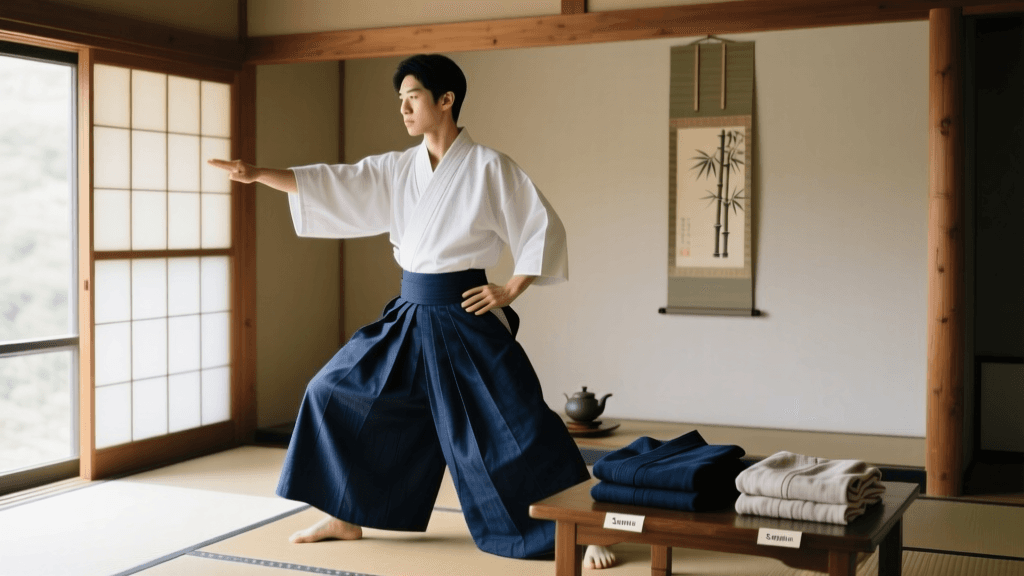
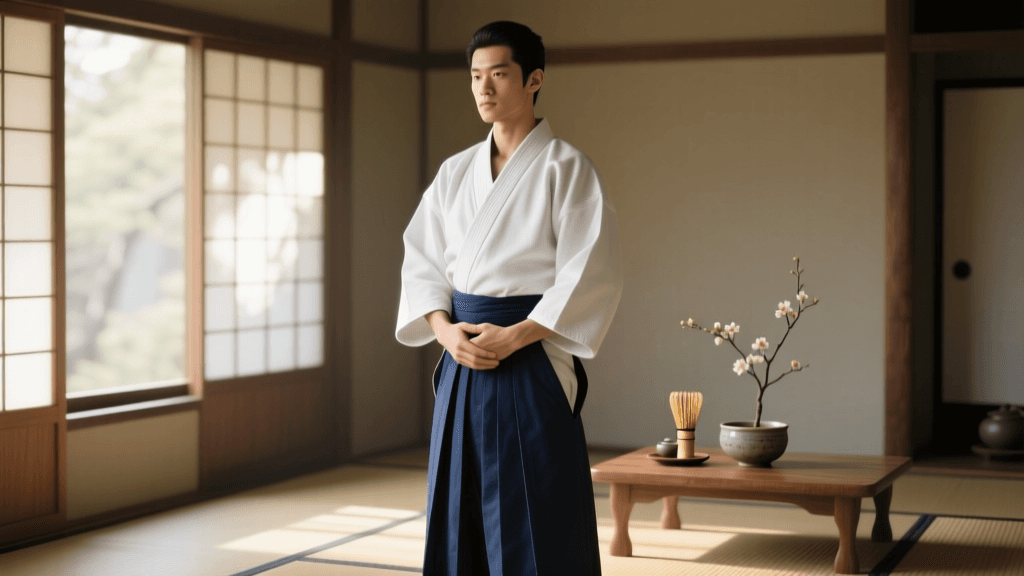
The hakama is perhaps the most iconic garment in Japanese traditional arts. Originally worn by samurai to protect their legs while riding horses and to conceal their footwork in combat, the hakama evolved into a symbol of status, formality, and scholarly pursuit. Today, it is a mandatory uniform in martial arts like Kendo, Aikido, and Iaido, and it remains the standard formal wear for male tea practitioners (and high-ranking female practitioners in certain schools).
Anatomy and Sizing
A formal hakama features five pleats in the front and two in the back. In martial arts philosophy, these seven pleats are often said to represent the seven virtues of the samurai (Bushido): Jin (benevolence), Gi (justice), Rei (courtesy), Chi (wisdom), Shin (sincerity), Chu (loyalty), and Ko (piety). The garment is secured by four himo (ties)—two long front ties and two shorter back ties—woven over a rigid ita (back plate) that rests against the small of the back to enforce an upright posture.
Sizing a hakama requires precise measurement. Unlike Western trousers measured by inseam, a hakama is measured from the navel (where the front ties cross) down to the ankle bone. Sizes typically range from #22 (approximately 75 cm or 29.5 inches) to #30 (approximately 95 cm or 37.5 inches). A properly fitted martial arts hakama should hover just above the floor, covering the ankles but not dragging, to prevent tripping during dynamic footwork (suriashi).
Fabric Choices for the Dojo and Tea Room
The choice of fabric drastically alters the garment's drape, maintenance, and appropriateness for specific arts. As noted by The Metropolitan Museum of Art's archives on Japanese textiles, the evolution of dyeing and weaving techniques has heavily influenced ceremonial dress. For tea ceremony, silk (ken) or high-quality crepe (chirimen) is preferred for its elegant drape, subtle sheen, and quiet rustle, which aligns with the refined atmosphere of the tea room. Conversely, martial artists require durability. Kendo practitioners favor heavy, stiff cotton dyed with natural indigo, which helps absorb sweat and provides a satisfying 'snap' during movement. Beginners and Aikido practitioners often opt for Tetron, a polyester-rayon blend that resists wrinkling, holds its pleats permanently, and is machine washable.
The Keikogi: The Foundation of Movement
The keikogi (training jacket) is the upper half of the standard martial arts uniform. While it is now ubiquitous globally, its modern iteration was pioneered in the late 19th century by Kano Jigoro, the founder of Judo. Kano designed the keikogi to withstand the rigorous pulling and throwing of grappling arts, replacing the fragile everyday kimono previously used in training.
The weave of the keikogi is highly specialized. Judo and Aikido jackets heavily utilize sashiko (rice-grain) weaving on the lower half and shoulders. This textured, quilted pattern reinforces the cotton, making it resistant to tearing when grabbed. The chest area often features hishizashi (diamond) weave, which is smoother and allows for greater flexibility and faster drying. In contrast, Kendo practitioners wear a lighter, indigo-dyed cotton jacket that allows for rapid shoulder movement and breathability beneath the heavy bamboo armor (bogu). For the tea practitioner, the keikogi is rarely worn, but its underlying philosophy of shoji (simplicity and cleanliness) heavily influences the plain, unadorned cotton jackets worn during rigorous temple training.
The Samue: Zen Workwear and Tea Preparation
While the hakama and keikogi are garments of formal practice and combat, the samue is the garment of preparation and labor. Translating literally to 'working clothes,' the samue originated as the daily wear for Zen Buddhist monks performing samu (physical work such as sweeping, farming, and cooking). Today, it consists of a loose-fitting, side-tied jacket and matching drawstring trousers.
In the context of the tea ceremony, the samue is the unofficial uniform of the mizuya (the tea preparation room). Before guests arrive, practitioners must boil water, wash bowls, and prepare sweets. Wearing a formal silk hakama in the humid, cramped mizuya risks staining and damaging the delicate fabric. The samue, typically made from breathable cotton, hemp, or tsumugi (a slubbed, rustic silk-cotton blend), allows for unrestricted movement and easy washing. Its aesthetic—rustic, unpretentious, and deeply connected to nature—perfectly embodies the wabi-sabi philosophy central to the tea ceremony. Many martial artists also adopt the samue as casual dojo wear for summer months or for traveling to seminars, appreciating its comfort and cultural resonance.
Comparative Guide: Traditional Uniforms
Selecting the right garment depends heavily on the practitioner's discipline, rank, and environment. Below is a structured comparison to guide your wardrobe investments.
| Garment | Primary Context | Common Fabrics | Estimated Cost (USD) | Maintenance Level |
|---|---|---|---|---|
| Hakama (Silk/Crepe) | Tea Ceremony, Formal Events | Silk, Chirimen (Crepe) | $150 - $400+ | High (Dry clean only, meticulous folding) |
| Hakama (Tetron/Cotton) | Kendo, Aikido, Iaido | Tetron (Poly/Rayon), Heavy Cotton | $40 - $120 | Medium (Machine washable, must be folded to retain pleats) |
| Keikogi (Judo/Aikido) | Grappling Martial Arts | Heavyweight Cotton (Sashiko weave) | $60 - $180 | Medium (Cold wash, air dry to prevent shrinkage) |
| Samue | Mizuya (Tea Prep), Zen Work, Casual Dojo | Cotton, Hemp, Tsumugi blend | $50 - $150 | Low (Machine wash, easy to fold and store) |
Practical Care: Washing, Folding, and Storage
Owning traditional Japanese garments requires a commitment to their care. The way you treat your uniform is considered an extension of your training. Neglecting your gear is viewed as a lack of respect for your art, your teacher, and your training partners.
Washing Guidelines
- Cotton Keikogi and Indigo Hakama: Always wash in cold water. Hot water will cause severe shrinkage and strip natural indigo dyes. Do not use bleach or harsh detergents. Air dry in the shade; direct sunlight will fade indigo and weaken cotton fibers over time.
- Tetron Hakama: These can be machine washed on a gentle cycle in a mesh laundry bag to prevent the ties from tangling. They can be tumble dried on low, but hanging them immediately prevents unwanted wrinkles.
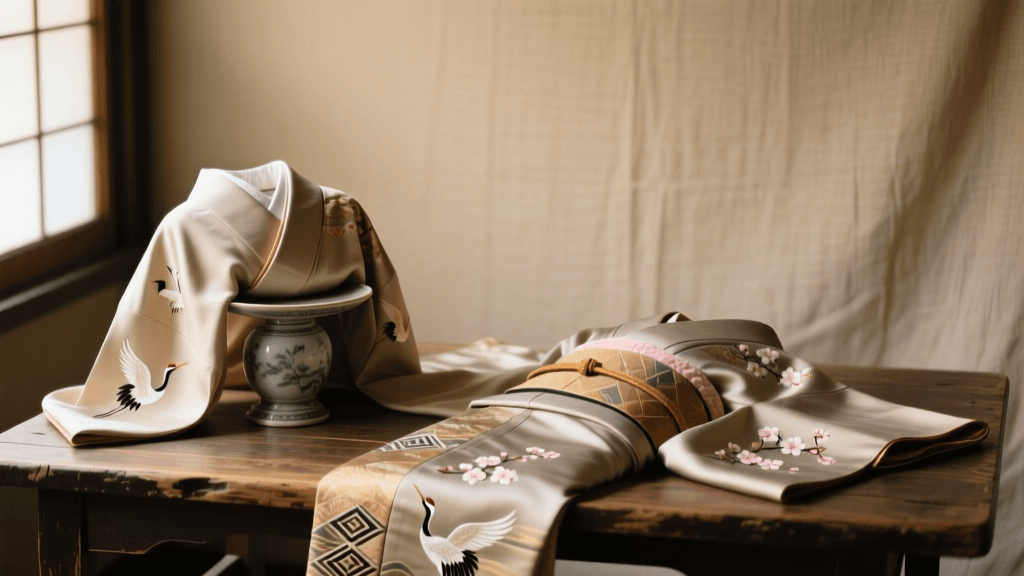
- Silk Tea Hakama and Kimono: Never wash with water. Spot clean minor stains with a damp cloth and take the garment to a professional dry cleaner who specializes in traditional Japanese textiles.
- Samue: Cotton and hemp samue are highly forgiving and can be machine washed and dried, making them ideal for frequent use in the mizuya or garden.
The Art of Folding the Hakama
Folding the hakama is a ritual in itself, often taught as the very first lesson in Aikido and Kendo dojos. The process requires smoothing out the seven pleats with the hands, aligning the front and back panels perfectly, and folding the garment into a compact, respectful square. The long front himo are then wrapped tightly around the folded bundle and tied in a specific knot that resembles a cross, securing the back plate flat against the fabric. This meticulous folding process serves as a cool-down meditation after intense physical exertion, forcing the practitioner to slow their breathing, focus their mind, and transition from the heat of combat back to a state of calm awareness.
'The way you fold your hakama reflects the state of your mind. A messy fold indicates a scattered spirit; a crisp, precise fold shows readiness and respect for the path you walk.' — Traditional Dojo Proverb
Conclusion
The garments of Japanese martial arts and tea ceremony are far more than historical costumes. The hakama teaches posture and virtue, the keikogi provides the resilience needed for physical rigor, and the samue grounds the practitioner in the humble reality of preparation and labor. By understanding the specific measurements, fabric weaves, and care requirements of these uniforms, practitioners can deepen their connection to the 'do' (the way). Whether you are drawing a bamboo sword, whisking matcha, or simply sweeping the dojo floor, wearing the correct traditional garment aligns your body and mind with centuries of disciplined practice.