Ainu Attus and Ryukyuan Bingata: Japan's Indigenous Textiles
Introduction to Japan's Indigenous and Minority Textiles
When discussing traditional Japanese clothing, the global imagination almost immediately gravitates toward the mainstream silk kimono, the casual cotton yukata, and the formal crested hakama. However, the Japanese archipelago is home to a rich tapestry of ethnic minorities and indigenous peoples whose sartorial traditions are just as profound, yet frequently overlooked. In the northernmost island of Hokkaido, the Ainu people have cultivated a deeply spiritual relationship with nature, reflected in their resilient bark-cloth garments. Conversely, in the subtropical southern islands of Okinawa, the Ryukyuan people developed vibrant, intricate dyeing techniques that speak to a history of maritime trade and royal patronage.
Understanding these indigenous textiles—specifically Ainu Attus and Ryukyuan Bingata—requires looking beyond mainstream Japanese fashion. It demands an appreciation for regional climates, historical marginalization, and contemporary cultural revitalization. For textile collectors, fashion historians, and conscious consumers, exploring these traditions offers a rare glimpse into the diverse cultural mosaic of the Japanese islands.
Ainu Attus: The Resilient Bark Cloth of the North
The Ainu, the indigenous people of Hokkaido, Sakhalin, and the Kuril Islands, historically relied on the natural resources of their harsh, snowy environment to create their clothing. The most iconic of these textiles is Attus (sometimes spelled Atsush), a durable, breathable fabric woven from the inner bark of the Manchurian elm tree, known in the Ainu language as ohyo.
The Craftsmanship of Attus Weaving
The creation of Attus is a labor-intensive process that requires deep ecological knowledge and immense physical effort. Traditionally, the bark is harvested in the early summer when the sap is flowing, making it easier to peel. The outer bark is stripped away, and the soft inner layers are separated into thin ribbons. These ribbons are then soaked in river water or hot springs to soften the fibers, after which they are dried and meticulously split into fine threads by hand.
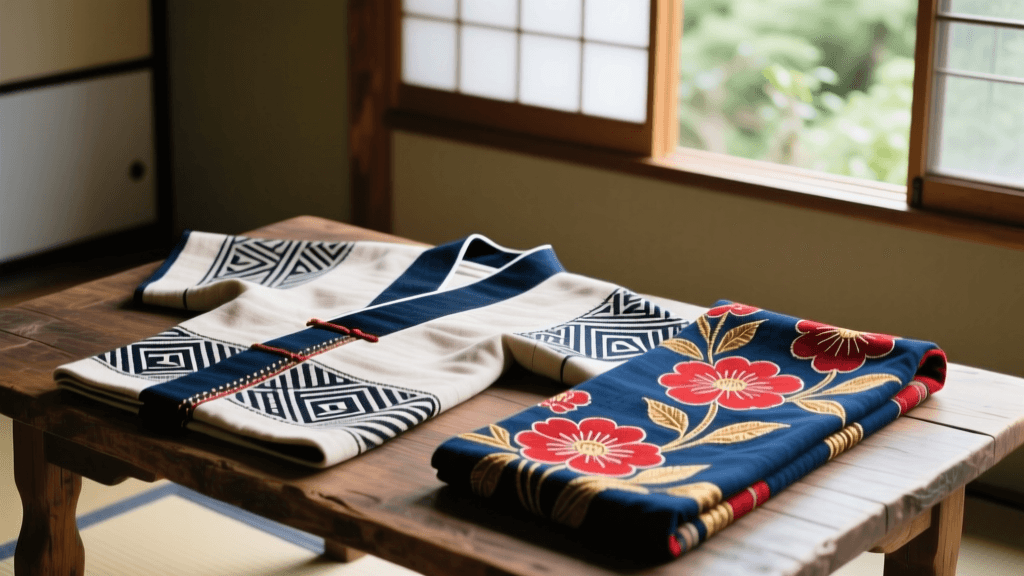
Weaving is done on a traditional backstrap loom called an emushiat. The weaver sits on the ground, using their body weight to maintain tension on the warp threads. The resulting fabric is remarkably tough, water-resistant, and highly breathable. Historically, Attus was used to make everyday work garments, as well as the base for formal ceremonial robes, which were then heavily embroidered with the Ainu's signature protective motifs, such as the moreu (spiral) and aiushi (thorn) patterns, designed to ward off evil spirits.
Ryukyuan Bingata: The Vibrant Resist-Dyeing of the South
Over 1,500 kilometers south of Hokkaido lies the Okinawa prefecture, the heartland of the Ryukyuan people. The Ryukyu Kingdom (1429–1879) was a thriving hub of maritime trade, connecting Japan, China, Korea, and Southeast Asia. This cosmopolitan history is vividly captured in Bingata, a traditional resist-dyeing technique characterized by its bold colors, dynamic patterns, and intricate stencils.
Stencil Cutting and Resist Dyeing
Bingata translates roughly to "red paint," though the technique utilizes a vast spectrum of colors. The process begins with the creation of kata (stencils) cut from mulberry paper treated with persimmon tannin for durability. Artisans use specialized chisels to carve out elaborate motifs inspired by the subtropical environment and foreign influences, including dragons, peonies, koi fish, and ocean waves.
Once the stencil is placed on the fabric (traditionally silk, hemp, or cotton), a thick rice-bran resist paste called norimaki is applied over the cut-out areas. After the paste dries, artisans paint vibrant mineral and plant-based pigments directly onto the fabric. A hallmark of authentic Bingata is the kumadori technique, where darker shades of the same color are brushed over the edges of the motifs to create a three-dimensional, shadowed effect. Finally, the resist paste is washed away in running water, revealing the crisp, uncolored patterns beneath.
The Hierarchy of Color in Ryukyuan Dress
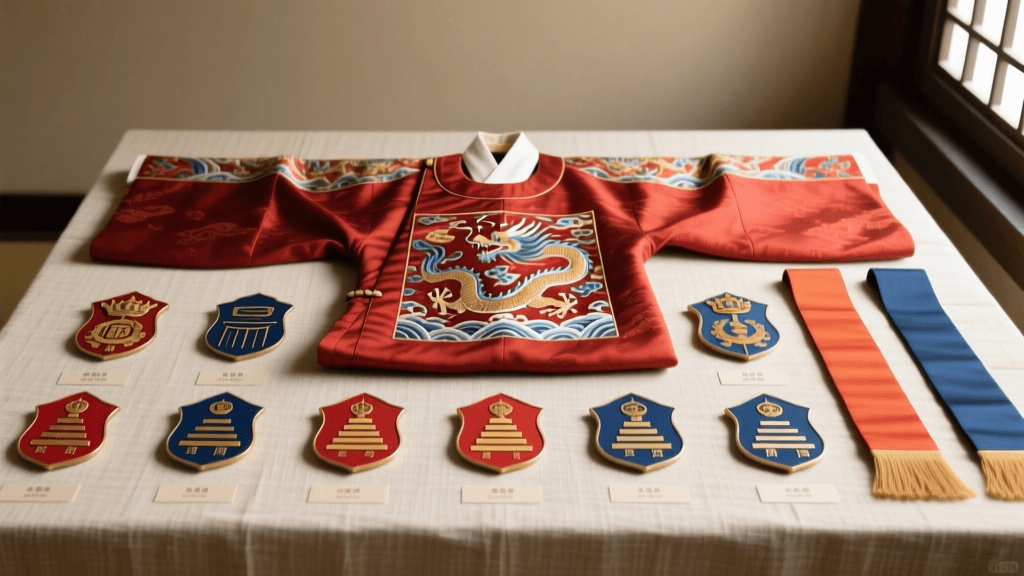
During the Ryukyu Kingdom era, Bingata was strictly regulated by sumptuary laws. The background color of the garment immediately identified the wearer's social status. Brilliant yellow, derived from the precious fukugi tree, was reserved exclusively for the royal family. Red and purple were designated for high-ranking nobles, while blue and white were permitted for commoners and lower-ranking officials. Today, these restrictions no longer apply, and Bingata is celebrated universally as a symbol of Okinawan identity and resilience.
Comparative Analysis: Attus vs. Bingata
To fully grasp the distinct characteristics of these two indigenous textiles, it is helpful to compare their origins, materials, and cultural applications side-by-side.
| Feature | Ainu Attus | Ryukyuan Bingata |
|---|---|---|
| Origin Region | Hokkaido (Northern Japan) | Okinawa (Southern Japan) |
| Primary Material | Manchurian Elm (ohyo) inner bark | Silk, Hemp, Cotton, Banana fiber (Bashofu) |
| Core Technique | Backstrap loom weaving | Stencil resist-dyeing and hand-painting |
| Visual Aesthetic | Earthy, textured, natural brown tones with geometric embroidery | Vibrant, high-contrast colors with fluid, nature-inspired motifs |
| Climate Adaptation | Highly durable, water-resistant, insulating for cold winters | Lightweight, breathable, suited for humid subtropical heat |
Practical Guide: Sourcing, Measuring, and Styling Indigenous Textiles
For enthusiasts of the Ministry of Economy, Trade and Industry (METI) designated traditional crafts, acquiring authentic Ainu and Ryukyuan textiles is a rewarding but nuanced endeavor. Ethical sourcing requires supporting indigenous artisans directly and understanding the practical dimensions of these garments.
Sourcing Authentic Pieces and Expected Costs
Authentic, handcrafted indigenous textiles represent a significant investment of time and labor. When purchasing, avoid mass-produced tourist souvenirs and seek out certified cooperatives or artisan studios.
- Ainu Attus Table Runners and Sashes: While full Attus robes are rare and often kept in museums or families, modern Ainu artisans frequently weave Chimimari (decorative sashes) and table runners. Expect to pay between ¥10,000 and ¥30,000 for small, authentic woven pieces. The best place to source these ethically is through the craft shops at the Upopoy National Ainu Museum and Park in Shiraoi, Hokkaido.
- Ryukyuan Bingata Obi Belts: A fully hand-dyed, silk Bingata Nagoya Obi is a masterpiece of Okinawan art. Prices typically range from ¥150,000 to ¥800,000, depending on the complexity of the stencil and the prestige of the artisan. Studios in Naha, such as those affiliated with the Okinawa Convention & Visitors Bureau's traditional craft network, offer direct purchases and custom orders.
- Bingata Haori Jackets: For a more accessible entry point, cotton or hemp Bingata Haori (short jackets) generally cost between ¥40,000 and ¥90,000.
Measurements and Tailoring for Modern Wear
If you are purchasing vintage or commissioning new pieces, understanding standard Japanese garment measurements is crucial for proper fit and styling.
- Nagoya Obi (Bingata): The standard width is 30 cm (approx. 11.8 inches), and the length is 360 cm (approx. 141 inches). The Nagoya Obi is pre-folded and stitched in a way that makes tying the popular otaiko (drum bow) knot significantly easier than with a formal Maru or Fukuro Obi.
- Haori Jacket: A standard women's Haori measures about 80 cm (31.5 inches) in body length, with a sleeve drop (sodeguchi) of around 30 cm (11.8 inches). Men's Haori tend to be longer, often reaching 95 cm to 100 cm. When styling a Bingata Haori, pair it with a solid-colored, muted kimono to allow the vibrant Okinawan motifs to take center stage.
Timing Your Visit to Artisan Workshops
For textile professionals and serious collectors, visiting the source of production provides invaluable context. Timing your trip around the natural cycles of the materials is essential.
- Hokkaido (Ainu Attus): Plan your visit for July and August. This is the narrow window when the Manchurian elm trees are harvested for their bark. Artisans are actively processing and weaving during the late summer months, making it the ideal time to observe the emushiat loom in action.
- Okinawa (Ryukyuan Bingata): The best time to visit Bingata workshops is between November and February. The subtropical winter offers lower humidity, which is critical for the proper drying of the rice-bran resist paste and the hand-painted pigments. During the humid summer typhoon season, the drying process is severely hindered, and many studios scale back production.
Preserving the Legacy of Ethnic Minority Dress
The survival of Ainu Attus and Ryukyuan Bingata is a testament to the resilience of indigenous communities who have fought to preserve their cultural identities in the face of historical assimilation policies. Today, a new generation of Ainu and Ryukyuan designers are reimagining these textiles, integrating them into contemporary streetwear, modern interior design, and global fashion runways.
"To wear the textiles of our ancestors is not merely an act of fashion; it is an act of remembering. Every thread of Attus and every stroke of Bingata pigment carries the voice of those who came before us, demanding that our stories continue to be told." — Contemporary Okinawan Textile Artisan
As global interest in sustainable, slow fashion continues to grow, these indigenous textiles offer profound lessons in ecological harmony and artisanal dedication. By understanding the specific measurements, seasonal production cycles, and ethical sourcing channels, collectors and fashion enthusiasts can support these living traditions, ensuring that the vibrant colors of the south and the resilient weaves of the north endure for generations to come.