Kabuki, Noh & Bunraku Kimono Costumes: A 2026 Stage Guide
The Soul of Japanese Classical Theater: Textiles in Motion
In the realm of traditional Japanese performing arts, the garment is never merely clothing; it is an architectural extension of the character's soul, social standing, and emotional state. As we navigate the cultural landscape of 2026, the intersection of heritage textile preservation and live performance has reached new heights. The kimono utilized in Japan's three classical theater forms—Noh, Kabuki, and Bunraku—represent the absolute zenith of Japanese silk weaving, dyeing, and layering techniques. For textile collectors, theater costumers, and cultural historians, understanding the distinct sartorial rules of these stages is essential. This guide explores the specialized construction, symbolic weight, and modern preservation of theatrical kimono across Japan's most revered stages.
The Kosode: The Universal Base Layer
Before examining the extravagant outer robes, one must understand the foundation of all three theatrical wardrobes: the Kosode. Translating to 'small sleeves,' the kosode is the direct ancestor of the modern kimono. In classical theater, the kosode serves as the primary undergarment and, for lower-class characters or minimalist scenes, the sole outer garment. In 2026, authentic theatrical kosode are still hand-tailored from high-grade Rinzu (silk damask) or Chirimen (silk crepe). The crepe texture of chirimen is particularly favored in Kabuki for its matte finish and excellent draping qualities, which absorb stage lighting without creating unwanted glare. The collar (eri) of the kosode is heavily starched to maintain a rigid, perfect V-shape at the nape of the neck, a critical aesthetic requirement across all three art forms.
Noh Theater: The Spiritual Weight of Brocade
Noh theater is an art form defined by yugen—a profound, mysterious sense of the beauty of the universe. Recognized by UNESCO's Intangible Cultural Heritage registry, Noh relies on slow, deliberate movements that require costumes of immense physical weight and structural rigidity to convey supernatural or aristocratic majesty. The outer garments, collectively known as shozoku, are primarily woven in the Nishijin district of Kyoto using heavy brocade techniques.
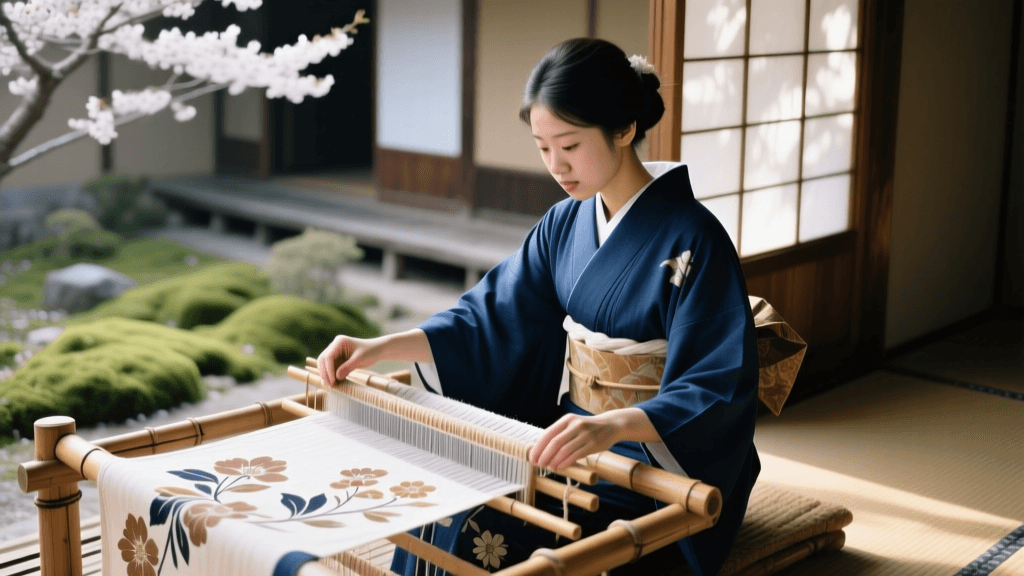
The Karaori (literally 'Chinese weave') is the quintessential Noh robe for female roles, featuring floating weft threads that create a raised, embroidered effect depicting autumn grasses, maple leaves, or flowing water. For male warrior or deity roles, the Atsuita is utilized. This thick, twill-weave silk is astonishingly heavy; a fully layered Noh costume can weigh upwards of 10 kilograms. In 2026, master weavers in Kyoto continue to use traditional wooden jacquard looms to produce these textiles, as modern power looms cannot replicate the specific tension and 'breath' required for the silk to move correctly during a Noh actor's suriashi (sliding step). The sheer weight of the garment forces the actor into the grounded, low-center-of-gravity posture that defines Noh movement.
Kabuki: Extravagance and the Hikinuki Quick-Change
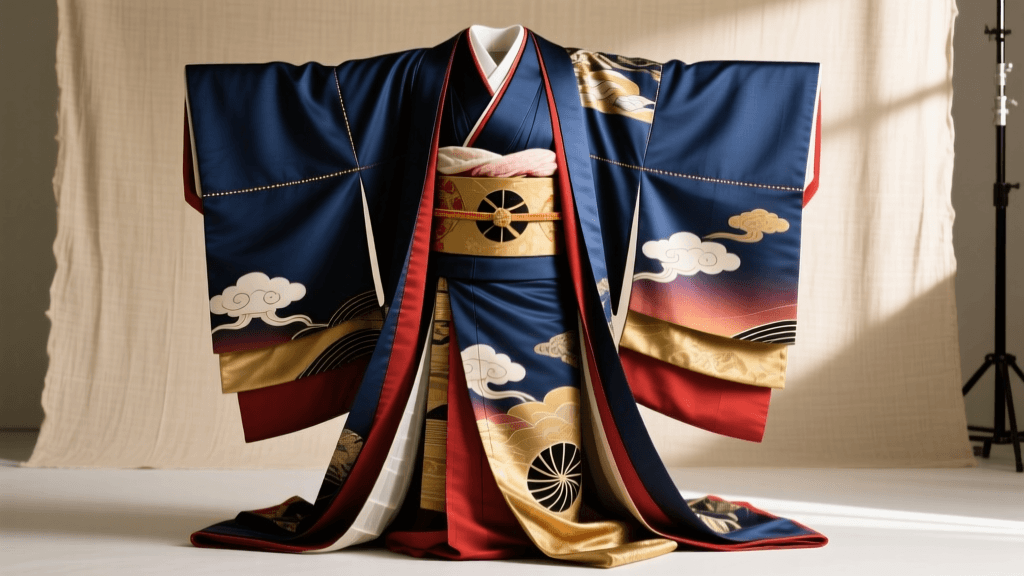
If Noh is the theater of restraint, Kabuki is the theater of spectacular excess. Kabuki costumes are designed to project personality and emotion to the furthest seats of the theater. The most iconic Kabuki garment is the O-uchikake, a grand, heavily padded outer robe worn by high-ranking courtesans (oiran) or aristocratic women. These robes feature massive, trailing hems padded with raw silk floss to create a bell-like silhouette that glides across the stage.
Kabuki is also famous for Hikinuki, a breathtaking on-stage quick-change technique. During a dramatic climax, stage assistants (kuroko) pull specific basting threads (shitsuke-ito) holding the outer kimono together. The garment instantly falls away or flips inside out to reveal a completely different color and pattern underneath, symbolizing a sudden shift in the character's emotional state or moral alignment. Preparing a kimono for a hikinuki requires specialized costume artisans who must calculate the exact tension of the basting threads so they snap precisely on the musical cue. In 2026, contemporary Kabuki stagings have seen a revival of natural safflower (benibana) and indigo dyes for these quick-change garments, offering a vibrant, organic depth that synthetic dyes cannot achieve under modern LED stage lighting.
Bunraku: Miniature Masterpieces of Scale
Bunraku, or Ningyo Johruri, presents a unique challenge in the world of theatrical kimono: the actors are not human, but wooden puppets ranging from half to two-thirds human size. Documented extensively in UNESCO's official Bunraku archives, this art form requires kimono that are scaled down but maintain the exact structural integrity, layering, and textile quality of full-sized human garments.
The puppets are dressed in actual silk kimono, but the internal construction is radically different. The garments must accommodate the complex internal armatures and the bamboo hoops that create the illusion of a human torso. Furthermore, the sleeves are manipulated by the puppeteers' own hands, requiring the armholes and sleeve attachments to be reinforced with specialized leather and heavy cotton backing to withstand the friction of nightly performances. The textiles used are often exquisite Yuzen dyed silks and scaled Nishijin-ori brocades. Because the puppets are viewed in intimate proximity by the audience, the precision of the miniature mon (family crests) and the micro-stitching of the hems are subjected to intense scrutiny.
Comparative Analysis: Stage Garments Across the Three Arts
Understanding the functional differences between these three theatrical forms is crucial for historians and costumers. The table below outlines the primary distinctions in textile choice, weight, and movement dynamics as of 2026.
| Feature | Noh Theater | Kabuki Theater | Bunraku Puppet Theater |
|---|---|---|---|
| Primary Silk Type | Nishijin Brocade & Heavy Twill | Rinzu (Satin Damask) & Chirimen (Crepe) | Scaled Nishijin & Yuzen Dyed Silk |
| Average Garment Weight | 4kg - 10kg (Human Scale) | 3kg - 8kg (Human Scale) | 0.5kg - 1.5kg (Puppet Scale) |
| Signature Technique | Static Layering for Majestic Posture | Hikinuki (On-stage Quick-change) | Internal Armature Draping & Hoop Support |
| Color Symbolism | Strict Seasonal & Class Rules (Subtle) | Bold, Dramatic Contrast (Aragoto Style) | Matches Human Character Tropes |
| Collar Construction | Wide, heavily padded for mask framing | Starched, sharp V-shape for dramatic posing | Wired to maintain shape against wooden neck |
Sourcing and Preserving Theatrical Kimono in 2026
For collectors and archivists acquiring vintage or contemporary theatrical kimono, preservation requires strict adherence to modern conservation standards. The heavy use of kinran (gold leaf wrapped around silk threads) and ginran (silver leaf) in Noh and Kabuki garments makes them highly susceptible to environmental degradation.
- Climate Control: In 2026, archival best practices dictate storing heavy brocade theatrical kimono in environments maintained at exactly 18°C (64°F) with a relative humidity of 50%. Fluctuations in humidity cause the organic silk core to expand and contract, which will eventually crack and flake the metallic gold leaf wrapping.
- Folding Protocols: Never fold a theatrical kimono along the same lines repeatedly. The rigid metallic threads will snap. Archival storage requires rolling the garments around acid-free, unbuffered tissue tubes, or if folding is necessary, padding every fold line with rolls of acid-free tissue to create soft, curved bends rather than sharp creases.
- Sourcing Authentic Pieces: When sourcing antique stage garments, verify the provenance through the National Theatre of Japan or established Kyoto textile guilds. Genuine stage kosode will feature reinforced underarm gussets and heavier basting threads not found in everyday ceremonial wear.
- Light Exposure: Modern UV-filtering LED display cases are mandatory for exhibiting these pieces. Even ambient indoor lighting can fade the natural indigo and safflower dyes used in high-end Kabuki reproductions within a matter of months.
Conclusion
The kimono of Kabuki, Noh, and Bunraku are not static museum relics; they are dynamic, engineered performance tools that breathe life into centuries-old narratives. Whether it is the grounding weight of a Noh Atsuita, the explosive reveal of a Kabuki Hikinuki, or the intricate, scaled tailoring of a Bunraku puppet's robe, these garments represent the pinnacle of Japanese textile artistry. As preservation technologies and stagecraft continue to evolve in 2026, the dedication to maintaining these traditional weaving and layering techniques ensures that the visual poetry of Japan's classical theaters will endure for generations to come.