Suzhou, Shu & Cantonese Embroidery: A Collector's Guide
The Living Heritage of Chinese Silk Embroidery
Chinese embroidery is not merely a decorative art; it is a profound visual language that communicates regional identity, social status, and philosophical ideals. For collectors, hanfu enthusiasts, and traditional garment aficionados, understanding the distinct nuances of regional embroidery techniques is essential for authenticating pieces and appreciating their true value. While China boasts four major embroidery styles (including Xiang embroidery from Hunan), the triad of Suzhou (Su Xiu), Shu (Shu Xiu), and Cantonese (Yue Xiu) represent the most sought-after and commercially significant traditions in the global textile market.
The foundation of these masterpieces lies in the millennia-old mastery of silk production. As recognized by UNESCO Intangible Cultural Heritage, the sericulture and silk craftsmanship of China involve highly specialized knowledge of mulberry cultivation, silkworm rearing, and thread reeling. This unparalleled access to high-grade silk threads allowed regional artisans to develop hyper-specialized stitching techniques that remain largely unmatched by modern machinery. In this comprehensive guide, we will dissect the technical hallmarks of Suzhou, Shu, and Cantonese embroidery, providing actionable advice for identification, acquisition, and preservation.
Suzhou Embroidery (Su Xiu): The Pinnacle of Elegance
Originating in the Jiangsu province, specifically around the city of Suzhou, Su Xiu is globally celebrated for its delicate refinement, elegant color palettes, and photorealistic shading. The aesthetic of Suzhou embroidery is heavily influenced by the Wu region's literati painting traditions, favoring tranquil landscapes, koi fish, and delicate botanicals.
Signature Techniques: Split Silk and Double-Sided Stitching
The defining technical marvel of Su Xiu is the "split silk" (pi xian) technique. Master artisans can split a single strand of silk thread into halves, quarters, eighths, and astonishingly, up to 1/128th of its original thickness. This microscopic division allows for imperceptible color blending, creating gradients that mimic the wash of watercolor or ink on rice paper. Furthermore, Suzhou is the undisputed home of double-sided embroidery (shuang mian xiu), where the front and back of a translucent silk screen display identical—or sometimes entirely different—images, with all knots and thread ends meticulously hidden within the stitches.
Practical Buying and Identification Tips
- Authenticity Check: Examine the reverse side of the fabric. Genuine hand-embroidered Su Xiu will show slight, organic irregularities in stitch length and tension. Machine embroidery will appear mathematically uniform and often reveals a distinct bobbin thread on the back.
- Thread Sheen: Authentic Su Xiu uses premium mulberry silk, which possesses a soft, pearlescent luster. Synthetic rayon or polyester threads will exhibit a harsh, plastic-like glare under direct light.
- Cost Expectations: Entry-level hand-embroidered Su Xiu accessories (like small pouches or fans) typically range from $150 to $400 USD. High-end custom qipao panels or double-sided screen artworks crafted by recognized provincial masters start at $3,000 USD and can exceed $50,000 USD for museum-quality pieces.
Shu Embroidery (Shu Xiu): The Vibrant Soul of Sichuan
Hailing from the Sichuan province in southwestern China, Shu Xiu is characterized by its bold, vibrant colors and robust, textured stitches. Historically, the region's geographical isolation fostered a distinct aesthetic that favors high-contrast palettes and dynamic, three-dimensional motifs. As noted by The Metropolitan Museum of Art, the historical silk trade routes allowed regions like Sichuan to develop unique textile identities that catered to both local nobility and export markets.
Signature Techniques: The Halo Stitch and Satin Mastery
Shu Xiu relies heavily on the satin stitch and the unique "halo stitch" (yunzhen). The halo stitch involves using varying lengths of overlapping stitches to blend colors seamlessly without the need for split-silk thinning. This creates a rich, raised texture that catches the light beautifully. Shu embroidery is also famous for its strict adherence to traditional motifs, most notably the giant panda, koi, and lotus flowers, often framed by intricate geometric borders.
Practical Buying and Identification Tips
- Texture Analysis: Run your fingers gently over the embroidered surface. Authentic Shu Xiu should feel distinctly raised and textured compared to the flat, painted-like surface of Suzhou embroidery.
- Color Fastness: Shu Xiu traditionally utilizes soft carmine and vibrant indigo dyes. When purchasing vintage pieces, check for "crocking" (color transfer) by gently rubbing a white cotton swab over the darkest red or blue threads.
- Cost Expectations: Shu Xiu is generally more accessible than Su Xiu due to a larger active artisan workforce in Chengdu. Beautifully hand-embroidered shawls and hanfu outerwear panels typically range from $300 to $1,200 USD, offering excellent value for collectors seeking high-impact visual pieces.
Cantonese Embroidery (Yue Xiu): Bold Colors and Gold Threads
Cantonese embroidery, or Yue Xiu, originates from the Lingnan region (Guangdong province). Shaped by its history as a major maritime trade hub, Yue Xiu is flamboyant, opulent, and heavily influenced by both local folklore and international export demands. It is the most common style found in antique Western collections, as it was heavily exported during the 18th and 19th centuries.
Signature Techniques: Gold Couching and Peacock Feathers
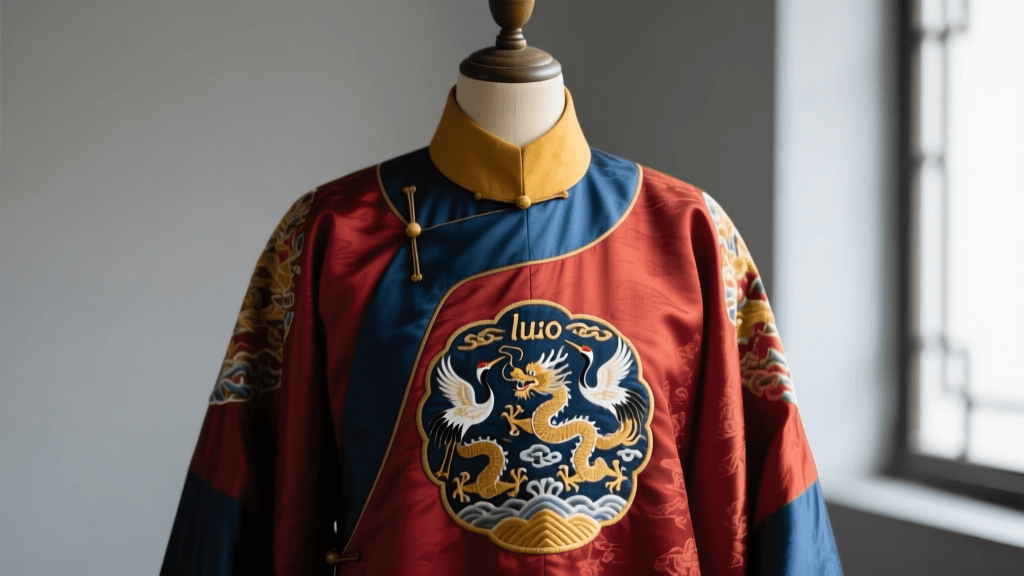
The hallmark of Yue Xiu is "pan jin" (gold and silver couching). Artisans lay metallic threads flat on the silk surface and secure them with tiny, nearly invisible silk stitches, creating dazzling, reflective surfaces. Additionally, Yue Xiu frequently incorporates unconventional materials, such as spun peacock feather filaments and horsehair, to add structural volume to motifs like the dragon and phoenix. The color palette is unapologetically loud, favoring deep reds, emerald greens, and bright yellows.
Practical Buying and Identification Tips
- Metallic Thread Inspection: Antique and high-end modern Yue Xiu uses real gold or silver foil wrapped around a silk core. Modern mass-market replicas use synthetic metallic yarns (Lurex), which will feel stiff and may tarnish or flake over time.
- Motif Identification: Look for region-specific Lingnan motifs, such as the lychee fruit, kapok flowers, and the distinctive Cantonese dragon (which often features a more serpentine, aggressive posture compared to northern imperial dragons).
- Cost Expectations: Due to the high cost of genuine metallic threads and the labor-intensive couching process, authentic hand-couched Yue Xiu garments are premium investments. Expect to pay between $800 and $2,500 USD for a fully embroidered traditional jacket (such as a qungua or kwa).
Comparative Analysis: Su, Shu, and Yue Embroidery
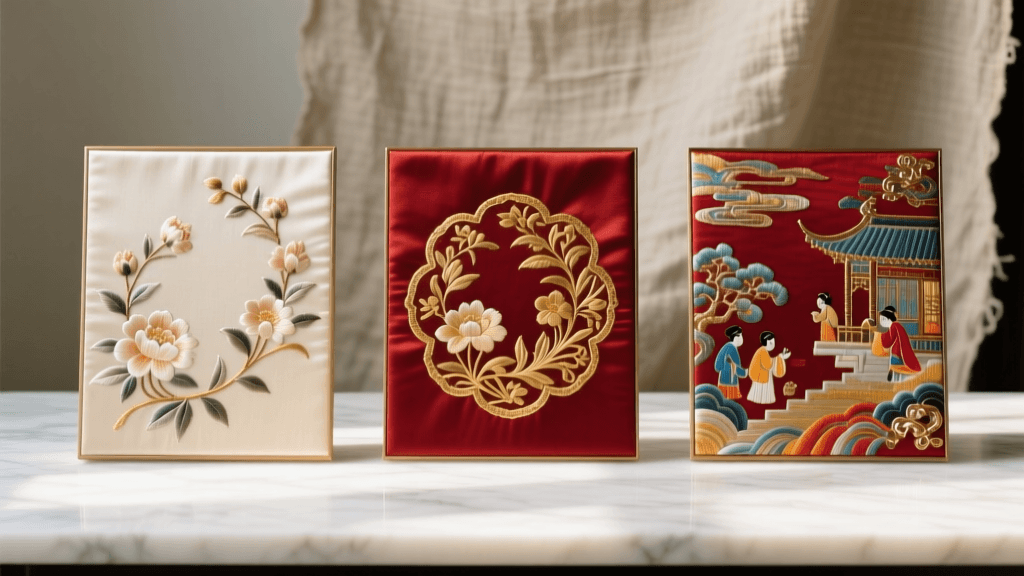
To assist collectors and stylists in making informed purchasing decisions, the following table summarizes the core technical and aesthetic differences between these three premier embroidery traditions.
| Feature | Suzhou (Su Xiu) | Shu (Shu Xiu) | Cantonese (Yue Xiu) |
|---|---|---|---|
| Primary Stitch | Split-silk, Seed stitch | Satin, Halo stitch | Gold Couching, Long-and-short |
| Thread Material | Ultra-fine mulberry silk | Standard silk, cotton blends | Silk, Gold/Silver foil, Peacock feather |
| Color Palette | Pastel, muted, ink-wash tones | Vibrant, high-contrast, warm | Opulent, bold, heavy metallics |
| Common Motifs | Koi, plum blossoms, cats | Pandas, lotus, carps | Phoenix, dragons, lychee, peonies |
| Surface Texture | Flat, smooth, painted effect | Raised, heavily textured | Highly dimensional, metallic sheen |
| Best Garment Use | Elegant Qipao, Hanfu inner layers | Hanfu outerwear, winter shawls | Bridal Kwa, ceremonial jackets |
Integrating Embroidered Textiles into a Modern Wardrobe
Incorporating these historical textiles into a contemporary wardrobe requires a balance of respect for the craft and modern styling sensibilities. For Hanfu practitioners, integrating Shu Xiu outerwear (such as a beizi or dahu) provides a stunning textural contrast against the smooth, flowing drape of plain silk undergarments. The raised halo stitch of Shu Xiu catches the light beautifully during movement, making it ideal for outdoor festivals and photography.
For formal occasions, Cantonese Yue Xiu remains the gold standard for bridal wear. A traditional qungua (a two-piece bridal jacket and skirt) heavily couched in gold thread is a generational investment. When styling Yue Xiu, keep accessories minimal; the embroidery is so visually dense that heavy jewelry will compete with the garment. Suzhou Su Xiu, with its subtle elegance, is perfectly suited for modern, tailored qipaos or as delicate accents on contemporary silk blouses, offering a whisper of tradition without overwhelming the wearer's silhouette.
Preservation and Care: Protecting Your Investment
Hand-embroidered silk is highly susceptible to environmental damage. Proper preservation is critical to maintaining the structural integrity and financial value of your collection.
- Light Exposure: Ultraviolet light is the enemy of silk and natural dyes. Never display embroidered garments in direct sunlight. Use UV-filtering glass if framing double-sided Su Xiu screens.
- Storage Solutions: Never hang heavy, densely embroidered garments (especially Yue Xiu bridal wear) on standard hangers, as the weight of the metallic threads will distort the silk warp over time. Store them flat in archival-quality, acid-free boxes, layered with unbleached cotton muslin.
- Cleaning Protocols: Under no circumstances should you attempt to wash hand-embroidered silk at home. Water can cause the silk threads to shrink at different rates than the base fabric, leading to severe puckering. Always seek out a specialist textile conservator or a dry cleaner who explicitly handles antique and haute couture textiles.
- Pest Management: Avoid traditional mothballs, which contain naphthalene or paradichlorobenzene; these chemicals can react with metallic threads, causing them to blacken and corrode. Instead, use natural alternatives like cedar blocks or dried lavender, ensuring they do not directly touch the silk.
Conclusion
Mastering the identification and appreciation of Suzhou, Shu, and Cantonese embroidery transforms the act of collecting from a simple transaction into an act of cultural preservation. Whether you are drawn to the whisper-thin, painted illusions of Su Xiu, the vibrant, textured energy of Shu Xiu, or the unapologetic opulence of Yue Xiu, each stitch represents centuries of refined human ingenuity. By understanding these regional techniques, collectors and enthusiasts can make informed investments, ensuring that the legacy of Asian textile art continues to be worn, cherished, and passed down through generations.