Kabuki Noh Bunraku Theater Kimono Costumes in 2026
The Art of Shozoku: Beyond the Everyday Kimono
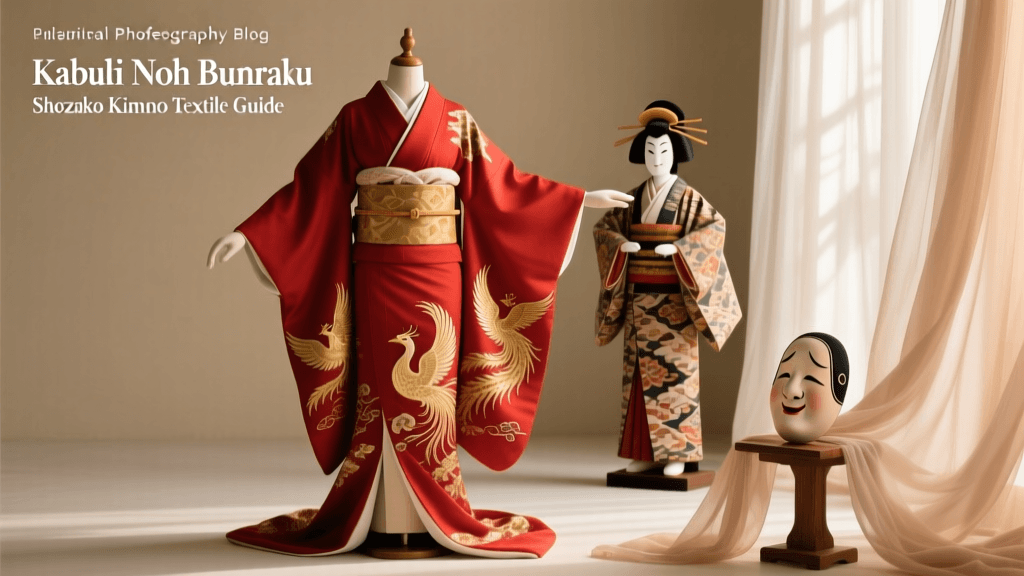
When discussing traditional Japanese garments, the everyday kimono often takes center stage. However, the most breathtaking, structurally complex, and historically significant silk garments are found off the streets and on the stage. In the realm of classical Japanese performing arts, theatrical costumes are collectively known as shozoku. Far from being mere props, these garments are vital storytelling devices, engineered to convey a character's age, social status, emotional state, and even supernatural origins. As of 2026, the intersection of ancient textile preservation and modern exhibition technology has made these masterpieces more accessible to global enthusiasts than ever before.
Japan’s three major classical theater forms—Kabuki, Noh, and Bunraku—each demand entirely distinct approaches to kimono construction, dyeing, and weaving. Understanding the nuances of these theatrical garments offers a profound glimpse into the pinnacle of Japanese textile arts.
Kabuki Isho: Spectacle, Weight, and the Hikinuki Technique
Kabuki is a theater of exaggerated drama, dynamic movement, and visual spectacle. Consequently, Kabuki costumes, known as isho, are designed to command attention from the furthest seats of the theater. Unlike the subdued elegance of everyday wear, Kabuki kimono utilize incredibly bold color palettes, massive family crests (mon), and heavy metallic threading.
The most famous sartorial technique unique to Kabuki is hikinuki, a rapid on-stage costume change. During a dramatic climax, stage assistants (kurogo) pull specific basting threads holding the outer kimono together. In a single fluid motion, the garment falls away or flips inside out to reveal a completely different color and motif, symbolizing a sudden shift in the character's emotion or allegiance. To withstand the violent pulling and the intense physical exertion of the actors, Kabuki kimono are heavily reinforced.
A fully layered Kabuki costume for a high-ranking courtesan (oiran) or a powerful warlord can weigh upwards of 20 kilograms in 2026 reproductions. The sheer volume of the Nishijin-ori (brocade) silk, combined with the thick, padded undergarments required to create the stylized, larger-than-life silhouettes, turns the actor into a living, breathing sculpture. The gold and silver leaf woven directly into the silk catches the stage lighting, creating an aura of opulence that defines the Kabuki aesthetic.
Noh Shozoku: Symbolism, Surihaku, and Yugen
If Kabuki is a shout, Noh is a whisper. Rooted in Zen philosophy and the aesthetic concept of yugen (profound, mysterious grace), Noh theater relies on subtle movements and deep symbolism. The costumes, strictly referred to as shozoku, reflect this restrained elegance. Recognized globally for their cultural significance, Noh's traditions are meticulously documented on the UNESCO Intangible Cultural Heritage list, highlighting the inseparable bond between the performance and its textile arts.
The cornerstone of the Noh wardrobe is the karaori, a stiff, heavily brocaded kimono originally inspired by Chinese weaving techniques. The silk is woven with floating wefts that create a raised, almost three-dimensional motif of pine trees, cranes, or geometric patterns. Because the karaori is incredibly stiff, it does not drape like normal silk. Instead, it stands away from the actor's body, creating a bell-like silhouette that amplifies the actor's subtle shifts in posture.
Another hallmark of Noh costume is surihaku, a technique where gold or silver leaf is pressed directly onto the surface of the silk using a specialized paste, rather than being woven or dyed. This creates a mesmerizing, reflective surface that seems to glow from within the dim, traditional stage lighting. Paired with nuihaku (silk embroidered with metallic threads), these garments are treated as sacred objects by Noh troupes, with some authentic Edo-period robes still carefully rotated into 2026 performances for their unmatched spiritual resonance.
Bunraku Ningyo: Engineering Kimono for the Puppet Stage
Bunraku, Japan’s classical puppet theater, presents a unique engineering challenge for kimono artisans. The puppets (ningyo) are roughly two-thirds the size of a human and are operated by three visible puppeteers. The kimono worn by these puppets must be scaled down perfectly, yet they are crafted using the exact same luxurious silks, dyeing methods, and weaving techniques as full-sized human garments.
The primary difference lies in the structural tailoring. A Bunraku kimono is designed with a split back and open shoulders. This allows the primary puppeteer, who controls the head and right arm, to insert their hand into the costume's torso to manipulate the puppet's internal armatures. The garments must be weighted precisely at the hem to ensure that when the puppet 'walks', the silk sways with a natural, human-like fluidity. If the textile is too heavy, the puppeteer's arm will fatigue; if it is too light, the illusion of a living character is broken. In 2026, master tailors in Osaka continue to hand-stitch these miniature masterpieces, ensuring the internal linings reduce friction against the puppet's wooden joints.
Comparative Analysis: Theatrical Kimono in 2026
To fully appreciate the distinctions between these three art forms, it is helpful to compare the physical and aesthetic properties of their costumes. The following table outlines the core differences in textile application across Japan's classical stages.
| Feature | Kabuki (Isho) | Noh (Shozoku) | Bunraku (Ningyo) |
|---|---|---|---|
| Primary Silk Type | Heavy Nishijin brocade, crepe silk | Stiff Karaori, Surihaku silk | Scaled-down Yuzen-dyed crepe, brocade |
| Garment Weight | Extremely Heavy (up to 20kg layered) | Moderately Heavy (stiff structure) | Lightweight (scaled for puppet armatures) |
| Motif Style | Bold, oversized, dramatic contrasts | Subtle, symbolic, nature-inspired | Proportional to human scale, highly detailed |
| Unique Tailoring | Basted threads for Hikinuki quick-changes | Wide, open sleeves, heavily padded collars | Split back and open shoulders for puppeteers |
The 2026 Preservation Landscape and Artisan Workshops
The creation of theatrical kimono relies on a fragile ecosystem of master artisans, primarily located in the Nishijin district of Kyoto and the dyeing workshops of Kanazawa. As of 2026, the demand for authentic, hand-woven karaori and hand-applied surihaku remains high, but the aging population of master weavers has prompted urgent preservation initiatives. A single, authentic Noh karaori robe can cost upwards of 3,500,000 JPY in 2026, reflecting the hundreds of hours of meticulous hand-looming required to create the floating weft patterns.
To combat the loss of traditional techniques, the Japanese government and private cultural trusts have heavily subsidized apprenticeship programs in 2026. Furthermore, multispectral imaging is now being utilized by the National Theatre of Japan to digitally archive the exact color degradation of natural dyes used in centuries-old garments. This digital preservation ensures that even as organic safflower reds and indigo blues fade over centuries, the exact chemical and visual profiles are saved for future textile restorers.
Experiencing Theatrical Kimono in 2026: A Visitor’s Guide
For travelers and textile enthusiasts visiting Japan in 2026, experiencing these garments extends far beyond buying a ticket to a live performance. Theaters and museums have integrated advanced technologies to allow visitors to inspect the weave and structure of these incredible costumes up close.
- The Kabukiza Gallery (Tokyo): Located in Ginza, the Kabukiza Theatre's dedicated gallery space offers rotating exhibitions of isho. In 2026, they feature augmented reality (AR) terminals where visitors can scan a displayed kimono to watch a holographic overlay of the hikinuki quick-change technique in action.
- The National Noh Theatre (Tokyo): The exhibition hall in Sendagaya provides a quiet, climate-controlled environment to view authentic surihaku and Noh masks. The 2026 audio guides include interviews with master weavers explaining the tension required on the loom to create the stiff karaori silhouette. You can find more about their ongoing cultural programming via the National Theatre of Japan portal.
- The National Bunraku Theatre (Osaka): Located in Nipponbashi, this venue offers backstage tours (when scheduling permits) where visitors can observe the puppeteers and tailors maintaining the intricate silk garments. The theater's 2026 interactive displays allow guests to feel the weight difference between a human-sized Kabuki kimono and a Bunraku puppet kimono.
- Kyoto National Museum: For historical context, the museum's permanent textile wing frequently rotates Edo-period theatrical garments into its display cases. Their 2026 conservation lab viewing sessions allow small groups to watch textile conservators repair microscopic tears in 200-year-old gold leaf applications.
Whether you are marveling at the explosive color of a Kabuki transformation, the quiet, shimmering grace of a Noh spirit, or the mechanical brilliance of a Bunraku silk gown, the theatrical kimono remains one of the most vital, living textile traditions in the world. By understanding the engineering and artistry behind these garments, audiences in 2026 can appreciate that the true magic of Japanese classical theater is woven into every single thread.
For those seeking deeper historical context on how these theatrical forms evolved alongside Japan's textile trade, the UNESCO Kabuki Theatre archive provides extensive documentation on the socio-economic impact of the silk trade on theatrical costume design throughout history.