Japanese Theater Kimono: Kabuki, Noh & Bunraku in 2026
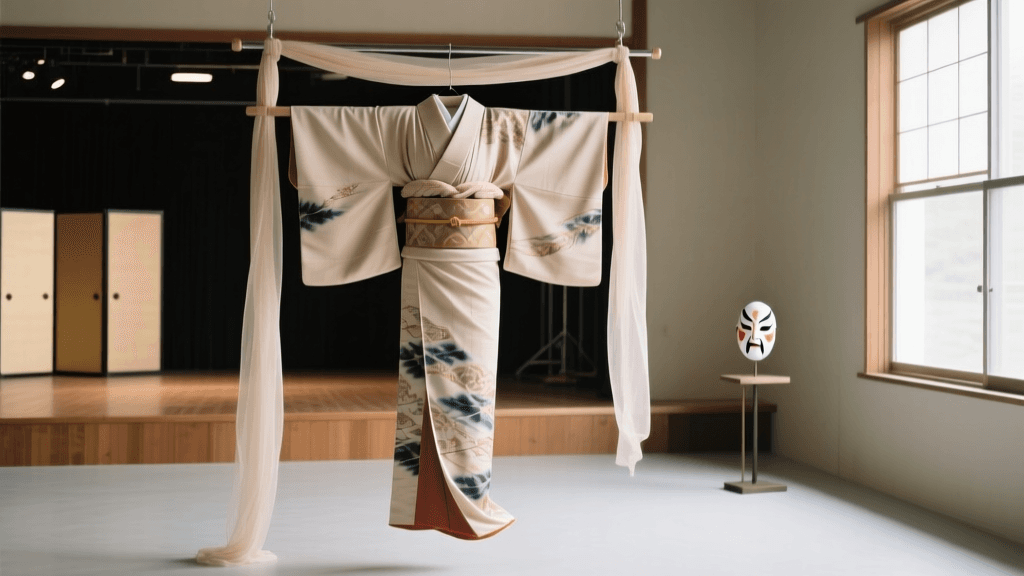
The Living Heritage of Shozoku (Theatrical Costumes)
When we think of the Japanese kimono, the image of elegant, everyday street wear or formal ceremony garments often comes to mind. However, the world of traditional Japanese performing arts relies on a completely different classification of garment known as shozoku. These theatrical costumes are not merely clothing; they are structural, narrative devices designed to amplify movement, denote social status, and convey deep emotional states to audiences sitting far from the stage. As of 2026, the intersection of centuries-old silk weaving techniques and modern preservation technology has created a fascinating backstage reality for Japan's three major classical theater forms: Kabuki, Noh, and Bunraku.
Unlike standard kimono, which prioritize drape and subtle elegance, shozoku are engineered for spectacle, spiritual weight, or mechanical function. In 2026, the artisans of Kyoto's Nishijin weaving district are working alongside theater archives to ensure these massive, intricate garments survive for future generations, utilizing everything from AI-assisted loom programming to replicate lost Edo-period patterns, to advanced climate-controlled storage systems.
Kabuki: The Spectacle of Silk and Exaggeration
Kabuki theater is synonymous with visual extravagance, and its costumes reflect this larger-than-life aesthetic. A lead Kabuki actor's stage presence is heavily dictated by the sheer volume and weight of their shozoku. It is not uncommon for a fully layered Kabuki costume, complete with heavily padded uwagi (outer robes) and wide obi, to weigh between 10 and 20 kilograms. This immense weight forces the actor to adopt the wide, grounded stance characteristic of Kabuki's aragoto (rough style) performances.
One of the most thrilling aspects of Kabuki costuming is the hikinuki technique. This is a rapid, on-stage costume change where an actor's outer kimono is instantly transformed to reveal a completely different garment underneath, signaling a sudden shift in the character's identity or emotional state. Stage assistants dressed entirely in black (kuroko) pull specific basting threads, allowing the outer silk layers to drop away in a fraction of a second. In 2026, the Shochiku costume department, which manages the wardrobe for Tokyo's premier Kabukiza Theatre, has implemented advanced RFID tagging within the inner linings of these complex layered garments. This allows backstage wardrobe masters to instantly track the location, condition, and maintenance schedule of thousands of individual silk pieces using handheld scanners, ensuring no historical textile is misplaced during frantic intermission changes.
Noh: The Spiritual Weight of Karaori
If Kabuki is about explosive visual energy, Noh theater is the embodiment of yugen—a profound, mysterious, and quiet grace. The costumes of Noh, particularly the karaori (stiff, brocaded outer robes worn by female characters) and surihaku (robes with gold or silver leaf pressed into the fabric), are masterpieces of structural textile engineering. According to the UNESCO Nogaku Theatre archives, the aesthetic of Noh is intrinsically tied to the physical limitations and extensions provided by its masks and garments.
A karaori is woven using a technique that creates floating wefts, making the fabric look like intricate embroidery while remaining structurally part of the weave. This results in a textile that is incredibly thick, stiff, and heavy. When a Noh actor dons a karaori, the stiffness of the silk acts almost like a wearable architecture. The actor cannot rely on natural, fluid body movements; instead, they must move from the hips, sliding their feet across the polished cypress stage in a highly controlled, gliding motion known as hakobi. The costume literally dictates the choreography. In 2026, preserving the metallic threads and delicate gold leaf of antique surihaku garments requires specialized low-light, humidity-controlled display cases when they are not in use, preventing the oxidation that plagued theater troupes in previous decades.
Bunraku: Dressing the Puppets in Miniature Masterpieces
Bunraku, Japan's traditional puppet theater, presents a unique challenge in the realm of shozoku. The puppets (ningyo) are approximately one-half to two-thirds the size of a human and are operated by three visible puppeteers. The kimono worn by these puppets are not simply scaled-down human garments; they are meticulously tailored to accommodate the wooden internal mechanisms and the arms of the main puppeteer (omozukai) who operates the head and right arm from within the robe.
The textiles used in Bunraku are exquisite, often featuring miniature yuzen dyeing and scaled-down Nishijin brocades. The challenge for the isho (costume) masters in 2026 is maintaining the flexibility of these silks. Because the puppets are constantly manipulated, folded, and stored, the silk fibers are subjected to immense mechanical stress. Modern backstage teams now use specialized, plant-based silk conditioning treatments that maintain the fabric's tensile strength without leaving residue that could damage the puppet's wooden joints. Furthermore, the layering of the kimono on a Bunraku puppet is designed to create the illusion of a fleshy, human neck and shoulders, using strategically placed cotton padding beneath the silk juban (under-robe).
Comparing the Theatrical Kimono of 2026
To understand the distinct functional requirements of these three art forms, it is helpful to compare their costume characteristics side-by-side. The table below outlines the primary differences in materials, weight, and modern preservation focuses as of 2026.
| Feature | Kabuki Shozoku | Noh Shozoku | Bunraku Ningyo Shozoku |
|---|---|---|---|
| Primary Silk Type | Nishijin-ori Brocade, Yuzen | Karaori & Surihaku | Miniature Yuzen & Brocade |
| Average Garment Weight | 10 - 20 kg (Layered) | 5 - 10 kg (Stiff) | 1 - 3 kg (Scaled) |
| Key Theatrical Function | Hikinuki (Quick Change) | Dictating slow, gliding movement | Concealing puppeteer mechanics |
| 2026 Preservation Focus | RFID Inventory Tracking | Humidity-controlled Tatami Storage | Joint-flexibility silk conditioning |
Preservation and Digital Archiving in 2026
The greatest threat to historical shozoku is not stage wear, but environmental degradation. Silk is a protein fiber highly susceptible to humidity fluctuations, light exposure, and pest damage. The National Theatre of Japan has been instrumental in archiving and preserving these cultural treasures. In 2026, a major initiative was launched to create high-resolution, 3D digital twins of the most fragile Edo-period Kabuki and Noh garments. By mapping the exact drape, weave tension, and layering of these antique costumes, digital archivists can now study the garments without subjecting the physical silk to the stress of being unfolded and handled.
Furthermore, the weaving artisans of Nishijin are utilizing these 3D scans to program modern Jacquard looms, allowing them to perfectly reproduce damaged historical textiles for active stage use. This means that when a 200-year-old Kabuki robe finally becomes too fragile for the stage, an exact, structurally sound replica can be woven using traditional silk threads, ensuring the visual continuity of the performance remains unbroken.
Where to Experience Theater Kimono in 2026
For textile enthusiasts and cultural travelers visiting Japan in 2026, witnessing these garments in action is an unforgettable experience. According to the UNESCO Intangible Cultural Heritage registry, the stylized movements of Kabuki are best appreciated when one understands the physical weight of the costumes. Here is where you can observe them:
- Kabukiza Theatre (Tokyo): Attend a full-day performance and be sure to rent an English audio guide, which often includes specific commentary on the symbolism of the costume colors and patterns. Visit the basement gallery to view retired shozoku up close.
- National Noh Theatre (Tokyo): The adjacent exhibition space frequently rotates displays of antique karaori and Noh masks, offering a rare chance to see the intricate metallic threads of surihaku under specialized museum lighting.
- National Bunraku Theatre (Osaka): Look for backstage tour opportunities or pre-show exhibitions where the internal mechanics of the puppets and the tailored draping of their miniature kimono are explained in detail.
Whether it is the explosive silk transformations of Kabuki, the spiritual, architectural stiffness of Noh, or the mechanical ingenuity of Bunraku, the shozoku of Japan remain a testament to the fact that in traditional Asian theater, the garment is never just clothing—it is the very soul of the performance.