Kabuki Noh Bunraku Stage Kimono Costumes: 2026 Guide
The Art of Shozoku: Beyond the Everyday Kimono
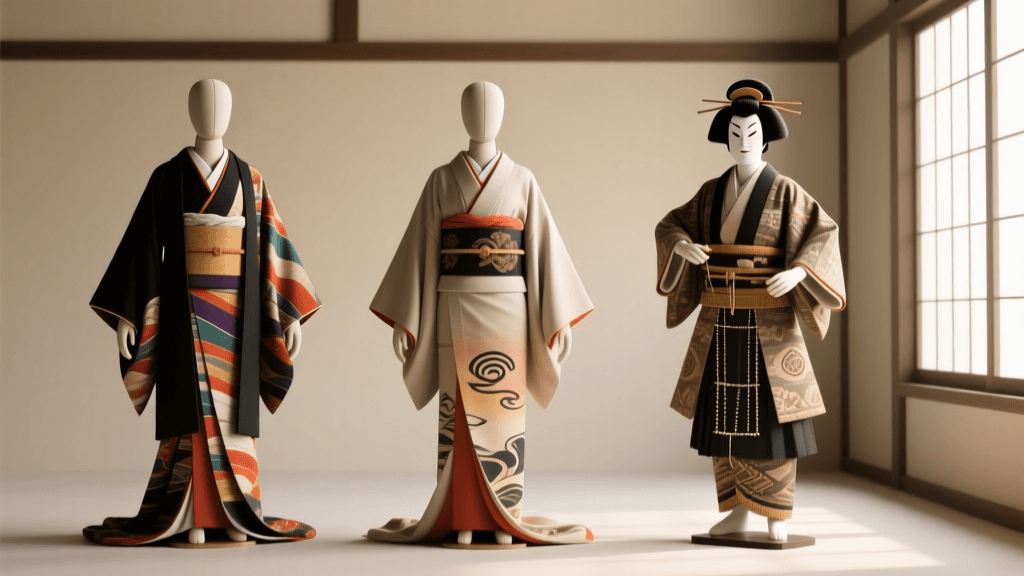
When discussing traditional Japanese garments, the everyday kimono often takes center stage in global fashion discourse. However, the realm of traditional performing arts utilizes a highly specialized category of garments known as shozoku (stage costumes). As we navigate the cultural landscape of 2026, the distinction between street-wear kimono and theatrical shozoku has never been more vital to understand. Stage kimono are not merely clothing; they are structural engineering marvels, narrative devices, and sacred vessels of character. Unlike the tailored, body-hugging silhouettes of modern street kimono, shozoku are designed to manipulate the actor's physical proportions, catch the glare of stage lighting, and facilitate rapid, miraculous transformations in full view of the audience.
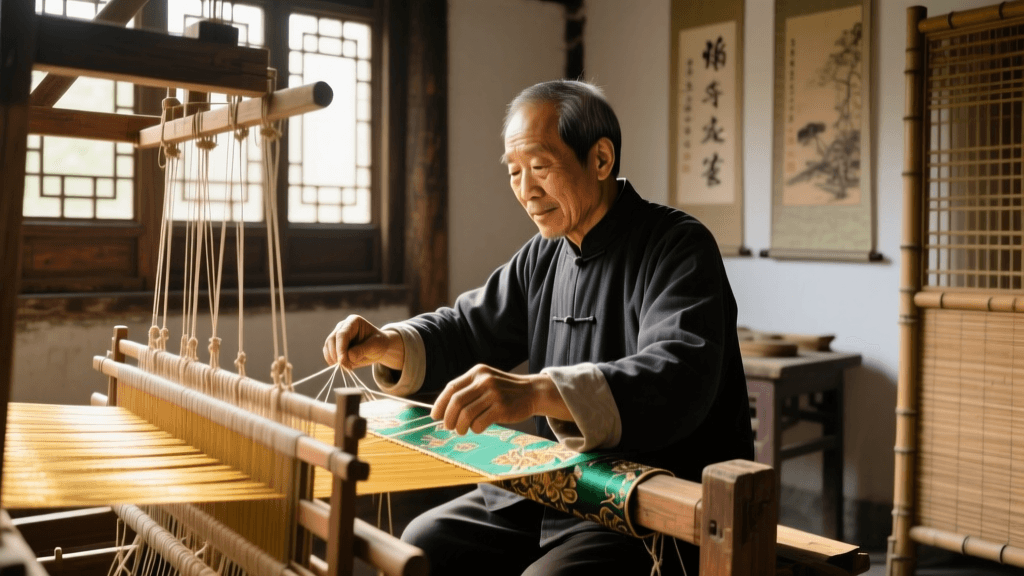
In 2026, the preservation of these theatrical textiles faces both unprecedented technological assistance and severe artisan shortages. The cost of commissioning a bespoke, hand-loomed Nishijin-ori brocade for a lead Kabuki actor now frequently exceeds ¥4,500,000, driven by the scarcity of raw silk and the aging demographic of master weavers in Kyoto. Yet, the demand remains fierce. To understand the genius of Japanese theatrical costuming, one must dissect the unique sartorial requirements of the three major classical forms: Kabuki, Noh, and Bunraku.
Kabuki: Extravagance, Proportions, and the Hikinuki
Kabuki theater is synonymous with visual spectacle, dynamic movement, and larger-than-life characters. Consequently, Kabuki shozoku are designed for maximum impact. The garments are heavily padded to give the actors a broader, more imposing physique, and the colors are intensely saturated to read clearly from the back rows of the theater. A defining feature of Kabuki costuming is the use of chokon (long-sleeved kimono) for young, unmarried female characters or romantic leads, with sleeves that can measure over 110 centimeters in length. These sweeping sleeves are weighted at the corners to create dramatic, pendulum-like arcs during dance sequences.
The most famous mechanical innovation in Kabuki costuming is the hikinuki (thread-pull quick change). During a dramatic climax, stage assistants dressed in black (kurogo) pull specific basting threads, causing the outer costume to instantly fall away and reveal a completely different kimono underneath. In 2026, costume directors at the Shochiku theater company have begun integrating micro-tension synthetic threads into traditional silk basting to ensure the hikinuki mechanism operates flawlessly under the high-humidity conditions of summer tours, reducing the misfire rate to near zero.
Noh Theater: The Spiritual Weight of Kariginu and Choken
In stark contrast to the bombast of Kabuki, Noh theater is an exercise in restraint, subtlety, and yugen (profound, mysterious grace). The stage costumes in Noh, particularly the kariginu (hunting robe) and the choken (dance robe), are masterpieces of Nishijin-ori brocade weaving. According to the UNESCO designation of Nogaku theatre, the spiritual and aesthetic weight of the performance relies heavily on the mask and the costume working in unison to obscure the human actor and manifest a deity, ghost, or spirit.
Noh kimono are woven with stiff, heavy silk threads, often incorporating gold and silver leaf. The stiffness of the textile is intentional; it forces the actor to move with deliberate, gliding steps (hakobi), as the fabric does not drape or flow like standard silk. The choken, worn primarily for female or celestial roles, features an open front and extremely wide sleeves that create a floating, ethereal silhouette when the actor raises their arms. In 2026, the National Noh Theatre in Tokyo has introduced advanced climate-control display cases for their Edo-period choken archives, utilizing argon gas environments to halt the oxidation of the metallic threads without altering the fabric's historic stiffness.
Bunraku Puppetry: Dressing the Wooden Soul
Bunraku, the traditional puppet theater of Osaka, presents a completely unique set of sartorial challenges. The puppets, which are roughly two-thirds the size of a human, are operated by three puppeteers. The kimono worn by these puppets must be structurally modified to accommodate the complex internal armatures and the hands of the puppeteers. A standard Bunraku kimono features a split back and open underarms, allowing the primary puppeteer (the omozukai) to insert their arm through the torso to operate the puppet's head and right arm, while the secondary puppeteers operate the left arm and legs from beneath the fabric.
The textiles used in Bunraku are generally lighter and more pliable than those in Kabuki or Noh, allowing the fabric to drape naturally over the puppet's wooden joints and mimic the subtle shifts of human muscle and breath. The tsume (costume dressers) are unsung heroes of Bunraku; they must pad the wooden shoulders and torsos with cotton and straw to give the puppet a lifelike flesh-and-blood silhouette before rigging the kimono. As of 2026, the Bunraku Association has partnered with textile engineering students at the Kyoto Institute of Technology to develop lightweight, memory-foam padding that mimics human body heat and drape, making the puppets appear even more startlingly alive under modern LED stage lighting.
Comparative Analysis: Kabuki vs. Noh vs. Bunraku Shozoku
To fully grasp the technical divergences between these three theatrical traditions, it is helpful to examine their structural and material differences side-by-side. The following table outlines the primary characteristics of stage kimono across these art forms as documented in 2026 theatrical archives.
| Theater Form | Primary Garment | Textile Weight & Drape | Sleeve Style | Primary Stage Mechanism |
|---|---|---|---|---|
| Kabuki | Happi / Chokon | Heavy Brocade, Padded | Extended (110cm+) | Hikinuki (Thread-pull) |
| Noh | Kariginu / Choken | Stiff Nishijin-ori | Wide, Open, Floating | Layered Reveal / Mask Integration |
| Bunraku | Split-back Kimono | Medium Silk, Pliant | Standard / Modified | Internal Armature Rigging |
The Role of the Koken: Invisible Masters of the Wardrobe
Across all three forms, the stage assistants—known as koken in Kabuki and Noh, and kurogo when dressed in black—are vital to the lifecycle of the stage kimono. In Kabuki, these assistants do not merely help with quick changes; they actively manage the kimono's silhouette during the performance. If an actor strikes a dramatic pose (mie), the koken will swiftly adjust the hem, fan out the sleeves, and ensure the obi knot is perfectly centered. In 2026, training programs for koken have become highly formalized, with apprentices spending up to five years learning the precise tension required to adjust a heavy brocade kimono without disrupting the actor's concentration or breaking the theatrical illusion.
2026 Preservation Efforts and Global Exhibitions
The survival of traditional shozoku is inextricably linked to the survival of the artisans who weave, dye, and embroider them. The Japanese government's Agency for Cultural Affairs has significantly increased subsidies in 2026 for apprentices studying traditional surihaku (gold-leaf imprinting) and kara-ori (floating weave brocade) techniques. Without these interventions, the knowledge required to recreate the complex, multi-layered textiles of the Edo period would be lost.
For international enthusiasts and textile scholars, 2026 offers remarkable opportunities to view these garments up close. The National Theatre of Japan in Tokyo regularly hosts backstage tours and costume exhibitions that allow visitors to examine the intricate padding and hidden rigging of Bunraku and Kabuki garments. Furthermore, according to the UNESCO Intangible Cultural Heritage registry for Kabuki, international touring troupes are now traveling with specialized, climate-controlled mobile wardrobes, ensuring that these priceless silk masterpieces can be safely exhibited in museums from London to New York without suffering from environmental degradation.
Whether you are a textile collector, a theater historian, or a fashion designer seeking inspiration, understanding the profound differences between Kabuki, Noh, and Bunraku stage kimono reveals a hidden world where fashion is not merely worn, but engineered to transcend the boundaries of the human form. The shozoku of 2026 stand as a testament to Japan's enduring ability to balance ancient, painstaking craftsmanship with the rigorous, unforgiving demands of the living stage.