Hanbok Jeogori Construction: Mastering Baerae Sleeves in 2026
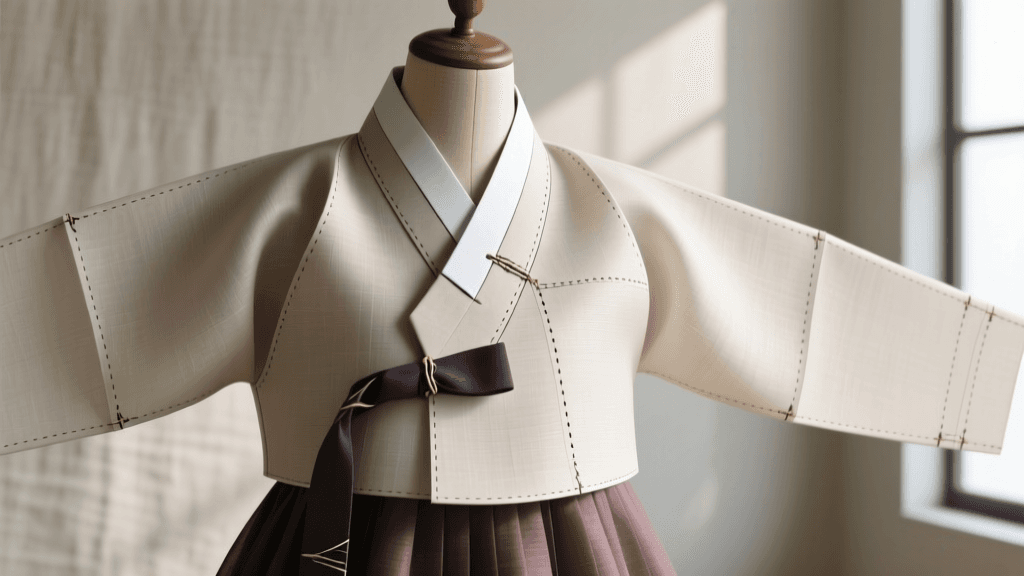
The Architectural Marvel of the Jeogori
The traditional Korean hanbok is a masterclass in structural elegance, and at the heart of its upper garment, the jeogori, lies one of the most fascinating feats of textile engineering: the baerae sleeve. Unlike Western tailoring, which relies on complex, curved armscyes and gussets to accommodate the human shoulder, the baerae achieves a sweeping, architectural curve through flat-pattern cutting and strategic seam placement. As the global fashion industry pivots toward zero-waste design and circular textiles in 2026, the construction techniques of the jeogori offer profound lessons for modern patternmakers, sustainable brands, and heritage artisans.
In 2026, the intersection of heritage craftsmanship and sustainable technology has brought traditional Asian garment construction to the forefront of eco-conscious design. By studying the baerae, contemporary designers are discovering how to maximize fabric utility while maintaining fluid mobility and striking silhouettes.
The Zero-Waste Philosophy of Saedan Cutting
To understand the baerae, one must first understand the traditional Asian approach to textile weaving and cutting. Historically, fabrics were woven on narrow backstrap or floor looms, producing bolts of cloth known in Korea as saedan. A standard saedan bolt is approximately 30 to 35 centimeters wide and 6 to 8 meters long. Instead of cutting curves into the fabric and discarding the offcuts, traditional tailors utilized the entire width of the bolt.
This straight-grain, rectangular cutting method ensures that nearly 100% of the woven textile is incorporated into the final garment. In an era where the 2026 Global Fashion Waste Report highlights that up to 15% of fabric is wasted on the cutting room floor in conventional Western manufacturing, the saedan methodology represents a gold standard for zero-waste pattern drafting. The jeogori is constructed by folding, piecing, and seaming these narrow rectangles, allowing the garment to be completely disassembled and re-tailored as the wearer's body changes over time.
Anatomy of the Baerae: Engineering the Curve
The baerae refers specifically to the curved underarm seam of the jeogori sleeve (somae). While the top of the sleeve is cut completely straight and attaches to a straight shoulder seam, the bottom edge features a gentle, sweeping curve that mimics the natural hang of a draped fabric.
"The beauty of the baerae lies in its illusion. It is born from strict geometric rectangles, yet it blooms into a soft, organic curve that cradles the arm without restricting movement." — Master Tailor Kim, Seoul Heritage Guild, 2026.
The curve is achieved not by cutting a crescent shape out of the fabric, but by folding and easing the straight edge during the sewing process, combined with the addition of the mu (a small triangular gusset, though historically the baerae curve evolved to eliminate the need for a gusset entirely). The sleeve finishes with a contrasting or matching cuff called the kkeutdong, which adds structural weight to the hem, ensuring the sleeve drapes perfectly when the arms are at rest.
Step-by-Step Construction Guide for 2026
Constructing a jeogori requires precision, patience, and an understanding of hidden seam finishes. Modern artisans in 2026 often blend traditional hand-stitching with advanced, eco-friendly textiles like lab-grown peace silk and organically dyed ramie.
1. Material Selection and Preparation
- Fabric: 100% organic ramie or peace silk (approx. 35cm width, 4 meters long).
- Lining: Lightweight organic cotton or cupro for breathability.
- Thread: Silk or long-staple cotton thread, heavily waxed for tension control.
- Collar (Git) and Tie (Goreum): Stiffened with natural rice paste or modern biodegradable interfacing.
2. Drafting the Flat Pattern
The pattern is drafted entirely in rectangles. The body panels (gil) are cut to the exact circumference of the wearer's chest plus ease, divided into front and back panels. The sleeves are cut as long rectangles, extending from the nape of the neck to the wrist. The baerae curve is marked on the lower edge of the sleeve rectangle, typically dropping 5 to 8 centimeters at the deepest point near the side seam, tapering back to the straight cuff edge.
3. The Art of Hidden Stitching (Soseulchim)
Because the jeogori is often unlined or lined with delicate fabrics, interior seams must be immaculate. The soseulchim (blind hemming) and godeulmagi (backstitching) techniques are used to enclose all raw edges. In 2026, many contemporary tailors use a 2-millimeter seam allowance, folding it twice and slip-stitching it to the lining so that no stitching is visible on the exterior of the garment. This creates a clean, minimalist aesthetic that aligns perfectly with modern luxury standards.
Structural Comparison: Baerae vs. Western Set-In Sleeve
Understanding the functional differences between traditional Asian flat-cutting and Western 3D draping is crucial for designers looking to integrate these techniques into modern collections.
| Feature | Hanbok Baerae Sleeve | Western Set-In Sleeve |
|---|---|---|
| Pattern Base | Rectangular flat-cut with curved lower seam | Curved 3D cap and shaped armscye |
| Fabric Waste | Near 0% (utilizes full saedan width) | 15-20% waste from curved cutting |
| Shoulder Stress | Distributed across straight grain | Concentrated at the armhole seam |
| Mobility | High (excess fabric allows upward lift) | Restricted by tailored cap height |
| Alterability | Highly modular, easy to resize or disassemble | Complex, requires recutting the bodice |
Sustainable Fashion and the Baerae in 2026
The integration of the baerae sleeve into contemporary fashion is one of the most exciting trends of 2026. Sustainable streetwear brands and high-fashion houses alike are adopting the flat-pattern cutting method to meet strict new European and Asian zero-waste textile regulations. By utilizing the straight-grain shoulder and curved underarm, designers are creating oversized, gender-fluid outerwear that requires minimal pattern manipulation and drastically reduces cutting room waste.
Furthermore, the modularity of the jeogori construction supports the growing "right to repair" and circular fashion movements. Because the garment is pieced together from flat rectangles using hidden, easily unpicked stitches, a damaged sleeve or stained cuff can be removed, replaced, or re-dyed without compromising the structural integrity of the bodice. According to the Encyclopedia of Korean Culture, the historical evolution of the baerae curve reflects centuries of refinement aimed at balancing aesthetic grace with practical longevity, a philosophy that resonates deeply with today's eco-conscious consumers.
Institutions highlighting Asian textile heritage, such as the Victoria and Albert Museum, continue to emphasize the sustainability inherent in these historical garments. As we move through 2026, the baerae stands not merely as a relic of the past, but as a vital, forward-looking blueprint for the future of zero-waste garment construction. Mastering this technique requires a shift in perspective—from forcing fabric to fit a 3D mold, to allowing the geometry of the textile to dictate the flow of the garment.