Japanese Fashion School Kimono Workshops 2026: Online & Hybrid Guide
The Renaissance of Traditional Garment Education in 2026
The global appetite for sustainable, heritage-based fashion has reached unprecedented heights in 2026, driving a massive surge in enrollment for traditional Japanese garment workshops. As the fashion industry pivots away from fast fashion, students and professionals alike are looking toward the meticulous craftsmanship of Japanese textile arts. Institutions that were once exclusively in-person, requiring years of residency in Tokyo or Kyoto, have now perfected the hybrid learning model. Today, aspiring designers can master the intricate construction of the kimono, the resist-dyeing techniques of Yuzen, and the geometric precision of Sashiko from anywhere in the world, culminating in short, intensive in-person residencies in Japan.
This comprehensive guide explores the premier Japanese fashion school workshops available in 2026, focusing on how online and hybrid programs are preserving the sacred art of monozukuri (the art of making things) while adapting to a digital-first educational landscape.
The Shift to Hybrid Learning: Preserving Heritage Digitally
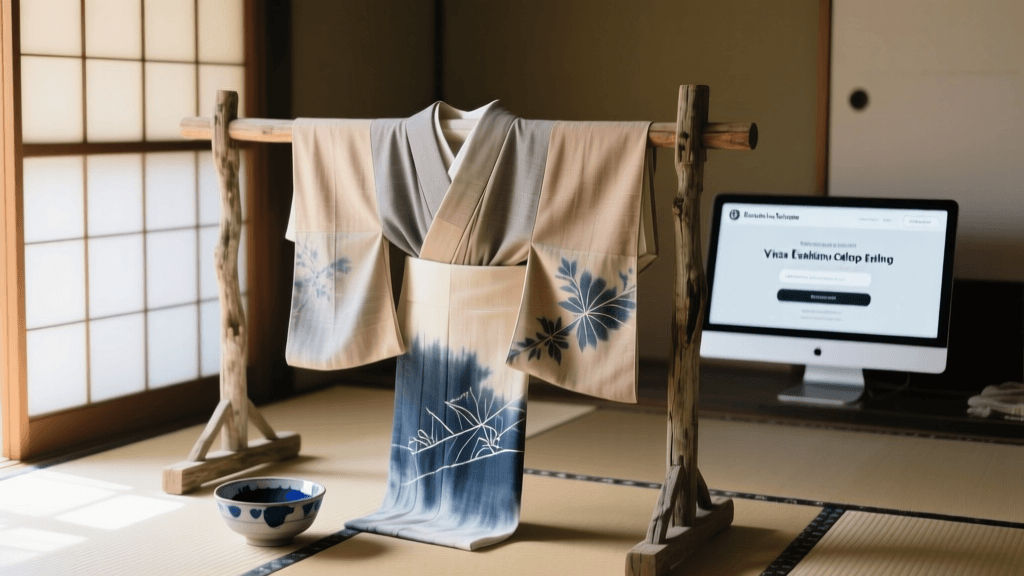
Historically, learning traditional Japanese garment making required an apprenticeship or full-time enrollment in a specialized vocational school. However, the educational shifts of the early 2020s forced institutions to digitize their curricula. By 2026, this was no longer a temporary compromise but a highly refined pedagogical strategy. Top-tier schools now utilize multi-camera 4K streaming setups in their dyeing labs, allowing remote students to observe the subtle color shifts in natural indigo vats in real-time.
According to cultural education reports from The Japan Foundation, international enrollment in Japanese traditional craft courses has increased by 42% since 2024, largely driven by these accessible hybrid models. The foundation has actively subsidized digital infrastructure for heritage programs, ensuring that the nuances of silk manipulation and natural dye chemistry can be taught effectively across borders.
Spotlight on Bunka Fashion College’s 2026 Curriculum
Bunka Fashion College in Tokyo remains the undisputed titan of Japanese fashion education. While globally renowned for its avant-garde contemporary design alumni, Bunka’s traditional garment departments have seen a massive revitalization. In 2026, their flagship hybrid program, Kimono Pattern Drafting and Yuzen Dyeing, offers a 16-week online theoretical and practical foundation, followed by a mandatory two-week intensive workshop at their Shinjuku campus.
The online portion covers the mathematical precision of the shaku (traditional Japanese measuring system), flat-pattern drafting for various kimono styles (including the formal furisode and casual yukata), and the digital simulation of Yuzen paste application. Students receive a comprehensive physical toolkit shipped globally, which includes traditional bamboo rulers, silk basting threads, and resist paste alternatives for home practice. The final two weeks in Tokyo are dedicated to working with master dyers on actual silk bolts, utilizing the school's professional steaming and washing facilities.
Kyoto University of the Arts: Mastering Shibori and Indigo
For those drawn to the organic, unpredictable beauty of textile manipulation, the Kyoto University of the Arts offers an exceptional 100% online certificate in Shibori and Natural Dyeing. Unlike Bunka’s hybrid requirement, Kyoto’s 2026 program is designed for global practitioners who cannot travel to Japan. The curriculum focuses heavily on the chemistry of natural dyes, specifically the cultivation and fermentation of Japanese indigo (Persicaria tinctoria).
Students are sent monthly 'dye-lab' kits containing pre-reduced indigo, mordants, and various binding tools (such as kanoko binding threads and itajime wooden clamps). The virtual classroom emphasizes the environmental sustainability of natural dyeing, a critical talking point in 2026's eco-conscious fashion industry. Graduates frequently go on to launch sustainable denim and slow-fashion labels that utilize traditional Japanese shibori techniques.
Comparing Top Japanese Fashion School Workshops for 2026
Choosing the right program depends on your career goals, budget, and willingness to travel. Below is a comparison of the top three traditional garment workshops available to international students this year.
| Institution | Program Focus | Format | 2026 Tuition (Approx.) |
|---|---|---|---|
| Bunka Fashion College | Kimono Pattern Drafting & Yuzen | Hybrid (16 Wks Online + 2 Wks Tokyo) | ¥380,000 ($2,500 USD) |
| Kyoto University of the Arts | Shibori & Natural Indigo Dyeing | 100% Online with Material Kits | ¥150,000 ($1,000 USD) |
| Tokyo Mode Gakuen | Modern Sashiko & Upcycling | Weekend Virtual Workshops | ¥85,000 ($560 USD) |
Note: Tuition fees for 2026 do not include international shipping for material kits or travel/accommodation costs for hybrid intensives.
Essential At-Home Toolkit for Online Students
Success in a hybrid or online traditional garment course relies heavily on having the correct tools. Western sewing kits are insufficient for the zero-waste, straight-line construction of the kimono. If you are enrolling in a 2026 program, ensure you have the following specialized items:
- Shaku (Traditional Ruler): Unlike standard metric rulers, the shaku is based on the traditional Japanese measurement system (1 shaku = approx. 37.9 cm). Pattern drafting requires thinking in these proportions to ensure the garment drapes correctly on the body.
- Hera (Silk Spatula): A smooth, rounded bamboo or Teflon tool used for creasing silk and applying resist paste without snagging the delicate fibers.
- Kakehari (Tensioning Tool): Essential for Yuzen dyeing and Sashiko embroidery. This wooden clamp and needle system stretches the fabric taut, allowing for even dye penetration and perfectly straight running stitches.
- Kuge (Basting Thread): Traditional kimono construction relies entirely on basting before final sewing. You will need spools of weak, easily breakable cotton basting thread that can be removed without damaging vintage or delicate silks.
- Digital Fabric Scale (0.1g precision): Crucial for online dyeing students to measure natural mordants and indigo extracts accurately, as natural dye chemistry is highly sensitive to weight ratios.
Navigating the In-Person Intensive: Travel and Visas
For students enrolled in hybrid programs like Bunka’s, the final in-person intensive is a rite of passage. In 2026, Japan has streamlined the visa process for short-term cultural study. Most international students attending a two-to-four-week intensive workshop can enter on a standard Temporary Visitor visa, provided the school issues a formal Certificate of Workshop Enrollment. This document proves that the primary purpose of the visit is cultural education rather than paid employment.
However, students must book their accommodations well in advance. The areas surrounding major fashion districts, such as Shinjuku (Tokyo) and Kamigyo (Kyoto), have seen a resurgence in boutique student housing. Many schools now partner with local machiyas (traditional wooden townhouses) to offer immersive living experiences, allowing students to practice their garment draping and styling in authentic architectural settings.
'The kimono is not merely a garment; it is a canvas of cultural memory. When we teach a student in London or New York how to fold a silk bolt via a digital stream, we are not just teaching them to sew. We are entrusting them with a centuries-old philosophy of zero-waste design and respect for the material.' — Director of Traditional Textiles, Bunka Fashion College, 2026 Syllabus Introduction.
Career Outcomes: From Heritage to Global Runways
Why invest time and money into learning traditional Japanese garment making in 2026? The answer lies in the current demands of the global luxury and sustainable fashion markets. Major European and American fashion houses are actively recruiting artisans who understand traditional Asian textile manipulation. Techniques like Sashiko (functional embroidery) and Boro (mending and patchwork) have moved from rural Japanese necessities to high-end runway staples, championed by brands focusing on upcycling and circular fashion.
Furthermore, graduates of these 2026 workshops are uniquely positioned to launch their own slow-fashion labels. By combining the structural genius of kimono pattern drafting—which utilizes the entire width of the fabric bolt without generating offcuts—with modern aesthetics, designers can create highly marketable, zero-waste collections. The online and hybrid workshops offered by Japan's top fashion schools are no longer just historical preservation efforts; they are incubators for the future of sustainable global fashion.
Final Thoughts on Enrolling in 2026
The accessibility of Japanese traditional garment education has never been greater. Whether you choose the rigorous, hybrid pattern-drafting courses at Bunka Fashion College, the deep-dive natural dyeing labs at Kyoto University of the Arts, or the weekend upcycling workshops at Tokyo Mode Gakuen, you are stepping into a lineage of master craftspeople. As you prepare your portfolio and application for the upcoming 2026 academic terms, ensure your home studio is equipped, your understanding of sustainable textiles is sharp, and your respect for the heritage of the craft is absolute. The future of fashion is deeply rooted in the traditions of the past, and Japan's fashion schools are holding the map.