The Collector's Guide to Vintage Taisho Roman Kimonos
The Allure of Taisho Roman and Early Showa Kimonos
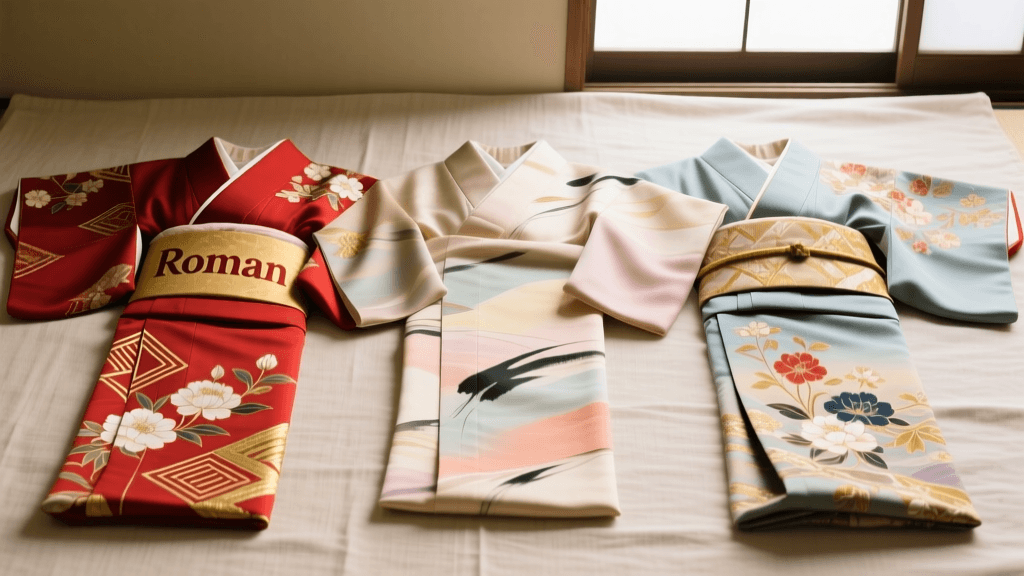
Collecting vintage Japanese garments is far more than a simple hobby; it is an active participation in cultural preservation and textile archaeology. For serious collectors of Asian traditions, the most coveted pieces often originate from a very specific, fleeting window of Japanese history: the Taisho era (1912–1926) and the early Showa era (1926–1945). This period birthed the 'Taisho Roman' aesthetic, a fascinating cultural movement where traditional Japanese sensibilities collided with Western Art Deco, modernism, and romanticism.
Unlike the highly formal, heavily regulated garments of the preceding Edo period, or the post-war synthetic blends that flooded the market, Taisho Roman kimonos represent a golden age of textile innovation. They feature bold, graphic patterns, vibrant synthetic dyes, and an unapologetic embrace of modernity. For the vintage collector, finding a well-preserved Taisho Roman kimono is akin to discovering a wearable piece of early 20th-century pop art.
The Magic of Meisen Silk
You cannot discuss vintage Taisho collecting without understanding meisen silk. Meisen is a type of ikat (kasuri) woven silk that became massively popular among everyday women, students, and the burgeoning middle class during the Taisho and early Showa periods. According to The Metropolitan Museum of Art's Heilbrunn Timeline of Art History, the evolution of Japanese dress during the 20th century was heavily influenced by new weaving technologies and shifting social classes, with meisen standing at the forefront of this democratization of fashion.
Meisen was created using a technique called hogushiori (warp printing). The silk threads were tightly bound and dyed before weaving, resulting in a fabric with a slightly blurred, painterly edge to its patterns. Because the threads were pre-dyed, the colors remained incredibly vibrant, and the fabric was highly durable. Today, collectors prize meisen for its graphic motifs—ranging from stylized roses and Art Deco geometric shapes to abstract landscapes and even modernist architecture.
How to Authenticate Vintage and Antique Kimonos
The vintage market is flooded with modern reproductions and mislabeled garments. Authenticating a true Taisho or early Showa kimono requires a trained eye and an understanding of traditional garment construction. Here are the critical markers to examine when evaluating a potential acquisition.
Examining the Collar: Hiro-eri vs. Bachi-eri
The collar construction is one of the most reliable indicators of a kimono's age. Garments from the Meiji (1868–1912) and early Taisho eras frequently feature a hiro-eri (wide collar), which is a wide, folded band of fabric that the wearer must fold and pin into place when dressing. By the mid-Taisho and early Showa eras, the bachi-eri (narrower, tapered collar) became the standard. A bachi-eri is sewn down and tapers from a wider fold at the back of the neck to a narrower edge at the front hem. Finding a pristine hiro-eri on a meisen kimono is a strong indicator of an earlier, highly desirable Taisho piece.
Inspecting the Linings and Seams
Turn the garment inside out. Authentic vintage kimonos are entirely hand-stitched. Look for the kise, a technique where the seam allowance is slightly folded under to protect the threads and allow the fabric to drape naturally. Machine stitching is an immediate red flag for a post-1960s garment or a modern reproduction.
Additionally, examine the hakkake (the lower lining of the skirt). In many Meiji and Taisho era kimonos, the hakkake was made of a contrasting, vibrant red silk or cotton, believed to ward off evil spirits and add a flash of color when walking. The upper lining, or douura, was often plain white or lightly patterned silk. If the lining is made of modern polyester or features a machine-serged edge, the garment is not an antique.
Checking the Textile and Dyes
Vintage silk has a distinct tactile quality. Meisen silk, in particular, has a smooth, slightly crisp 'crunch' when handled, unlike the soft, fluid drape of modern chirimen (crepe) silk. Furthermore, early synthetic dyes used in the 1920s and 1930s often possess a specific, almost neon-like vibrancy in pinks, purples, and greens that is difficult to replicate with modern chemical dyes.
Sourcing and Pricing Guide
Sourcing authentic vintage kimonos requires patience and a willingness to navigate both domestic Japanese markets and international auction houses. As documented in The Victoria and Albert Museum's Asian Collections, the global appreciation for Japanese textiles has created a robust international market, driving up prices for pristine, museum-quality examples while leaving plenty of accessible options for everyday collectors.
| Era | Defining Aesthetics | Common Textiles | Estimated Market Value (USD) |
|---|---|---|---|
| Meiji (1868-1912) | Subdued nature motifs, family crests (mon), hiro-eri collars | Chirimen (crepe), Rinzu (satin damask) | $150 - $600+ |
| Taisho (1912-1926) | Art Deco, Taisho Roman, bold geometry, vibrant florals | Meisen silk, Oshima Tsumugi | $200 - $850+ |
| Early Showa (1926-1945) | Transition to bachi-eri, war-time restrictions, muted tones | Rayon, subdued Meisen, Wool | $80 - $350 |
Where to Buy
- Yahoo! Auctions Japan (Yahuoku): The holy grail for serious collectors. Requires a proxy bidding service (like Buyee or ZenMarket) but offers the widest selection and lowest base prices.
- Oedo Antique Market (Tokyo): Held on the first and third Sundays at the Tokyo International Forum. Excellent for inspecting textiles in person, though prices carry a tourist premium.
- Specialized Online Dealers: Websites like Kimonoy.com or Ichiroya specialize in vintage exports. They are more expensive but provide accurate measurements, condition reports, and reliable shipping.
Red Flags When Buying Online
'Never trust a listing that describes a kimono simply as "one size fits all." Traditional garments are tailored to specific heights and arm spans, and ignoring these measurements will result in an unwearable piece.'
- Missing Measurements: If the seller does not provide the mitake (back length) and yuki (sleeve length from center back), walk away. A kimono's mitake should ideally match the wearer's height.
- 'Dry Clean Only' Tags: Traditional kimonos do not have modern care tags sewn into the side seams. If you see a printed polyester care label, it is a modern mass-produced garment.
- Permanent Creases: While vintage silk will have fold lines from storage, deep, discolored creases indicate poor storage and potential fabric degradation (dry rot).
Preservation and Wardrobe Organization
Acquiring a Taisho Roman kimono is only half the battle; preserving it for the next century is the true responsibility of the collector. Antique silk is highly susceptible to light damage, humidity fluctuations, and acid degradation.
The Art of Tatou (Wrapping)
Never store vintage kimonos on wire hangers or in plastic garment bags. Plastic traps moisture and off-gasses chemicals that will shatter antique silk over time. Instead, adopt the traditional Japanese method of storage. Garments should be folded using the hon-datami method and wrapped in tatou (acid-free, traditional Japanese paper wrappers). If authentic washi paper tatou are unavailable, use unbuffered, acid-free archival tissue paper.
Environmental Controls
Store your wrapped garments flat in cedar drawers or archival plastic bins (made of polypropylene) in a cool, dark, and climate-controlled room. Ideal humidity levels should be maintained between 45% and 55%. In Japan, collectors practice mushiboshi (airing out the garments) twice a year, usually in the dry, crisp days of late autumn or early winter. Unfold the kimonos, let them breathe in a shaded, well-ventilated room for a day, and refold them along different lines to prevent permanent stress on the silk fibers.
Conclusion
Collecting vintage Taisho Roman and early Showa kimonos is a deeply rewarding pursuit that bridges the gap between fashion history and textile art. By understanding the nuances of meisen weaving, mastering the physical markers of authentication, and committing to proper archival preservation, collectors can ensure that these vibrant echoes of Japan's modernist past continue to be studied, admired, and cherished for generations to come.