Jingle Dress Regalia 2026: Materials, Costs, and Powwow Rules
The Living Medicine of the Jingle Dress
The jingle dress is far more than a vibrant garment; it is a living, breathing entity of healing, resilience, and profound spiritual significance. Originating from the Ojibwe (Chippewa) people in the early 20th century, the jingle dress was born from a vision of healing during a time of widespread illness. Today, as we navigate the 2026 powwow season, the dress remains a powerful symbol of Indigenous medicine, echoing across dance arenas from the Pacific Northwest to the Great Lakes. For artisans, dancers, and cultural historians alike, understanding the intricate construction, material sourcing, and strict etiquette surrounding the jingle dress is essential.
According to the Smithsonian National Museum of the American Indian, the jingle dress dance has evolved from a localized healing ceremony into a staple of the intertribal powwow circuit. Yet, despite its widespread popularity in competition and exhibition, the foundational rules of respect, modesty, and acoustic tradition remain fiercely protected by Indigenous communities. Whether you are an emerging dancer preparing for your first regional competition or a seasoned regalia maker adapting to 2026 textile markets, mastering the anatomy of the jingle dress requires a blend of historical reverence and modern practicality.
Sourcing Materials for the 2026 Season
Creating an authentic jingle dress requires careful selection of fabrics, ribbons, and, most importantly, the metal cones that give the dress its signature voice. In 2026, the rising costs of raw metals and global shipping delays have shifted how regalia makers source their materials. Artisans are increasingly turning to Indigenous-owned supply cooperatives and specialized North American metalworkers to ensure their materials are ethically sourced and acoustically superior.
Fabric and Ribbon Selection
The base of a traditional jingle dress is typically made from 100% cotton calico or broadcloth. These natural fibers are preferred because they breathe well during intense summer powwows and provide a sturdy matrix to support the heavy weight of the metal cones. For a standard adult dress, you will need between 5 to 7 yards of 45-inch-wide fabric. In 2026, high-quality, fade-resistant calico prints average $14 to $22 per yard. Many contemporary dancers also incorporate crushed velvet or high-grade satin for the yoke and appliqué work, adding a dynamic visual contrast when the dancer spins.
Ribbon work is another critical element. Wide satin or grosgrain ribbons are used to create the geometric appliqué patterns on the skirt and sleeves. Grosgrain is highly recommended for the structural rows where cones are attached, as its ribbed texture prevents the leather thongs from slipping, ensuring the jingles remain evenly spaced throughout a rigorous dance routine.
Metal Jingles: The Voice of the Dress
The metal cones, or 'jingles,' are the heart of the regalia. Historically, these were crafted from repurposed tin tobacco can lids, rolled into conical shapes. Today, while some traditionalists still hand-roll vintage lids for historical accuracy, most dancers purchase commercially stamped or rolled cones. The acoustic profile of your dress depends entirely on the metal you choose. Below is a comparison of the most popular cone types available in the 2026 market.
| Cone Type | Material | Sound Profile | 2026 Avg Cost (per gross/144) | Best Application |
|---|---|---|---|---|
| Rolled Nickel | Nickel/Steel Blend | Bright, sharp, loud, and piercing | $55 - $75 | Competition Dancing |
| Stamped Silver | Silver-Plated Brass | Melodic, soft chime, resonant | $95 - $140 | Traditional/Healing Ceremonies |
| Vintage Lids | Repurposed Tin | Deep, hollow, rhythmic clack | $40 - $60 (Scavenged) | Historical Accuracy & Elders |
| Rolled Copper | Pure Copper | Warm, muted, earthy tone | $80 - $110 | Specialty Acoustic Blending |
When purchasing cones, always buy at least 20% more than your calculated need. Cones can bend, split, or tarnish over time, and having a matching reserve ensures your dress maintains its uniform sound and appearance throughout the powwow season.
Construction, Measurements, and the '365' Tradition
The construction of a jingle dress is a masterclass in weight distribution and acoustic engineering. A widely respected tradition dictates that a healing jingle dress should contain exactly 365 cones—one for every day of the year, representing continuous prayer and medicine. However, in the modern competition arena, the physical toll of wearing 365 heavy metal cones (which can add 15 to 20 pounds to the garment) has led to adaptations.
Many 2026 competition dancers opt for 'Fancy' or 'Contemporary' jingle dresses that feature between 150 and 250 cones. This reduction allows for the high kicks, rapid spins, and athletic footwork required in modern contest categories, while still generating the iconic 'wall of sound.' If you are building a traditional dress for healing or exhibition, the 365-cone rule is strongly encouraged.
Spacing and Attachment
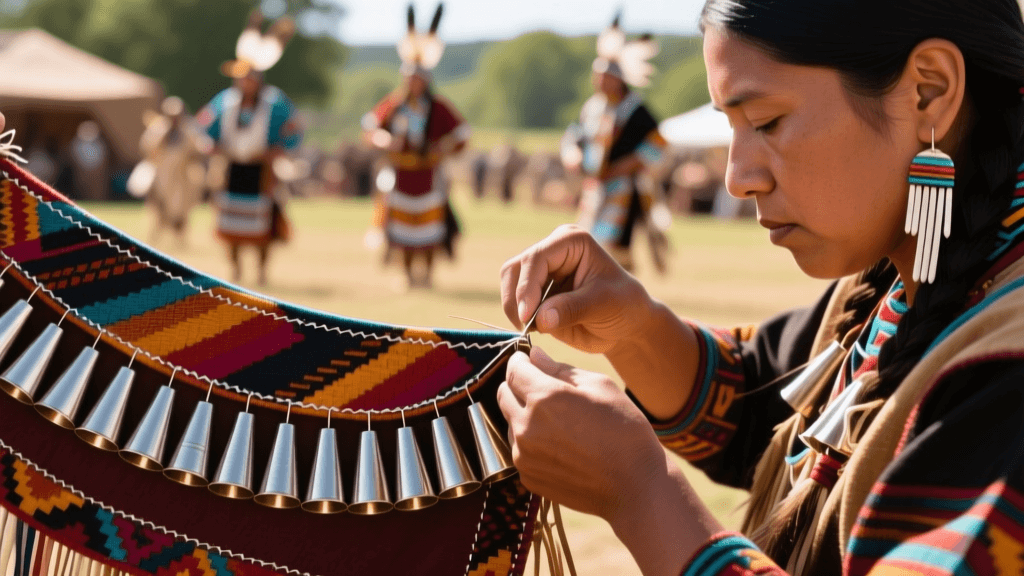
The jingles are attached using leather thongs or heavy-duty waxed cotton cord, tied to the ribbon rows on the skirt. The standard spacing is approximately 1.5 to 2 inches apart. If the cones are placed too closely, they will tangle and muffle the sound; if placed too far apart, the dress will lose its rhythmic continuity. The rows themselves are usually spaced 3 to 4 inches vertically. It is crucial to tie the cones so they hang freely and strike one another when the dancer steps, rather than lying flat against the fabric.
The yoke and sleeves are often adorned with intricate beadwork, typically featuring floral motifs native to the Great Lakes region or geometric patterns reflecting the dancer's specific tribal affiliation. In 2026, many artisans are utilizing advanced, eco-friendly synthetic sinews that resist fraying and humidity, ensuring the beadwork remains intact during sudden summer rainstorms common at outdoor powwows.
2026 Powwow Arena Etiquette and Competition Standards
Understanding the etiquette of the jingle dress is just as important as knowing how to sew it. As highlighted by resources like Powwows.com, the regalia is considered sacred medicine. You must never touch another person's regalia without explicit permission. If a dancer drops a cone or a piece of beadwork in the arena, it is customary to treat the item with the same respect as a dropped eagle feather; the music will often stop, and a designated elder or arena director will retrieve it, sometimes requiring a brief prayer or tobacco offering before the dancer may resume.
In the 2026 competition circuit, judges are increasingly scrutinizing the authenticity and cultural integrity of the regalia. Dancers are expected to demonstrate modesty in their dress construction. Hemlines typically fall below the knee, often reaching the mid-calf or ankle, and necklines remain high. The 'toe-heel' footwork is the gold standard for Traditional Jingle categories, where the dancer must keep one foot in contact with the earth at all times, symbolizing a continuous connection to Mother Earth. The rhythmic stepping is what activates the cones, creating a sound that mimics the gentle, persistent patter of rain.
Furthermore, cultural appropriation remains a critical topic in the Indigenous arts community. Publications like ICT News frequently report on the ongoing efforts by Native artisans to protect their traditional designs from mass-market knockoffs. If you are non-Indigenous and wish to support the jingle dress tradition, the most respectful action is to commission and purchase directly from verified Native American and First Nations beadworkers, seamstresses, and metalworkers, ensuring the economic benefits return to the communities that originated the practice.
Preservation and Care of Your Regalia
Proper maintenance of a jingle dress is vital to its longevity. The metal cones are highly susceptible to rust and tarnish, especially after exposure to sweat, humidity, and summer rain. After every powwow, the dress should be hung in a dry, climate-controlled environment. Avoid folding the skirt, as this will crush the cones and bend the leather thongs. Instead, use a wide, padded hanger to support the heavy yoke and allow the skirt to hang freely.
To clean the cones, gently wipe them with a dry microfiber cloth. If tarnish occurs on silver-plated or copper cones, use a specialized, non-abrasive metal polish, being incredibly careful not to get the chemicals on the cotton fabric or the leather ties, which can cause rot. Inspect the leather thongs regularly; the friction of the dancing will eventually wear them down. Replacing worn thongs during the off-season prevents catastrophic rips and lost cones during a performance.
Ultimately, the jingle dress is a testament to the survival and vibrancy of Indigenous cultures across the Americas. By honoring the traditional materials, respecting the sacred mathematics of its construction, and adhering to the strict etiquette of the powwow arena, dancers and makers alike ensure that the healing song of the jingles will continue to resonate for generations to come.