Mastering The Jibata Loom: Weaving Japanese Kasuri In 2026
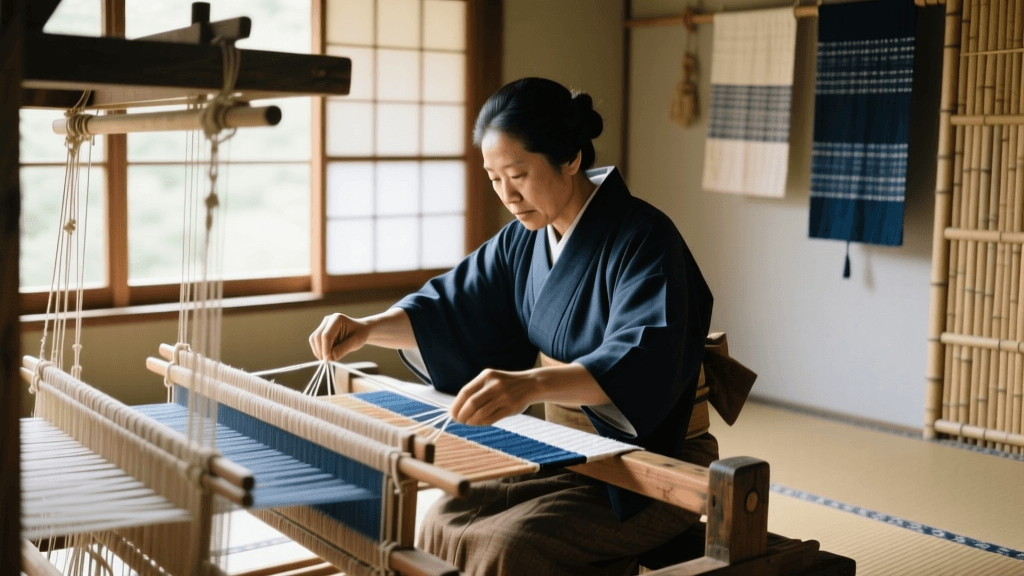
The rhythmic clack of the wooden batten and the subtle shifting of the weaver’s body are the heartbeat of Japan’s most revered textile tradition. In 2026, as the global slow fashion movement reaches its zenith, the Jibata (地機), or traditional Japanese floor loom, remains the ultimate instrument for creating authentic Kasuri (ikat) textiles. Unlike mechanized looms that prioritize uniform speed, the Jibata relies on the weaver’s own body weight to maintain warp tension, resulting in the distinctive, slightly blurred patterns that define heritage Japanese weaving.
For collectors, textile enthusiasts, and artisans, understanding the mechanics and modern application of the Jibata loom is essential. This guide explores the intricate hand-weaving methods of Japanese Kasuri in 2026, detailing the loom's anatomy, the weaving process, and where the tradition stands today.
The Anatomy of the Jibata Loom
The Jibata is a backstrap-style floor loom, fundamentally different from the Takahata (high loom) which uses a rigid wooden frame and foot pedals. The Jibata is positioned low to the ground, and the weaver sits on a cushion, using a strap around their lower back to control the tension of the warp threads.
Key Components
- Osa (Reed): A comb-like structure, traditionally made from bamboo, that beats the weft yarn into place. In 2026, master artisans still commission custom bamboo reeds from specialized craftsmen in Kyoto, with dents (gaps) calibrated to the exact millimeter for fine ramie or cotton.
- Heddles (Sokou): Woven from fine cotton or silk threads, these loops lift and lower specific warp threads to create the shed. A complex Kasuri pattern may require up to eight distinct heddle shafts.
- Koyu (Warp Beam): The wooden beam at the far end of the loom that holds the unwoven warp threads. It is anchored to the floor or a heavy wooden post.
- Himo (Backstrap): The tensioning belt worn by the weaver. The physical connection between human and loom is what gives Jibata-woven fabric its unique, forgiving drape.
The Step-by-Step Kasuri Weaving Process
Creating Kasuri on a Jibata is a painstaking process that blends mathematics, artistry, and physical endurance. The term "Kasuri" translates roughly to "blurred pattern," achieved through a resist-dyeing technique applied to the threads before they are even placed on the loom.
1. Thread Preparation and Resist Dyeing
Before weaving begins, cotton or ramie threads are tightly bound with string in precise intervals. These bundles are dipped into natural indigo (Ai-zome) vats. The bound sections resist the dye, creating a pattern. In 2026, sustainable indigo farming in Tokushima and Saitama has seen a massive revival, providing weavers with vibrant, eco-friendly dyes that meet modern environmental standards without sacrificing historical accuracy.
2. Dressing the Loom
The dyed threads are measured, aligned, and wound onto the warp beam. Aligning the dyed sections of the warp threads with the weft threads is the most challenging aspect of Kasuri. A misalignment of even two millimeters will ruin the geometric harmony of the pattern.
3. The Weaving Motion
The weaver leans back to apply tension to the warp. Using a hand-held shuttle (hi), they pass the weft thread through the shed. The weaver then pulls the batten forward to beat the weft into place. Because the weaver controls the tension with their core muscles, the resulting fabric has a slight, organic irregularity that machines cannot replicate. A skilled artisan weaving a high-end Kurume Kasuri bolt (approximately 12 meters long) will spend roughly 45 days at the Jibata, working eight-hour shifts. In the current 2026 market, a certified hand-woven Kurume Kasuri kimono bolt commands prices starting at ¥550,000, reflecting the immense labor involved.
The Sensory Experience of the Weaving Studio
Stepping into a Jibata weaving studio in 2026 is a multi-sensory immersion into Japanese heritage. The air is often heavy with the earthy, fermented aroma of natural indigo (sukumo) and the crisp, dry scent of raw ramie or cotton. The acoustic environment is equally defining. Unlike the deafening roar of modern power looms, a Jibata studio is filled with a rhythmic, almost meditative cadence: the soft rustle of threads sliding through the bamboo reed, the sharp clack of the wooden batten beating the weft, and the subtle exhalations of the weaver as they lean back to adjust the tension. This sensory profile is a crucial part of the textile's terroir, embedding the environment into the very fabric of the Kasuri.
2026 Innovations in Traditional Hand-Weaving
While the core mechanics of the Jibata remain unchanged since the Edo period, the ecosystem surrounding it has evolved. In 2026, weaving cooperatives in Okinawa and Fukuoka are integrating digital thread-mapping software during the design phase. This software calculates the exact shrinkage rates of organic cotton and natural indigo, allowing weavers to adjust their tie-dye bindings with microscopic precision before the yarn ever touches the dye vat.
Furthermore, ergonomic advancements in the weaver's seating and backstrap materials—utilizing breathable, high-tensile bio-resins—have reduced the chronic lower back strain historically associated with Jibata weaving, encouraging a younger demographic of artisans to take up the craft.
Comparison: Jibata vs. Takahata vs. Modern Looms
To understand where the Jibata fits in the contemporary textile landscape, it is helpful to compare it with other loom types used in Japan today.
| Loom Type | Tension Mechanism | Weaving Speed | Best Application | 2026 Artisan Availability |
|---|---|---|---|---|
| Jibata (Floor Loom) | Body weight (Backstrap) | Very Slow (1-2m/day) | Heritage Kasuri, Ojiya-chijimi ramie | Rare; specialized masters |
| Takahata (High Loom) | Rigid frame and pedals | Moderate (3-5m/day) | Standard silk, Tsumugi, Yuzen base | Common in craft schools |
| Power Loom (Mechanized) | Automated pneumatic | Fast (50m+/day) | Commercial apparel, mass-market yukata | Widespread industrial |
Preservation and Sourcing in 2026
The survival of the Jibata loom relies heavily on institutional support and consumer appreciation for intangible cultural heritage. The Japanese Ministry of Economy, Trade and Industry (METI) continues to designate specific weaving techniques as Traditional Crafts of Japan, ensuring subsidies for apprentices and raw material sourcing.
Additionally, global recognition plays a vital role. UNESCO’s Intangible Cultural Heritage list highlights techniques such as the creation of Ojiya-chijimi and Echigo-jofu, which utilize a variation of the backstrap tension method to weave exquisite ramie fabrics in the Niigata prefecture. These designations have sparked international interest, with museums like the Victoria and Albert Museum actively acquiring contemporary 2026 Jibata-woven pieces to document the living evolution of Asian textile arts.
For those looking to study Jibata weaving, the Kurume Kasuri Technical Center in Fukuoka offers immersive residencies. Aspiring weavers in 2026 can expect to spend a minimum of six months mastering the physical posture and tension control required before they are permitted to weave a sellable textile.
Conclusion
The Jibata is more than a tool; it is an extension of the artisan’s body. In an era dominated by fast fashion and automated manufacturing, the deliberate, physically demanding process of hand-weaving Kasuri on a traditional Japanese floor loom stands as a profound act of cultural preservation. By supporting these artisans and understanding the immense skill required to operate the Jibata, we ensure that the beautiful, blurred patterns of Japan’s textile heritage continue to thrive in 2026 and beyond.