Mastering Jibata Looms: Oshima Tsumugi Weaving Guide 2026
Introduction to Japanese Hand-Weaving in 2026
In the landscape of 2026, the global appreciation for slow fashion and artisanal heritage has reached unprecedented heights. Among the most revered of these traditions is Japanese hand-weaving, a meticulous craft that transforms raw silk and cotton into textiles of profound cultural and aesthetic significance. At the heart of this practice is the Jibata, the traditional Japanese floor loom. Unlike Western counterbalance or jack looms, the Jibata operates on a unique system of tension and shuttle manipulation that requires the weaver to become physically integrated with the machine. This guide explores the intricate mechanics of the Jibata loom and the legendary Oshima Tsumugi mud-dye weaving method, offering a comprehensive look at how these ancient techniques are being preserved and adapted in 2026.
The Anatomy of the Jibata Loom
The Jibata (literally 'floor loom') is a marvel of low-tech, high-precision engineering. Historically used for weaving everything from everyday hemp workwear to exquisite silk kimono bolts, the Jibata relies on the weaver's body weight and posture to maintain warp tension. According to the Kogei Japan traditional crafts portal, the preservation of these wooden looms is critical to maintaining the authentic texture of regional Japanese textiles.
Essential Components of the Jibata
- Aomuki (Warp Beam): The large wooden cylinder at the back of the loom that holds the un-woven warp threads. It is often weighted or braced against the floor to provide resistance.
- Osa (Reed): A comb-like structure made of bamboo or metal that beats the weft thread into place. For fine Oshima silk, the Osa is incredibly dense, often featuring 18 to 24 dents per centimeter.
- Hata (Shuttle): The wooden boat that carries the weft bobbin. Jibata shuttles are typically longer and heavier than Western counterparts, designed to be thrown and caught with a specific rhythmic snap of the wrist.
- Chikara-ito (Tension Cords): In traditional backstrap-style Jibata setups, cords connect the warp beam to a belt around the weaver's hips, allowing micro-adjustments in tension simply by leaning forward or backward.
Oshima Tsumugi: The Pinnacle of Mud-Dyed Silk
No discussion of Japanese hand-weaving is complete without examining Oshima Tsumugi, a silk textile originating from Amami Oshima in Kagoshima Prefecture. Renowned for its lightweight, wrinkle-resistant properties and subtle, intricate patterns, Oshima Tsumugi requires over 80 distinct manual steps to complete. The Victoria and Albert Museum's Asian Collections frequently highlights Oshima Tsumugi as a masterclass in precision ikat (kasuri) and natural dyeing.
The Mathematics of Kasuri (Ikat) Tying
Before the silk is dyed, it must be tied to resist the color and create the pattern. In Oshima Tsumugi, this is done using cotton threads wrapped around specific bundles of silk. A standard kimono bolt (tanmono) is approximately 36 centimeters wide and 12 meters long. The weaver must calculate the exact shrinkage and tension of the silk so that when the warp and weft intersect on the Jibata, the dyed and undyed sections align perfectly to form geometric or floral motifs. A misalignment of even a single millimeter will blur the pattern, rendering the textile unsellable as authentic Oshima.
Dorozome: The Alchemy of Mud and Wood
The defining characteristic of Oshima Tsumugi is dorozome, or mud-dyeing. The silk is first boiled in the bark of the Sharinbai (Yeddo hawthorn) tree, which is rich in tannic acid. It is then submerged in the iron-rich mud of Amami Oshima's rice paddies. The chemical reaction between the tannins and the iron creates a deep, lustrous charcoal-black color that is remarkably colorfast. In 2026, environmental protections on Amami Oshima strictly regulate the harvesting of Sharinbai and the collection of mud, ensuring the island's ecosystem remains balanced while supporting the local artisan economy.
Step-by-Step Hand-Weaving Method on a Jibata
Weaving on a Jibata is a full-body endeavor. The rhythm of the weaver dictates the quality of the cloth. Here is the standard workflow for dressing and weaving a fine silk warp.
1. Warping and Threading the Heddles
The warp threads are measured out to the exact length required for the 12-meter bolt, plus an additional 50 centimeters for loom waste. Each thread is passed through the eye of a string heddle (soukou). The Jibata typically uses two to four shafts of heddles, depending on the complexity of the weave structure. For a basic twill Oshima, four shafts are standard.
2. Sleying the Osa (Reed)
Threading the reed requires immense patience. Using a specialized hook, the weaver pulls groups of two or four threads through each bamboo dent. The density of the reed determines the final drape and weight of the kimono silk. A tighter sley results in a crisper, more formal fabric, while a looser sley creates a softer, more casual drape.
3. The Weaving Rhythm: Throwing the Hata
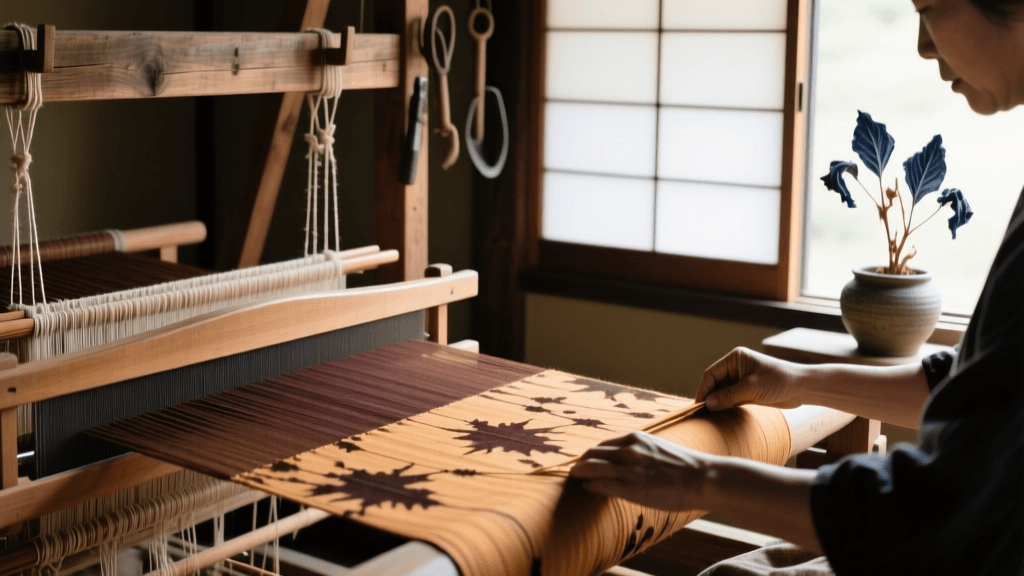
Once the loom is dressed, the weaving begins. The weaver depresses the wooden treadle with their foot to raise the shaft and open the shed. The right hand throws the hata (shuttle) through the shed, while the left hand catches it. The weaver then pulls the osabera (reed holder) forward to beat the weft into the fell of the cloth. This sequence—step, throw, catch, beat—creates a hypnotic rhythm. A master weaver can produce up to 15 centimeters of intricate kasuri fabric in an hour, though a single bolt can take over a month to complete.
2026 Innovations: Authenticating the Craft
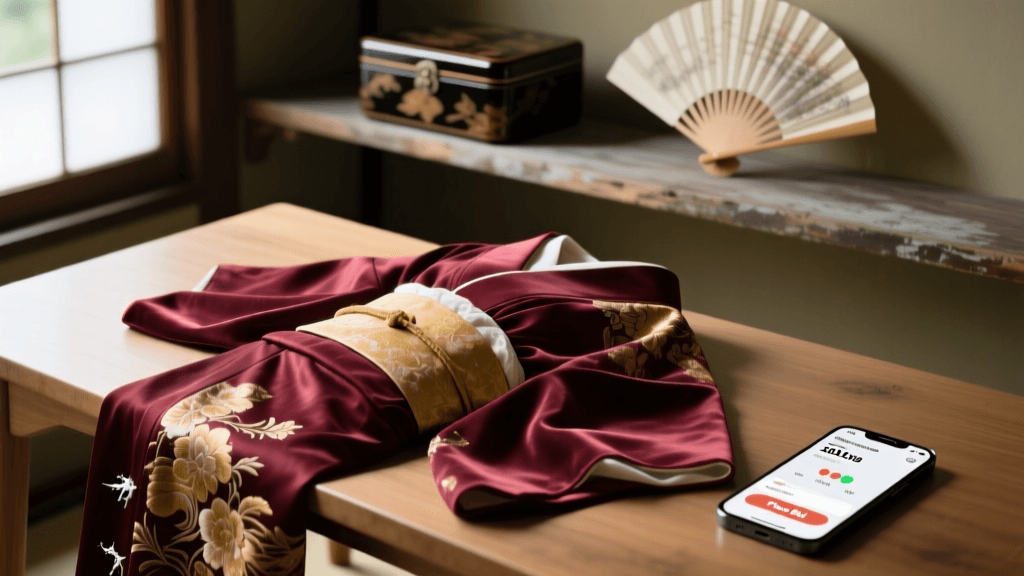
As the demand for authentic heritage textiles has surged in 2026, so too has the market for synthetic imitations. To combat this, the Amami Oshima Tsumugi cooperative has integrated microscopic NFC (Near Field Communication) threads into the selvedge of every authentic bolt. When scanned with a smartphone, this thread reveals the entire provenance of the textile: the specific artisan who tied the kasuri, the date the mud-dyeing occurred, and the weaver who operated the Jibata. This fusion of ancient hand-weaving and modern blockchain-backed authentication ensures that the financial rewards return directly to the artisan villages.
Comparison of Traditional Japanese Looms
While the Jibata is iconic, it is not the only loom used in Japanese textile history. Below is a comparison of the primary looms used in traditional garment production.
| Loom Type | Primary Use | Tension Mechanism | Production Speed | 2026 Availability |
|---|---|---|---|---|
| Jibata (Floor Loom) | Kasuri, Tsumugi, everyday silks | Body weight / Backstrap / Floor bracing | Slow (High precision) | Artisan workshops, heritage villages |
| Takabata (Tall Loom) | Complex brocades, Nishijin-ori | Wooden frame with hanging weights | Moderate | Specialized Kyoto studios |
| Izubata | Narrow bands, obi ties, ribbons | Small wooden box frame | Fast (for narrow widths) | Widely available for hobbyists |
| Computerized Jacquard | Mass-market kimono, modern obi | Automated pneumatic tension | Very Fast | Industrial textile mills |
Sourcing Materials and Tools in 2026
For international weavers and textile enthusiasts looking to study or replicate these methods in 2026, sourcing authentic materials requires navigating specialized channels. Pure Amami mud-dye extract is rarely exported due to bio-security regulations regarding raw soil. However, processed Sharinbai tannin extract and iron-mordant substitutes are available through specialized natural dye suppliers in Kyoto. When purchasing a vintage Jibata, buyers must inspect the osa (reed) for micro-fractures in the bamboo, as replacement reeds must be custom-ordered from master bamboo artisans in Nara. The Agency for Cultural Affairs, Government of Japan continues to publish directories of certified traditional craftspersons, serving as the most reliable resource for connecting with master loom builders and silk spinners.
Conclusion
The Jibata loom and the Oshima Tsumugi weaving method represent far more than mere garment production; they are a physical manifestation of Japanese philosophy, patience, and harmony with nature. The rhythmic clatter of the wooden shuttle and the deep, earthy scent of iron-rich mud are sensory experiences that connect the modern weaver to centuries of ancestral knowledge. As we move through 2026, the integration of ethical sourcing, environmental stewardship, and digital authentication ensures that these magnificent hand-woven textiles will continue to drape future generations in the enduring beauty of Asian traditions.