Japanese Jibata Loom Weaving: Traditional Techniques for 2026
The Resurgence of the Jibata in 2026
In an era where the global textile industry is increasingly dominated by automated, AI-driven manufacturing and synthetic fast fashion, the Japanese Jibata (traditional floor loom) remains a profound bastion of human artistry. As we navigate 2026, there is a remarkable renaissance in analog crafts, with a new generation of weavers and international textile enthusiasts seeking out the meditative, tactile experience of Japanese hand-weaving. The Jibata is not merely a tool; it is an extension of the artisan’s body, demanding a harmony of breath, posture, and rhythm that machines simply cannot replicate.
For those looking to master Asian traditional garments, understanding the mechanics and philosophy of the Jibata is essential. Whether you are weaving the intricate brocades of Nishijin-ori or the subtle, slubbed textures of Yuki-tsumugi, the floor loom dictates the very soul of the fabric. This comprehensive guide explores the anatomy, techniques, and modern realities of operating a traditional Japanese loom in 2026.
Anatomy of the Traditional Japanese Floor Loom
Unlike the heavy, multi-harness European floor looms, the traditional Japanese Jibata is characterized by its low profile, allowing the weaver to sit on a cushion (zabuton) directly on the floor. This grounded posture is integral to the Zen philosophy of Japanese weaving. To operate the loom effectively, an artisan must understand its core components:
- Waku (Frame): The sturdy wooden skeleton of the loom, traditionally crafted from aged hinoki (Japanese cypress) or keyaki (zelkova) to withstand decades of tension and humidity fluctuations.
- Makiki (Warp Beam): The rear beam that holds the unwoven warp threads. Tension is maintained using a traditional ratchet and wooden peg system.
- Chikiri (Cloth Beam): The front beam where the finished woven cloth is rolled. The weaver adjusts the chikiri to advance the fabric as the work progresses.
- Soko (Heddles): Fine cords or wire loops that lift and lower individual warp threads to create the shed (the space through which the shuttle passes).
- Osa (Reed): A comb-like structure made of bamboo or metal that beats the weft thread firmly into place, determining the final density and width of the fabric.
- Hi (Shuttle): The boat-shaped wooden tool that carries the weft yarn (yoko-ito) through the shed. Mastering the throw of the hi is a lifelong pursuit.
Nishijin-ori vs. Yuki-tsumugi: A 2026 Weaver's Comparison
When setting up a Jibata in 2026, the choice of weaving style dictates the entire preparation process. The two most revered hand-weaving traditions in Japan—Nishijin-ori from Kyoto and Yuki-tsumugi from the Ibaraki/Tochigi regions—require vastly different approaches to loom dressing and material handling.
| Feature | Nishijin-ori (Kyoto Brocade) | Yuki-tsumugi (Pongee Silk) |
|---|---|---|
| Primary Fiber | Degummed, highly refined raw silk; gold/silver leaf threads. | Hand-spun silk floss (mawata); retains natural sericin slubs. |
| Loom Complexity | High; often requires multiple harnesses and a draw-loom setup for complex patterns. | Moderate; typically woven on a simpler 2-harness Jibata focusing on kasuri (ikat) patterns. |
| Weaving Speed | Extremely slow (5-10 cm per day for intricate Obi sashes). | Moderate (up to 50 cm per day for standard kimono bolts). |
| 2026 Market Price | ¥800,000 – ¥2,000,000+ per finished Obi. | ¥300,000 – ¥600,000 per standard Tan (kimono bolt). |
| Key Characteristic | Vibrant, multi-colored, heavily patterned, and structurally rigid. | Matte finish, lightweight, warm, with a distinct nubby texture. |
According to the Nishijin Textile Center, the demand for bespoke, hand-woven Nishijin obi sashes has seen a 15% increase among international collectors in 2026, driven by a desire for exclusive, non-digital luxury. Conversely, Yuki-tsumugi remains the pinnacle of understated, everyday elegance, prized for its breathability and durability.
Dressing the Jibata: Actionable Steps for Artisans
Dressing the loom—the process of preparing the warp threads—is arguably the most critical phase of Japanese weaving. A standard kimono bolt, known as a tan, measures approximately 12 meters (39 feet) in length and 36 centimeters (14 inches) in width. Here is how modern artisans approach the warping process:
1. Warping and Measuring the Ito (Yarn)
Before the threads touch the loom, they must be measured on a warping frame (seikei-dai). In 2026, while some traditionalists still use wooden pegs to measure the 12-meter lengths, many contemporary studios employ digital tension meters to ensure absolute uniformity across the 800 to 1,200 warp threads required for a single bolt. The threads are gathered into a cross (kari-maki) to prevent tangling.
2. Threading the Soko (Heddles) and Osa (Reed)
Using a threading hook, the weaver passes each individual warp thread through the eye of a soko heddle. This requires intense focus and excellent lighting; many modern weaving studios in Kyoto now utilize full-spectrum LED task lights to reduce eye strain during this painstaking process. Once threaded through the heddles, the threads are drawn through the osa (reed). The density of the reed (e.g., 40 dents per inch) will dictate the final drape and stiffness of the silk.
3. Tying On and Tensioning
The warp is tied to the chikiri (cloth beam) using a specialized weaver's knot that will not slip under high tension. Traditional stone weights or wooden tension bars are hung from the back of the warp to maintain a consistent pull. Proper tension is the difference between a flawless textile and one plagued by broken threads and uneven beats.
The Zen of the Shuttle: Posture, Rhythm, and Breath
Operating a Jibata is a deeply physical and spiritual endeavor. The concept of ma (negative space or pause) is as important as the action itself. The weaver sits with a straight spine, feet flat on the wooden pedals (ashifumizao).
"The loom does not weave the cloth; the breath weaves the cloth. If your mind is chaotic, the selvedge will be crooked." — Master Weaver Proverb, Kyoto Guild.
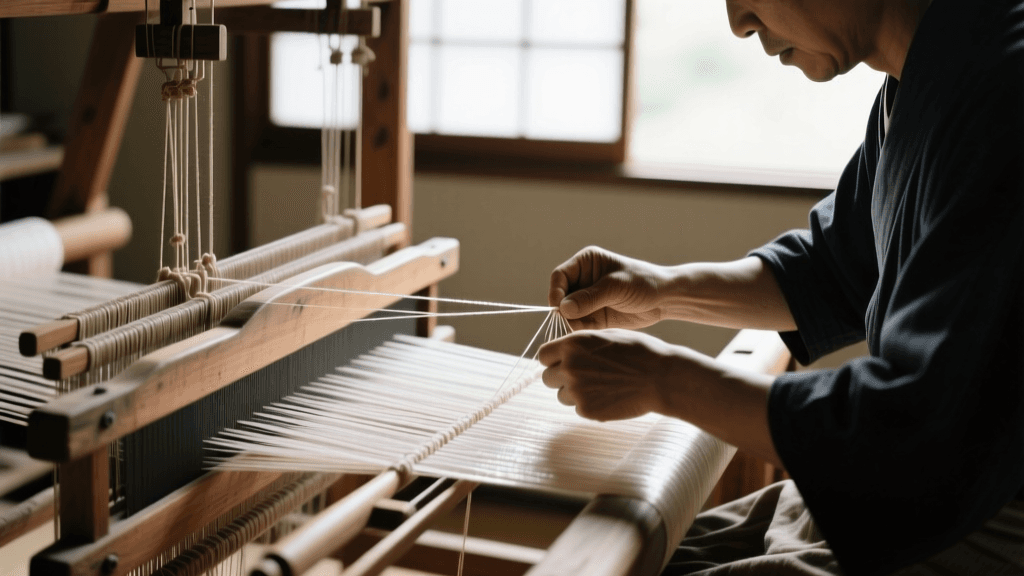
The throw of the hi (shuttle) must be fluid. The weaver depresses the pedal to open the shed, throws the shuttle with a flick of the wrist, catches it with the opposite hand, and pulls the osa (reed) forward in one continuous, rhythmic motion. This is repeated thousands of times a day. In 2026, ergonomic specialists working with Japanese craft cooperatives have introduced subtle modifications to the zabuton cushions and loom heights to preserve the spinal health of aging master weavers, ensuring these techniques can be passed down to apprentices without physical burnout.
Sourcing Authentic Materials in 2026
The soul of the Jibata lies in the silk it weaves. Sourcing authentic, high-quality Japanese silk has become both a challenge and a priority for 2026 weavers. The domestic sericulture industry has contracted over the decades, making pure Japanese silk (jun-wasei) a rare luxury.
For Yuki-tsumugi, artisans rely on mawata (silk floss) stretched from defective cocoons. Recognized by UNESCO as an Intangible Cultural Heritage, the Yuki-tsumugi technique requires the artisan to hand-spin the silk floss directly onto their own body or a specialized basket before weaving. In 2026, the Ibaraki Prefecture Yuki Tsumugi Cooperative has launched an apprenticeship grant program, subsidizing the cost of raw mawata for young weavers committed to keeping the hand-spinning tradition alive.
For Nishijin-ori weavers, sourcing dyed silk threads involves working with specialized dyehouses in the Horikawa district of Kyoto. In 2026, there is a strong movement toward using botanical dyes (such as indigo, madder, and persimmon tannin) combined with traditional metallic threads to create eco-conscious, yet historically accurate, brocades.
Maintaining the Wooden Loom: Climate Control and Care
A traditional Jibata is a living entity, constructed from wood that expands and contracts with the seasons. In 2026, with global climate patterns causing more extreme humidity fluctuations, loom maintenance requires rigorous attention.
- Humidity Control: Silk threads are highly sensitive to moisture. If the air is too dry, the silk becomes brittle and snaps under the tension of the osa. Studios must maintain a relative humidity of 60-65%. Modern weavers utilize ultrasonic humidifiers integrated directly beneath the warp beam.
- Wood Polishing: The friction of the shuttle and the weaver's hands naturally polishes the wood over decades. However, the structural joints must be treated annually with natural camellia oil (tsubaki-abura) to prevent the wood from drying out and cracking.
- Reed Care: Bamboo reeds must be brushed clean of silk dust and sized occasionally with a dilute animal glue solution to prevent the warp threads from fraying against the reed's teeth.
Conclusion: The Future of the Thread
The Japanese Jibata is far more than an antique relic; it is a dynamic instrument of cultural preservation. As we move through 2026, the integration of modern ergonomic support, climate control, and international appreciation has provided a lifeline to these ancient hand-weaving methods. Whether you are a collector seeking the unparalleled depth of a hand-woven Nishijin obi, or an aspiring artisan learning to dress the loom and throw the shuttle, engaging with the Jibata is a profound commitment to the rhythm, patience, and enduring beauty of Asian textile traditions. By supporting the cooperatives and guilds that keep these practices alive, we ensure that the song of the wooden loom continues to echo for generations to come.