Japanese Jibata Looms & Kasuri Weaving Methods in 2026
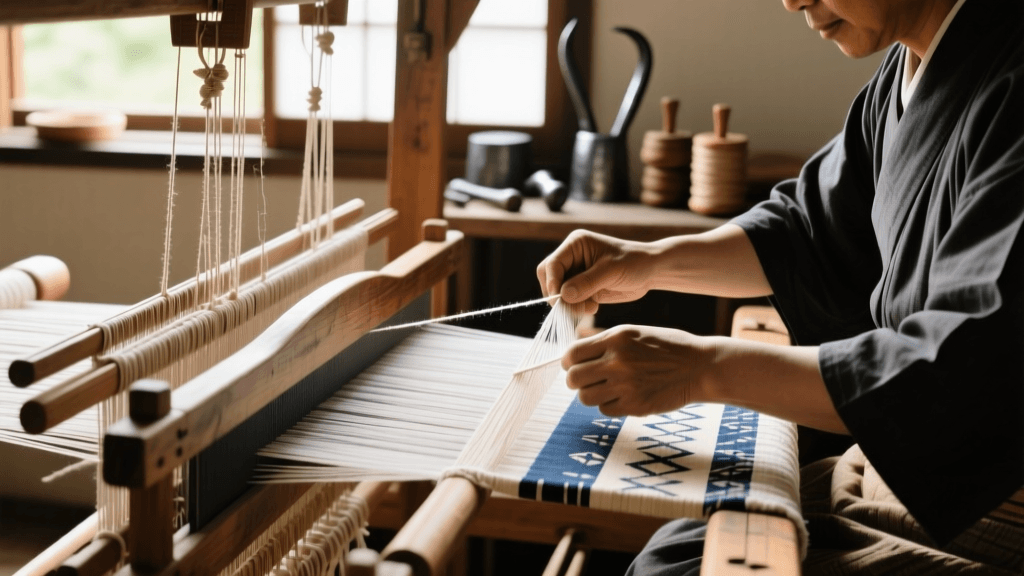
The Resurgence of Heritage Textiles in 2026
As the global slow fashion movement reaches new heights in 2026, the rhythmic clatter of the traditional Japanese loom is experiencing a profound renaissance. Artisans and textile enthusiasts worldwide are turning away from mass-produced synthetics, seeking instead the tactile authenticity of heritage weaving. At the heart of this revival are the Jibata (traditional floor or backstrap looms) and the intricate Kasuri (ikat) dyeing and weaving methods. According to the Ministry of Economy, Trade and Industry (METI), the demand for certified traditional Japanese craft textiles has seen a remarkable surge in 2026, driven by a new generation of weavers who value sustainability, mathematical precision, and cultural preservation.
This comprehensive guide explores the mechanics of Japanese traditional looms, the meticulous preparation required for Kasuri weaving, and actionable advice for sourcing materials and mastering tensioning techniques in today's market.
The Anatomy of the Jibata and Takahata Looms
Unlike the heavy, rigid floor looms common in Western weaving traditions, Japanese looms are designed with a distinct philosophy of ergonomics, modularity, and tension control. The two primary types of traditional looms used for Kasuri are the Jibata and the Takahata.
The Jibata (Standard Floor Loom)
The Jibata is a low-to-the-ground loom, often constructed from lightweight, polished cedar or cypress. The weaver sits on a cushion (zabuton) and uses their body weight to help maintain warp tension, especially in backstrap variations. The defining feature of the Jibata is its simplicity and the weaver's intimate physical connection to the warp threads. The shuttle (hi) is thrown by hand, and the shed is opened using simple treadles or a backstrap mechanism.
The Takahata (Tall Floor Loom)
Introduced and refined during the Meiji era to increase production efficiency, the Takahata is a taller, more complex floor loom featuring overhead tie-ups and a suspended reed (osha). The Takahata allows for multi-shaft weaving, making it the preferred choice for complex silk Kasuri patterns that require multiple harnesses. The overhead pulleys and intricate karakuri (mechanical) tie-ups allow the weaver to manage intricate pattern sheds without the physical strain of manual harness lifting.
The Art of Kasuri: Preparation and Dyeing
Kasuri is the Japanese equivalent of ikat, a technique where threads are resist-dyed before they are woven to create blurred, geometric, or pictorial patterns. The magic of Kasuri lies in the mathematical calculation of the tie-dye (kukuri) process.
Types of Kasuri
- Tate-gasuri (Warp Ikat): Only the warp threads are dyed. This is the most common and beginner-friendly method, frequently seen in Kurume cotton textiles.
- Yoko-gasuri (Weft Ikat): Only the weft threads are dyed. This requires immense skill during the weaving process, as the weaver must manually adjust the weft thread with a needle after every single pick to align the pattern perfectly.
- Tate-yoko-gasuri (Double Ikat): Both warp and weft are dyed. This is the pinnacle of Kasuri weaving, requiring flawless execution in both dyeing and weaving.
In 2026, natural indigo (ai) fermentation vats remain the gold standard for Kurume Kasuri. Master dyers monitor the pH and alkalinity of the sukumo (indigo leaves) daily, ensuring the deep, living blue that synthetic dyes cannot replicate.
2026 Sourcing Guide: Looms, Yarns, and Equipment
Acquiring a traditional Japanese loom requires navigating a niche market. In 2026, antique loom restoration collectives in Kyoto and Fukuoka are the primary sources for authentic Takahata and Jibata models. Furthermore, the Japan Kogei Association continues to support artisan networks that supply specialized tools like bamboo reeds and persimmon-juice-treated shuttles.
| Loom Type | Historical Era | Best Application | 2026 Est. Price (JPY) | Tension Mechanism |
|---|---|---|---|---|
| Jibata (Standard) | Edo Period | Cotton Kasuri | ¥250,000 - ¥450,000 | Body weight / Backstrap |
| Takahata | Meiji Era | Silk & Complex Patterns | ¥500,000 - ¥900,000 | Overhead pulleys & treadles |
| Modern Hybrid | 2020s | Beginners & Studios | ¥180,000 - ¥300,000 | Mechanical ratchets |
Sourcing Yarn: For authentic Echigo-jofu ramie or Kurume cotton, weavers in 2026 rely on direct cooperatives in Niigata and Fukuoka prefectures. Ramie yarn, prized for its crisp texture and cooling properties, is spun by hand and graded by micron thickness. A standard 500g cone of hand-plied Echigo ramie costs approximately ¥45,000 in 2026.
Step-by-Step: Warping and Tensioning Silk and Ramie
Proper warp tension is the most critical factor in Japanese weaving. Uneven tension will ruin a Kasuri pattern, as the dyed nodes will not align. Follow these steps for a standard 38cm weaving width on a Jibata:
- Measuring the Warp: Use a wooden warping mill (seikei-dai). Measure the warp to a length of 12 meters, allowing 2 meters for loom waste and take-up. For a 38cm width at 30 ends per inch (EPI), you will need approximately 450 warp threads.
- Crossing the Threads: Maintain a perfect cross (ayatori) using lease sticks. This cross is vital for threading the heddles without tangling.
- Threading the Reed (Osha): Japanese bamboo reeds are measured in ha (dents per 3.78cm). For fine silk Kasuri, use a 15-ha reed. Thread two ends per dent to achieve the desired density.
- Applying Tension: Tie the warp to the front cloth beam using a specialized slip knot. On a traditional Jibata, attach the tension weights (omori) to the back warp beam. For a 38cm width, apply exactly 3.5kg of distributed weight. If weaving on a backstrap Jibata, lean back until the warp produces a clear, high-pitched "ping" when plucked.
- Sizing the Warp: Brush the warp with a thin layer of rice starch or funori (seaweed sizing) to prevent the silk or ramie from fraying against the bamboo reed during the shedding process.
Troubleshooting Common Weaving Faults
Even experienced weavers encounter challenges when working with traditional Japanese methods. Here is how to address common issues in 2026:
- Misaligned Kasuri Patterns: If the weft ikat pattern drifts, stop weaving immediately. Use a fine needle to manually ease the weft thread left or right within the shed before beating it in with the reed. This technique, known as eshi-awase, requires patience and a keen eye.
- Warp Breakage: Ramie and silk are strong but brittle if subjected to sudden friction. If a warp thread breaks, splice it using a traditional weaver's knot, leaving the tails on the back side of the fabric to be trimmed later. Never use synthetic tape or glue.
- Shedding Issues on Takahata: If the shed is not opening cleanly, check the overhead pulleys. In 2026, many artisan collectives use 3D-printed replacement parts for antique pulleys, but ensure the friction points are lubricated with traditional camellia oil (tsubaki-abura) rather than modern petroleum greases, which can stain the silk.
Preserving the Craft: Communities and Future Outlook
The survival of Jibata weaving and Kasuri techniques relies on the transmission of knowledge from master artisans to apprentices. Recognized by UNESCO as an Intangible Cultural Heritage, practices like Ojiya-chijimi weaving are protected by strict regional guilds that govern everything from the water used in washing the fabric to the specific snow-bleaching (yuki-zarashi) methods employed in late winter.
For international weavers looking to study these methods in 2026, several prefectural craft centers in Fukuoka and Niigata offer intensive, English-supported residencies. These programs not only teach the physical mechanics of the Jibata but also immerse students in the Zen-like philosophy of Japanese weaving—where the repetitive motion of the shuttle and the rhythmic beating of the reed become a form of moving meditation.
Whether you are restoring an antique Takahata loom or dyeing your first bundle of Kurume cotton indigo, the practice of Japanese traditional weaving offers a profound connection to history. By embracing these meticulous methods, modern artisans ensure that the legacy of Kasuri will continue to unfold, one perfectly aligned thread at a time.