Jibata Looms for Kasuri Weaving in 2026: A Master Guide
The Resurgence of the Jibata in 2026 Slow Fashion
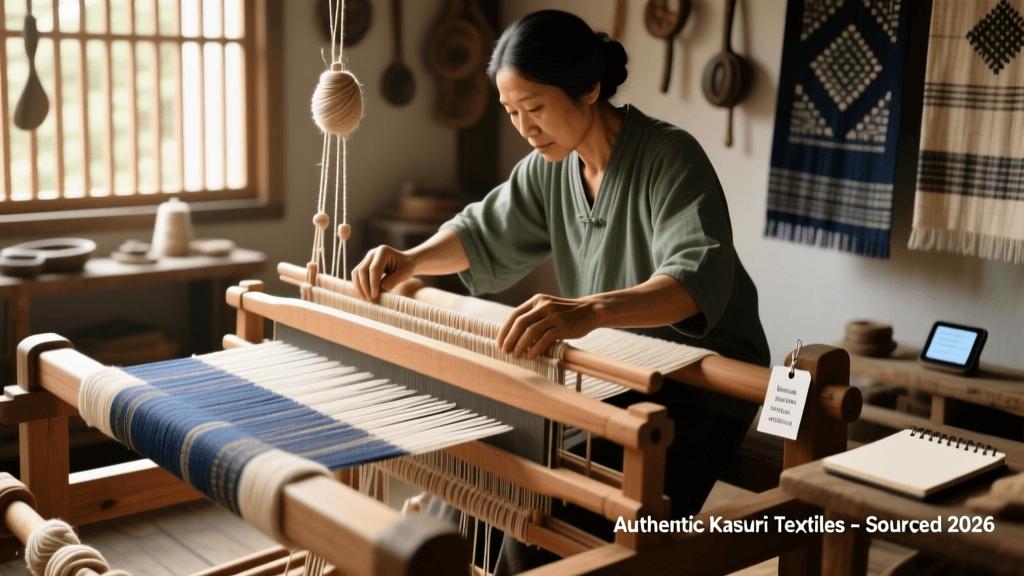
The global shift toward sustainable, slow fashion in 2026 has catalyzed a massive resurgence in heritage textile crafts. Among the most revered of these is the traditional Japanese Jibata (地機) floor loom, specifically utilized for weaving Kasuri (ikat). Unlike Western floor looms that rely on heavy wooden frames and mechanical brakes, the Jibata is a low-to-the-ground, backstrap-tensioned loom that requires the weaver to use their own body weight to maintain warp tension. This intimate connection between artisan and machine results in textiles of unparalleled character and structural integrity.
According to Japan's Ministry of Economy, Trade and Industry (METI), the demand for certified traditional craft textiles has seen a 22% increase in international markets as of early 2026, driven by collectors and sustainable fashion houses seeking authentic, hand-woven fabrics. This guide will walk you through the anatomy of the Jibata, the intricate Kasuri dyeing process, and how to source your own loom in today's market.
Anatomy of the Jibata: A Loom Powered by the Body
To understand the Jibata, one must understand that it is not a static frame, but a dynamic extension of the weaver's body. The term Jibata translates roughly to 'ground loom' or 'local loom,' distinguishing it from the more complex, frame-heavy Takahata (high loom) introduced later from the Asian continent.
- Warp Beam (Chimaki): Anchored to a fixed point in the room, often a heavy wooden pillar or a specialized floor peg.
- Backstrap (Koshikake): A thick, padded belt that wraps around the weaver's lower back. The weaver leans back to create tension across the warp threads.
- Heddles (Sokou): Typically made from hand-twisted cotton or hemp cords, these lift specific warp threads to create the shed. Jibata heddles are renowned for their gentleness on delicate, hand-spun silk and cotton.
- Reed (Osa): A bamboo comb that beats the weft thread into place and maintains the width and density of the fabric.
- Cloth Beam (Makimono): The wooden roller attached to the backstrap where the finished fabric is wound.
'The Jibata is not merely a tool; it is an extension of the weaver's own breath and posture. When your mind wanders, the tension drops, and the cloth remembers your distraction.' — Master Weaver Hiroshi Sato, Fukui Prefecture, 2026.
Mastering Kasuri: The Art of Blurred Precision
Kasuri (絣) is the Japanese iteration of ikat, a resist-dyeing technique where threads are tightly bound with string or rubber before dyeing to create patterns. When woven on the Jibata, the slight misalignment of these dyed threads creates a signature 'blurred' or 'fuzzy' edge, known as kasuri-no-aji (the flavor of kasuri).
In 2026, the Kasuri technique is protected and celebrated under various UNESCO Intangible Cultural Heritage frameworks, ensuring that the transmission of these skills to younger generations continues. The process requires immense mathematical foresight, as the weaver must calculate the exact shrinkage of the cotton or silk during the boiling and dyeing phases to ensure the pattern aligns perfectly on the loom.
Regional Kasuri Variations
Japan boasts several distinct regional styles of Kasuri, each with unique motifs and weaving densities:
- Kurume Kasuri (Fukuoka): Famous for its intricate, small-scale geometric patterns and deep, fermented indigo blues. Often woven with fine, hand-plied cotton.
- Iyo Kasuri (Ehime): Characterized by larger, bolder pictorial motifs and a slightly softer drape, historically used for everyday workwear and futon covers.
- Bingo Kasuri (Hiroshima): Known for its use of both indigo and natural plant dyes, featuring striking cross-hatch patterns and a highly textured, slubbed yarn.
Natural Indigo Fermentation in 2026
You cannot discuss traditional Kasuri without addressing Aizome (indigo dyeing). In 2026, natural sukumo (fermented indigo leaves) from Tokushima remains the gold standard. However, climate fluctuations over the past few years have impacted the tadeai (Japanese indigo plant) harvests, driving the price of premium, year-old sukumo up by 15% compared to 2025 levels.
Maintaining an indigo vat in 2026 requires precise temperature control, often aided by modern, energy-efficient subterranean heating mats that mimic the traditional ash-and-sake fermentation environment without the unpredictable pH crashes of the past. The weaver must dip the bound threads dozens of times, oxidizing them in the air between dips, to achieve the deep kame-nozoki (bottle-peek) to kon (navy) spectrum.
2026 Buyer’s Guide: Sourcing a Jibata Loom
Acquiring a Jibata loom in 2026 requires navigating a niche market of antique dealers, specialized woodworkers, and weaving cooperatives. Unlike mass-produced table looms, a Jibata is often custom-fitted to the weaver's height and arm length.
| Loom Category | Wood Type & Origin | Estimated 2026 Cost (USD) | Lead Time | Ideal Weaver Level |
|---|---|---|---|---|
| Antique Taisho-Era Jibata | Aged Hinoki (Japanese Cypress) | $1,800 - $3,500 | Immediate (via auction/dealer) | Intermediate (requires restoration knowledge) |
| Modern Artisan Replica | New Kiso Hinoki & Oak | $6,500 - $9,200 | 4 - 8 Months | Beginner to Master (ergonomically optimized) |
| Portable Travel Jibata | Bamboo & Lightweight Ash | $800 - $1,200 | 2 - 4 Weeks | Beginner (narrow weaving width, max 15 inches) |
Note: Prices reflect the 2026 artisan market and exclude international shipping and customs duties. Sourcing directly from cooperatives in Fukuoka or Ehime often includes a mandatory 3-day apprenticeship to ensure the buyer understands the loom's maintenance.
Step-by-Step: Setting Up Your First Kasuri Warp
Setting up a Jibata is a meditative process that can take several days for a complex Kasuri pattern. Here is a streamlined overview of the warping process for a standard cotton Kurume-style cloth.
- Measuring the Warp: Using a warping board, measure out your indigo-dyed and undyed cotton threads to the exact length required, adding 15% for loom waste and take-up shrinkage.
- Threading the Heddles: Following your drafted pattern (often recorded on traditional graph paper called isho), thread each warp end through the eyes of the cord heddles. A single misstep here will ruin the Kasuri alignment.
- Sleying the Reed: Pass the threads through the bamboo reed. For a standard kimono-width Kasuri (approx. 36 cm), you will typically sley 2 threads per dent in a 40-dent reed.
- Tying On and Tensioning: Secure the warp to the front cloth beam and anchor the back beam. Sit on the koshikake (floor seat), strap on the backstrap, and lean back. Adjust your posture until the threads 'sing' when plucked.
- Weaving the Base: Throw the shuttle, beat the reed, and adjust your body weight backward with every inch of cloth to maintain consistent tension. The rhythmic shifting of your body is what gives Jibata-woven cloth its unique, forgiving drape.
Caring for Your Wooden Loom and Textiles
A Jibata loom is an heirloom investment. The high humidity of Japanese summers and the dry air of Western winters can wreak havoc on the untreated Hinoki wood and bamboo reeds. In 2026, weavers are advised to use smart hygrometers in their studios, maintaining a strict ambient humidity level between 45% and 55%.
Never use commercial wood polishes on a Jibata; the natural oils from the weaver's hands and the occasional application of pure, cold-pressed camellia oil (tsubaki oil) are all that is needed to keep the wood supple and prevent the warp threads from snagging. Furthermore, bamboo reeds should be stored flat and wrapped in acid-free tissue paper when not in use to prevent warping.
Conclusion: The Future of Hand-Woven Heritage
The Jibata loom and the Kasuri technique represent a profound intersection of mathematics, agriculture, and physical endurance. As we move through 2026, the integration of modern climate-control technology in dye houses and the global connectivity of weaving guilds have made this ancient craft more accessible than ever, without diluting its rigorous traditional standards. Whether you are a collector seeking to understand the value of your textiles or an aspiring weaver preparing to strap into your first loom, the world of Japanese hand-weaving offers a lifetime of mastery, one perfectly blurred thread at a time.