Mastering the Jibata Loom: Japanese Kasuri Weaving Guide 2026
Introduction to the Jibata Loom and Kasuri Weaving
In the evolving landscape of textile arts in 2026, the ancient Japanese practice of hand-weaving has experienced a profound renaissance. Among the most revered of these traditional methods is the use of the jibata, a hand-operated floor loom that relies on the weaver’s own body tension to create intricate, soulful fabrics. Unlike the mechanized Jacquard looms that dominate industrial manufacturing, the jibata demands a meditative, physical connection between the artisan and the thread. This guide explores the meticulous process of weaving kasuri (Japanese ikat) cotton on a traditional jibata loom, offering modern practitioners actionable insights into sourcing, setup, and technique. As documented by the Kogei Japan portal, the preservation of these regional weaving techniques is not merely about maintaining history; it is about adapting sustainable, slow-fashion practices for the modern era.
The Anatomy of the Jibata Floor Loom
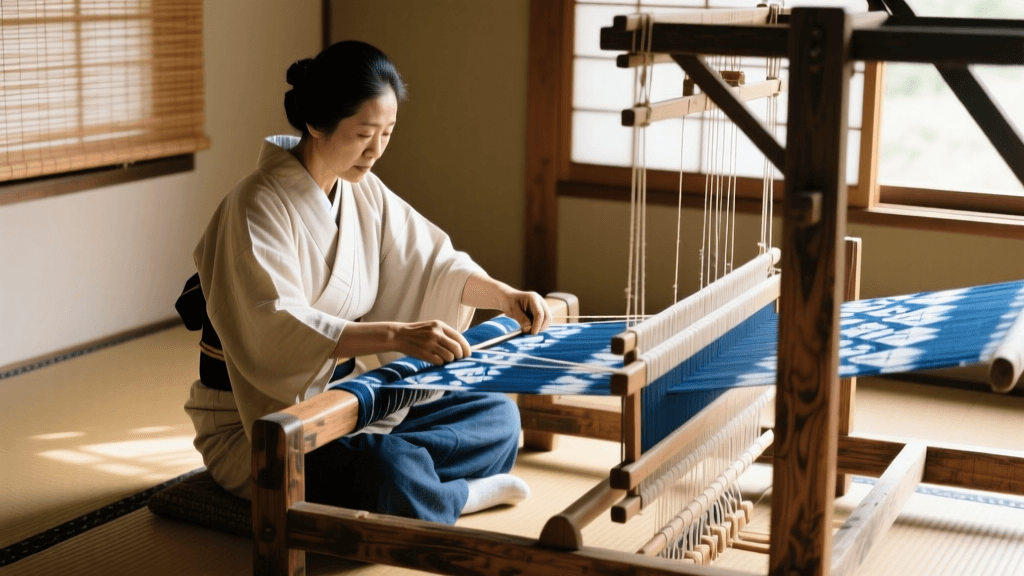
To understand the jibata, one must first appreciate its elegant simplicity. The term jibata translates roughly to 'floor loom,' but it specifically refers to a loom where the weaver sits on the floor, using a backstrap or body-tension mechanism to control the warp threads. The primary components include the seijou (warp beam), which anchors the far end of the threads, and the chikiri (cloth beam), which sits near the weaver to roll the finished fabric. The osa (reed) is held in a wooden frame called the bata, which the weaver pulls toward their body to beat the weft yarn into place. The shuttle, known as the hi, is typically carved from a single piece of cherry or persimmon wood, polished smooth by decades of handling. In 2026, artisan woodworkers in Kyoto and Nara continue to craft these components from sustainably harvested hinoki (Japanese cypress), ensuring the loom remains lightweight yet incredibly durable. The tactile feedback of a wooden bata striking the weft is a rhythmic heartbeat that defines the traditional weaving experience.
Essential Tools and Loom Specifications for 2026
Whether you are setting up a professional studio or a dedicated home weaving space, selecting the right equipment is crucial. Below is a comparison of traditional Japanese loom types and their associated costs and applications for modern artisans.
| Loom Type | Primary Material | Estimated 2026 Cost (USD) | Best Application |
|---|---|---|---|
| Jibata (Floor Loom) | Hinoki Cypress, Bamboo | $1,200 - $4,500 | Kasuri cotton, everyday garments |
| Takadai (Braiding Loom) | Keyaki (Zelkova), Silk cords | $400 - $900 | Kumihimo silk braids, obi ties |
| Takahata (Drawloom) | Aged Cedar, Complex rigging | $8,000+ | Nishijin-ori silk brocades |
| Miniature Jibata Kit | Bamboo, lightweight pine | $350 - $600 | Beginner practice, small runners |
Preparing the Yarn: The Kasuri Resist-Dyeing Technique
Before a single thread is placed on the loom, the kasuri (ikat) pattern must be engineered. Kasuri involves resist-dyeing the warp and weft threads before weaving, creating a blurred, geometric, or pictorial pattern when the threads intersect. The preparation begins with calculating the exact mathematical repeat of the design. Artisans use a specialized measuring frame called a kasuri-guki to wrap the cotton yarns. Sections of the yarn that are meant to remain the natural cotton color are tightly bound with synthetic or traditional hemp string. In 2026, while some modern studios use laser-guided binding machines for commercial production, master artisans still insist on hand-binding to achieve the characteristic kasure (blur or fuzz) that gives the textile its organic, living quality.
Once bound, the skeins are submerged in vats of natural aizome (indigo). Sourced primarily from Tokushima Prefecture, the indigo fermentation process requires daily feeding with sake, wheat bran, and wood ash lye. The Victoria and Albert Museum's Asian Collections frequently highlights the chemical complexity of Japanese indigo, noting how the living bacteria in the vat dictate the final depth of the blue. After multiple dips and oxidations, the bindings are removed, revealing the stark white patterns against the deep, oceanic blue.
Setting Up and Weaving: Achieving the Perfect Tension
Threading the jibata is a painstaking process that can take several days for a complex kasuri design. The warp threads must be aligned perfectly so that the dyed sections match up across the width of the fabric. Once the loom is warped, the weaver sits on a zabuton (floor cushion), securing the tension strap around their lower back. By leaning forward and backward, the weaver micro-adjusts the tension of the hundreds of warp threads. This bodily connection is what makes the jibata unique; the tension is not dictated by rigid metal gears, but by the weaver’s breath and posture.
The weaver opens the shed (the space between warp threads) using foot pedals or hand-manipulated heddle rods, throws the hi (shuttle) through the shed, and then forcefully pulls the bata forward to pack the weft thread. Achieving a consistent beat is the hallmark of a master weaver. If the weaver strikes too hard, the fabric becomes stiff and board-like; too soft, and the kasuri pattern will distort and lose its crispness. In 2026, ergonomic adaptations such as adjustable wooden seating platforms have been introduced to help older artisans maintain their practice without suffering from lower back strain, a common occupational hazard of floor weaving.
Maintaining Your Jibata Loom in 2026
Proper care of a wooden jibata ensures it lasts for generations. Here are the essential maintenance steps for modern home studios:
- Wood Conditioning: Apply a thin layer of natural camellia oil (tsubaki oil) to the cherry wood shuttle and cypress beams every six months to prevent drying and cracking, especially in climate-controlled homes.
- Reed Care: The bamboo or metal dents of the osa (reed) can accumulate cotton dust and indigo residue. Use a soft, dry brush to clean the reed after every weaving session to prevent yarn snagging.
- Cord Replacement: Traditional heddle cords made of hemp or cotton will eventually fray. In 2026, many weavers use high-tensile, waxed linen cords as a durable, period-appropriate alternative that reduces friction.
- Tension Strap Inspection: The backstrap bears immense physical stress. Inspect the woven cotton or leather tension straps for micro-tears before every warping session to prevent sudden snaps that could ruin a partially woven piece.
Sourcing Authentic Materials and Craft Tourism
For international enthusiasts and modern textile artists looking to begin their jibata journey in 2026, sourcing authentic materials is easier than ever, yet requires careful vetting. While importing a full-sized, antique jibata from Japan can cost upwards of $4,500 due to specialized crating and freight, several cooperatives now offer modular, scaled-down jibata kits designed for home studios. These kits typically range from $800 to $1,200 and include the essential bata, hi, and tensioning straps.
When selecting yarn, it is crucial to use tightly spun, mercerized cotton or traditional tsumugi (silk noil) to withstand the high tension and friction of the wooden reed. The Japan National Tourism Organization actively promotes regional craft tourism, allowing visiting weavers to purchase directly from mills in regions like Kurume and Matsuyama, famous for their distinct kasuri traditions. Engaging directly with these local mills ensures that the cotton you weave carries the authentic terroir and historical weight of its origin.
Conclusion
The jibata loom is more than a tool; it is an extension of the weaver’s body and a vessel for cultural memory. As the global fashion industry grapples with the environmental and ethical costs of fast fashion in 2026, the slow, deliberate practice of Japanese hand-weaving offers a profound alternative. By mastering the setup, understanding the intricate dyeing of kasuri, and embracing the physical rhythm of the loom, modern artisans can keep this vital tradition alive. Whether you are weaving a simple indigo runner or a complex pictorial kasuri obi, the jibata rewards patience with textiles that possess an unmistakable, human soul.