Jibata Looms & Tsumugi Weaving Guide 2026: Master Japanese Silk
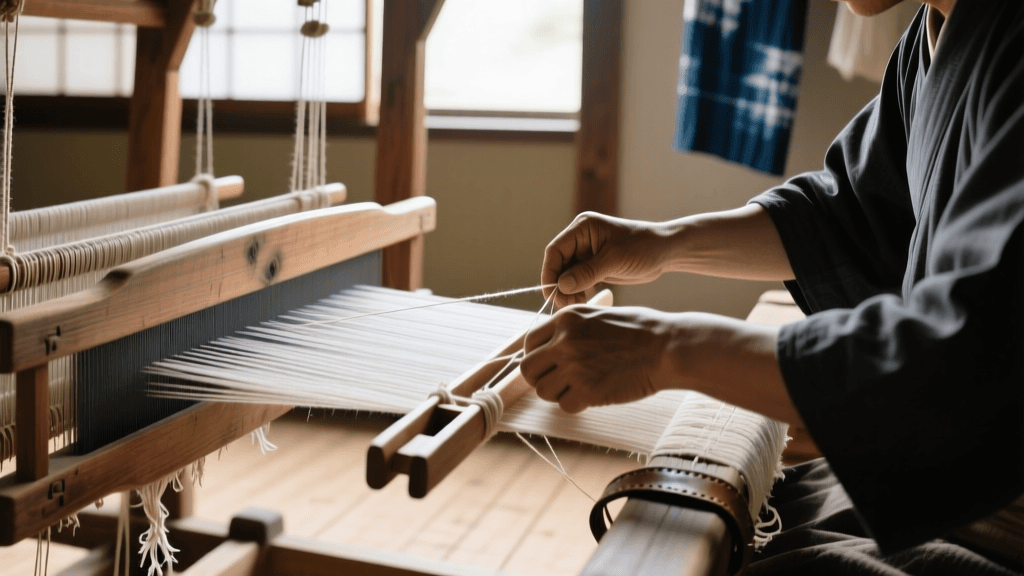
The 2026 Renaissance of Japanese Hand-Weaving
In 2026, the global slow fashion and heritage craft movements have converged, sparking a massive resurgence of interest in traditional Japanese hand-weaving. Textile artisans, designers, and dedicated hobbyists are increasingly turning away from mass-produced, synthetic fabrics to rediscover the profound, meditative practice of weaving on traditional looms. At the heart of this revival is the Jibata (ground loom) and the creation of Tsumugi (pongee silk), a textile celebrated for its slubby texture, incredible durability, and understated elegance.
Unlike the rigid, foot-treadle looms common in Western weaving traditions, the Japanese Jibata relies on the weaver's own body weight to maintain warp tension. This intimate physical connection between the artisan and the textile results in a uniquely organic fabric. Whether you are a seasoned weaver looking to expand your technical repertoire or a cultural historian fascinated by Asian traditions, mastering the Jibata and Tsumugi methods offers a deeply rewarding journey into Japan's sartorial heritage.
Anatomy of the Jibata (Traditional Floor Loom)
To understand Japanese weaving methods, one must first understand the elegant simplicity of the Jibata. Dating back centuries, this loom sits low to the ground and is traditionally constructed from local hardwoods like cherry or zelkova. Its design is modular, allowing it to be disassembled and stored when not in use—a practical necessity in traditional Japanese homes.
Key Components of the Jibata
- Chikiri (Cloth Beam): The front beam where the finished woven cloth is rolled. It sits very close to the floor.
- Oshiki (Warp Beam): The back beam that holds the unwoven warp threads. On a Jibata, this is often anchored to the floor or a heavy weight.
- Heddles (Sokobari): Unlike Western looms that use complex harness frames, traditional Jibata often use individual string heddles manipulated by hand or simple bamboo sticks, allowing for intricate patterning.
- Osa (Reed): The bamboo comb used to beat the weft thread tightly into place. The dent (spacing) of the reed dictates the final density of the Tsumugi silk.
- Backstrap Tensioning: The most defining feature of the Jibata. The weaver wears a belt or backstrap connected to the cloth beam. By leaning back, the weaver controls the warp tension dynamically, adjusting it with every single pass of the shuttle.
'The Jibata is not merely a tool; it is an extension of the weaver's breath and posture. The tension of the silk is the tension of the artisan's spine.'
— Master Weaver Hiroshi Sato, Ibaraki Prefecture Textile Guild, 2025.
Comparison Chart: Jibata vs. Takahata vs. Modern Looms
While the Jibata is iconic, it is not the only loom used in Japan. The Takahata (high loom), introduced later and influenced by continental Asian and European designs, uses foot treadles. Below is a 2026 comparison to help you choose the right equipment for your studio.
| Loom Type | Tension Method | Best For | 2026 Avg. Cost (USD) |
|---|---|---|---|
| Jibata (Ground Loom) | Backstrap / Body Weight | Traditional Tsumugi, Kasuri (Ikat), narrow obis | $1,200 - $3,500 (Antique/Restored) |
| Takahata (High Loom) | Foot Treadles & Frame | Wider kimono bolts, complex multi-shaft patterns | $2,500 - $6,000 (New/Custom) |
| Modern Table Loom | Mechanical Friction Brake | Beginners, small studio spaces, sampling | $800 - $1,800 (Commercial Brands) |
Sourcing Yarn and Equipment in 2026
Acquiring authentic materials is crucial for traditional Tsumugi weaving. In 2026, the market for antique Showa-era Jibata looms has stabilized, but high-quality restored models are highly sought after. Specialist dealers in Tokyo's Asakusa district and online heritage craft auctions typically price fully restored, ready-to-weave Jibata looms between 180,000 and 450,000 JPY (approximately $1,200 to $3,000 USD).
Sourcing Tsumugi Ito (Pongee Silk Yarn)
True Tsumugi is woven from silk noil—the short, leftover fibers from the reeling of continuous silk filament. These fibers are hand-spun into a yarn that is irregular, matte, and incredibly strong. As of early 2026, premium hand-spun Tsumugi yarn from renowned sericulture regions like Nagano and Kagoshima costs roughly $85 to $120 USD per 100-gram skein. When sourcing, look for yarn that has been naturally degummed and dyed using botanical methods, such as indigo (aizome) or persimmon tannin (kakishibu).
The Tsumugi Weaving Process: Step-by-Step
Weaving Tsumugi on a Jibata is a slow, deliberate process. A single kimono bolt (tanmono), which measures roughly 14 inches wide and 40 feet long, can take a master weaver over a month to complete. Here is the foundational workflow for 2026 practitioners.
1. Seikei (Warping)
The warp threads are measured out to the exact length required. Because Tsumugi yarn is slubby and uneven, warping must be done by hand over a wooden creel. The artisan counts the threads meticulously, often using a traditional bamboo measuring frame to ensure the final width of the kimono bolt is exact.
2. Noribiki (Sizing)
To prevent the short silk fibers from fraying and snapping under the high tension of the Jibata, the warp threads are coated in a natural sizing. In 2026, while some commercial studios use synthetic sizing, traditionalists still use a paste made from boiled rice flour or funori (seaweed extract). This stiffens the yarn, making it smooth enough to pass through the reed.
3. Hata-kake (Threading the Loom)
Each individual warp thread is passed through the heddle and then through the dent of the bamboo reed. This step requires immense patience and good lighting. A single crossed thread will result in a flaw in the final textile.
4. Kasuri Preparation (Optional but Traditional)
If weaving Kasuri (the Japanese equivalent of Ikat), the weft threads are tightly bound with cotton string in specific geometric patterns before being dyed in indigo vats. When woven, the dyed and undyed sections align to create blurred, breathtakingly beautiful motifs. According to the UNESCO Intangible Cultural Heritage registry, the meticulous hand-tying of Kasuri threads in regions like Yuki remains one of the most protected and revered textile techniques in the world.
5. Oru (Weaving and Beating)
The weaver sits on the floor, secures the backstrap, and leans back to establish tension. Using a boat-shaped wooden shuttle (hi), the weft is passed through the shed. The weaver then pulls the batten holding the reed forward with a firm, rhythmic strike to pack the weft tightly. The rhythmic 'thwack' of the reed is the heartbeat of the traditional Japanese weaving village.
Preserving the Craft: 2026 Workshops and Apprenticeships
The survival of the Jibata and Tsumugi methods relies on the transmission of knowledge from master to apprentice. The Metropolitan Museum of Art notes that Japanese textiles are not merely decorative; they are deeply embedded in the social and spiritual fabric of the culture, making their preservation a matter of national pride.
For international and domestic students in 2026, several premier institutions offer immersive learning experiences:
- Yuki Tsumugi Village (Ibaraki Prefecture): Offering intensive 4-week residencies where students learn hand-spinning, Kasuri tying, and Jibata weaving from designated Living National Treasures.
- Ojiya Chijimi Center (Niigata Prefecture): Famous for its crepe silk, this center offers summer workshops focusing on the unique high-twist weft techniques woven on modified ground looms.
- Kyoto Seika University Textile Lab: A modern academic approach where students combine traditional Jibata mechanics with contemporary digital design patterns.
For those looking to travel and experience these crafts firsthand, the Japan National Tourism Organization highlights several craft villages that have opened their doors to eco-tourism and slow-travel itineraries in 2026, allowing visitors to support local artisans directly.
Conclusion: The Future of a Timeless Art
Mastering the Jibata loom and the art of Tsumugi silk weaving is not a quick endeavor. It requires physical endurance, deep concentration, and a profound respect for natural materials. Yet, as we navigate the fast-paced, digital-centric landscape of 2026, the tactile grounding provided by traditional Japanese hand-weaving has never been more vital. By investing in antique looms, sourcing ethical silk noil, and dedicating oneself to the rhythmic discipline of the shuttle and reed, modern weavers are ensuring that the soulful, slubby beauty of Tsumugi will endure for generations to come.