Jibata Looms & Kasuri Hand-Weaving Methods Guide 2026
The Renaissance of Japanese Hand-Weaving in 2026
The global slow-fashion renaissance of 2026 has placed an unprecedented spotlight on heritage textiles, driving a massive resurgence in traditional Japanese hand-weaving methods. At the center of this revival is the jibata (traditional floor loom) and the intricate kasuri (ikat) resist-dyeing technique. For modern artisans, textile students, and dedicated hobbyists, mastering these methods is no longer just about historical preservation; it is about participating in a living, breathing craft that merges mathematical precision with deep meditative practice. According to the Japan's Ministry of Economy, Trade and Industry (METI) Kogei portal, the demand for authentic, hand-woven Japanese textiles has reached a decade-high in 2026, prompting a new wave of apprenticeships and specialized tool manufacturing.
Anatomy of the Jibata: Japan's Traditional Floor Loom
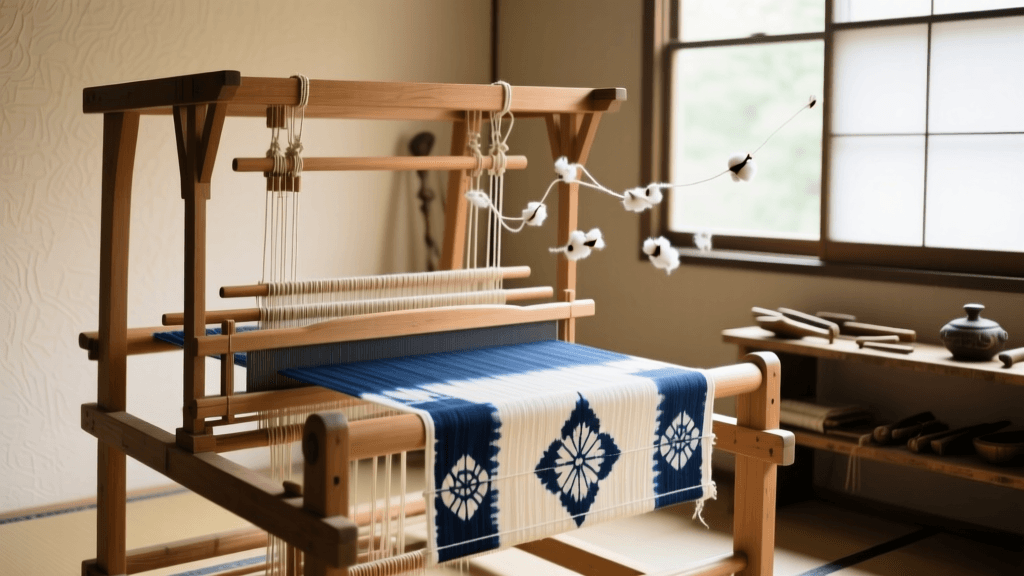
Unlike Western floor looms where the weaver sits on an elevated bench and operates treadles with their feet, the traditional Japanese jibata is a ground-level loom. The weaver sits on a zabuton (floor cushion) directly behind the warp beam, using their body weight and a backstrap to maintain warp tension. This intimate physical connection to the loom allows for incredible sensitivity to thread tension, which is vital when working with delicate hand-spun silk or uneven cotton yarns.
The primary components of a standard jibata include:
- Osa (Reed): A comb-like structure made from bamboo or metal that beats the weft yarn into place and determines the fabric's width and density.
- Ayatori (Pattern Harnesses): Complex string heddles that are manually manipulated, often with the assistance of a drawboy or a mechanical dobby attachment, to create intricate geometric patterns.
- Hi (Shuttle): Traditionally carved from persimmon or cherry wood, the boat-shaped shuttle carries the weft yarn through the shed.
- Makijiku (Warp Beam): The cylindrical beam that holds the unwoven warp threads, tensioned by the weaver's lower back and a specialized belt.
In 2026, modernized jibata looms often feature hybrid tensioning systems that reduce lower back strain while preserving the traditional low-profile aesthetic and tactile feedback required for heritage weaving.
Mastering Kasuri: The Mathematics of Japanese Ikat
Kasuri is the Japanese term for ikat, a technique where threads are resist-dyed before they are woven to create patterns that appear to have a characteristic blurred or brushed edge. The preparation for kasuri is arguably more demanding than the weaving itself. It requires a profound understanding of textile mathematics, as the weaver must calculate the exact shrinkage and tension of the yarn during the dyeing and weaving phases.
There are three primary types of kasuri:
1. Tate-Gasuri (Warp Ikat)
Only the warp threads are dyed. This method is slightly more forgiving, as the weft threads are a solid color, and the pattern alignment is adjusted simply by beating the weft tighter or looser.
2. Yoko-Gasuri (Weft Ikat)
Only the weft threads are dyed. This requires the weaver to carefully adjust the weft yarn with a bamboo pick or needle after every single shuttle pass to ensure the pattern aligns perfectly across the width of the fabric.
3. Ei-Gasuri (Double Ikat)
Both warp and weft threads are resist-dyed. This is the pinnacle of the craft. As noted in the Kurume Kasuri traditional craft guidelines, achieving perfect registration in double ikat requires master-level skill, as even a millimeter of deviation in thread tension will distort the intended geometric motif.
The resist-dyeing process, known as kukuri, traditionally involves tightly binding sections of the yarn bundle with cotton string. However, in 2026, many contemporary studios have adopted specialized, reusable silicone and vinyl resist tapes that speed up the binding process while providing 100% waterproof barriers against natural indigo vats.
Sourcing Jibata Looms and Tools in 2026
Acquiring a jibata loom today requires navigating a niche market. While antique looms from the Meiji and Taisho eras are highly sought after, they often require extensive restoration. Alternatively, a new generation of specialized woodworkers in regions like Takayama and Kyoto are producing CNC-milled, precision-crafted reproduction looms using sustainably sourced Japanese cypress (hinoki).
| Loom Type | Material & Origin | 2026 Price Range (USD) | Best For |
|---|---|---|---|
| Antique Meiji-Era Jibata | Aged Keyaki (Zelkova) / Kyoto | $4,500 - $8,000 | Collectors, Museum Displays, Master Weavers |
| Modern CNC Reproduction | Sustainable Hinoki (Cypress) / Takayama | $2,800 - $4,200 | Serious Artisans, Studio Production, Daily Weaving |
| Portable Table Jibata | Bamboo & Aluminum Hybrid / Osaka | $600 - $950 | Beginners, Traveling Workshops, Sampling |
| Restored Taisho-Era Dobby | Mixed Hardwoods & Brass Fittings / Nishijin | $6,500 - $12,000 | Complex Pattern Weaving, Nishijin-ori Silk Brocade |
The Aizome Process: Natural Indigo Dyeing for Kasuri
Traditional kasuri is inextricably linked to aizome (natural indigo dyeing). The foundation of this process is sukumo, dried and fermented polygonum tinctorium (Japanese indigo) leaves. In 2026, Tokushima Prefecture remains the heart of sukumo production, though climate shifts have made the autumn fermentation process more challenging, driving up the cost of premium, master-fermented sukumo.
To create the dye vat (aidate), the sukumo is mixed with hardwood ash lye (aku), sake, and wheat bran. Maintaining a living indigo vat requires daily feeding and pH monitoring. Modern weavers in 2026 utilize digital pH meters and submersible temperature probes to ensure the vat remains at the optimal alkalinity and warmth (around 30°C), ensuring the bacteria that reduce the indigo remain active. When the kukuri-bound yarn bundles are dipped repeatedly into the vat and exposed to oxygen, the iconic deep, layered blues of Japanese heritage textiles are born.
Ergonomics and the Modern Weaver's Posture
Historically, the physical toll of sitting on the floor and operating a heavy wooden battan (beater) led to severe joint and back issues for aging artisans. The 2026 approach to jibata weaving heavily emphasizes ergonomics without sacrificing tradition. Artisans now utilize heated, high-density memory foam zabuton cushions that support the sit bones and promote proper pelvic tilt. Furthermore, adjustable lumbar backrests that anchor to the floor are commonly used to offset the backward pull of the warp tension, allowing weavers to maintain their practice comfortably for decades.
Preserving the Craft: Communities and Workshops
The survival of jibata weaving and kasuri relies on community knowledge transfer. For those looking to study these techniques, regions like Ibaraki (famous for Yuki Tsumugi silk weaving techniques) and Fukuoka offer immersive, multi-week residencies. These programs pair novices with Ningen Kokuho (Living National Treasures) and certified master weavers. In 2026, digital archives and VR-assisted loom threading tutorials have also emerged as supplementary tools, helping international students decode the complex harness tie-ups before they ever touch a physical shuttle.
Conclusion
Mastering the jibata loom and kasuri hand-weaving methods is a profound commitment to the Japanese philosophy of monozukuri (the art of making things). Whether you are sourcing a restored antique loom, calculating the resist-dye mathematics for a double ikat motif, or tending to a living indigo vat, the practice demands patience, precision, and deep respect for natural materials. As the 2026 textile community continues to champion sustainable, heritage-driven fashion, the rhythmic sound of the wooden shuttle and the battan striking the reed remain a powerful testament to the enduring beauty of Japanese hand-weaving.