Guide to Japanese Wedding Kimono: Shiromuku and Irochakake
The Timeless Elegance of Japanese Bridal Fashion
The transition from everyday life to the sacred union of marriage is marked by profound sartorial choices in Japan. While Western-style white gowns have gained popularity, the traditional Japanese wedding kimono remains the pinnacle of bridal elegance, deeply rooted in Shinto rituals and centuries of textile artistry. For brides planning a traditional ceremony at historic shrines like Meiji Jingu in Tokyo or Heian Jingu in Kyoto, understanding the nuances of bridal attire is essential. This comprehensive guide explores the ceremonial significance, practical costs, and dressing etiquette of Japan's most iconic wedding garments.
The Shiromuku: Symbolism of Pure White
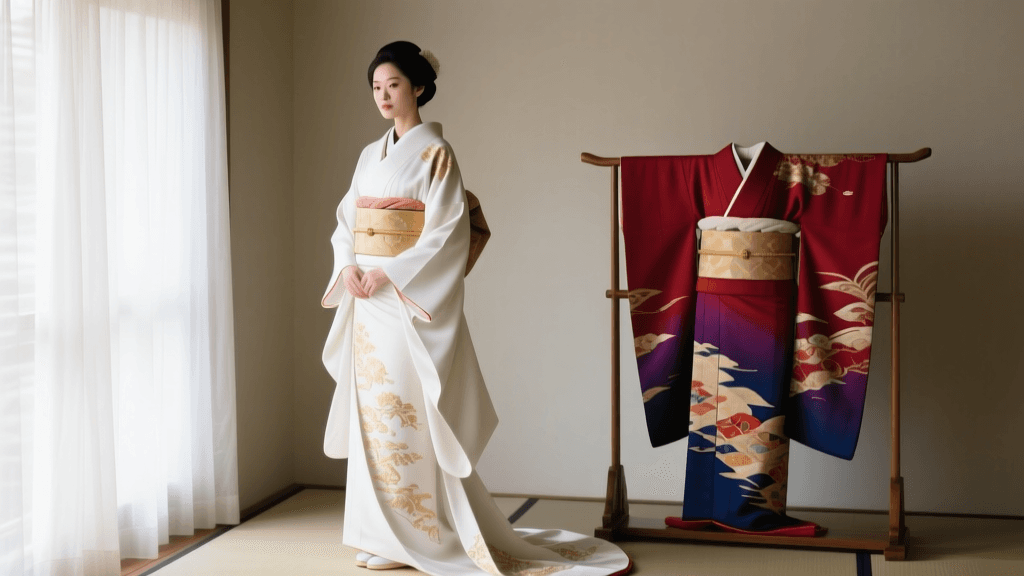
The shiromuku (literally 'pure white') is the most formal and traditional bridal ensemble, worn exclusively during the Shinto wedding ceremony. As noted by cultural authorities like the Japan Guide, the stark white color holds deep spiritual significance in Shintoism, representing purity, virginity, and the bride's willingness to be 'dyed' in the colors and traditions of her new family. The ensemble is entirely white, from the outer robe to the undergarments, the obi sash, and even the accessories.
The white of the shiromuku is not merely an absence of color, but a sacred canvas representing the bride's readiness to embrace the traditions and hues of her new family.
Essential Components of the Shiromuku
A complete shiromuku ensemble is a complex layering of garments and accessories, each serving a specific aesthetic and symbolic purpose:
- Kakeshita: The primary under-robe, featuring a long, trailing hem and intricate white-on-white brocade patterns.
- Uchikake: The heavily padded outer coat worn over the kakeshita. It is not tied with an obi but left open to reveal the layers beneath, often featuring auspicious motifs like cranes, pine trees, or plum blossoms.
- Maru Obi: A formal, double-sided brocade sash, tied in a large, elaborate knot (such as the fukura suzume or sparrow knot) at the back.
- Wataboshi: A large, white silk hood worn over the head during the ceremony, symbolizing the bride's purity and shielding her from evil spirits.
- Tsunokakushi: An alternative headpiece (often worn at the reception) literally translating to 'horn-hiding,' symbolizing the bride's resolve to hide any 'horns' of jealousy or selfishness in her marriage.
The Irochakake: Vibrant Reception Attire
Following the solemn Shinto ceremony, the bride traditionally changes into an irochakake (colored uchikake) for the wedding reception (hiroen). This garment allows the bride to express her personal style while maintaining the formal silhouette of the uchikake. Historically, red was the dominant color, chosen for its ability to ward off evil spirits and symbolize celebration. Today, modern brides frequently opt for pastel pinks, rich purples, gold, or even black with vibrant embroidery.
The irochakake is often paired with a furisode-style under-robe, featuring long, swinging sleeves that denote youth and unmarried status (though specifically adapted for brides). The transition from the austere white shiromuku to the vibrant irochakake visually represents the bride's rebirth into her new life.
Textile Craftsmanship: Nishijin-ori and Yuzen
The creation of a formal wedding kimono is a masterclass in Japanese craftsmanship. According to the Victoria and Albert Museum, the evolution of Japanese silk weaving and dyeing techniques reached its zenith in garments meant for life's most pivotal ceremonies. Bridal uchikake frequently utilize Nishijin-ori, a luxurious, multi-layered brocade weaving technique originating in Kyoto that incorporates gold and silver threads to create three-dimensional, light-catching motifs. Alternatively, Yuzen dyeing—a resist-dyeing technique using rice paste—allows artisans to paint elaborate, pictorial landscapes directly onto the silk, resulting in breathtaking, one-of-a-kind masterpieces.
Hiki Furisode: The Modern Alternative
For brides seeking a balance between tradition and modern mobility, the hiki furisode (trailing long-sleeve kimono) has become a popular choice. Unlike the heavy, floor-dragging uchikake, the hiki furisode is a single, exceptionally long kimono with a padded hem and furisode sleeves. It is tied with an obi, allowing for a more defined waistline and easier movement, making it ideal for outdoor shrine weddings or venues with limited space.
Practical Guide: Costs, Rentals, and Timelines
Acquiring a bridal kimono is a significant investment. Because a high-quality, hand-woven silk uchikake can cost upwards of 1,000,000 JPY ($6,500 USD) to purchase, the vast majority of brides opt for rental packages. These packages are highly convenient, as they include the garment, all necessary undergarments (juban, koshihimo ties), accessories, and professional dressing services.
| Garment Type | Primary Usage | Avg Rental Package Cost (USD) | Est. Garment Weight | Booking Timeline |
|---|---|---|---|---|
| Shiromuku | Shinto Ceremony | $1,500 - $2,500 | 15 - 20 lbs | 6 - 9 Months |
| Irochakake | Reception / Banquet | $1,800 - $3,000 | 12 - 18 lbs | 6 - 9 Months |
| Hiki Furisode | Ceremony & Reception | $1,200 - $2,200 | 8 - 12 lbs | 4 - 6 Months |
Actionable Advice: If you are planning a wedding during Japan's peak bridal seasons (Spring/Autumn, specifically May and November), you must book your kimono rental and shrine reservation at least 9 months in advance. Ensure your rental package explicitly includes kitzuke (dressing), hatsuzuke (bridal hair styling), and makeup, as hiring these professionals separately can add $500+ to your budget.
The Dressing Process: A Test of Patience
Dressing in a traditional bridal kimono is an arduous, multi-hour process that requires the expertise of a licensed kitsuke-shi (kimono dresser). The historical evolution of the kimono from a simple undergarment to a complex outer robe, as documented by the Metropolitan Museum of Art, necessitates a precise layering technique.
- Foundation (45 mins): The bride is fitted with specialized padding to create a cylindrical silhouette, flattening the curves to ensure the kimono hangs perfectly straight.
- Layering (30 mins): The nagajuban (under-robe) and kakeshita are secured using numerous silk and muslin ties (koshihimo).
- The Obi (30 mins): The heavy brocade obi is wrapped, folded, and tied into an intricate knot, often requiring a pre-tied tsukuri obi for structural stability.
- Uchikake & Accessories (15 mins): The outer coat is draped, and the bride is fitted with zori (straw sandals) and white tabi (split-toe socks).
Mastering Bridal Etiquette and Movement
Wearing a bridal kimono requires a complete adjustment to one's posture and gait. The tight binding of the obi restricts deep breathing and bending at the waist. Brides must practice suriashi, a sliding walking technique where the feet barely leave the tatami mats, preventing the hem from lifting and ensuring a graceful, gliding appearance. When sitting, the bride must lower herself straight down, keeping her back perfectly straight to avoid crushing the elaborate obi knot. Furthermore, a decorated fan (sensu) is traditionally held in the right hand or tucked into the obi, serving as a vital prop for formal photographs and shrine rituals.
Conclusion
Choosing to wear a shiromuku or irochakake is a profound commitment to Japanese heritage. While the physical weight of the silk and the rigorous dressing process demand endurance, the resulting aesthetic is unparalleled in its majesty. By understanding the symbolism, budgeting appropriately for rental packages, and preparing for the physical demands of the attire, modern brides can honor centuries of tradition while stepping into their new lives with grace and cultural pride.