Guide to Japanese Wedding Kimono: Shiromuku and Iro-Uchikake
The Profound Elegance of Japanese Bridal Wear
A traditional Japanese wedding, or shinzen shiki, is a masterclass in ritual, symbolism, and textile artistry. At the heart of this ceremony is the bridal kimono, a garment that transcends mere clothing to become a spiritual and cultural artifact. Unlike Western bridal fashion, which often emphasizes the silhouette of the body, Japanese bridal wear focuses on the drape, the layers, and the profound meanings woven into the silk. According to the Victoria and Albert Museum, the kimono is not just a garment but a canvas for social status, seasonal awareness, and life transitions. For brides, this transition is marked by two primary garments: the pure white shiromuku and the vibrant iro-uchikake.
Shiromuku: The Canvas of Purity
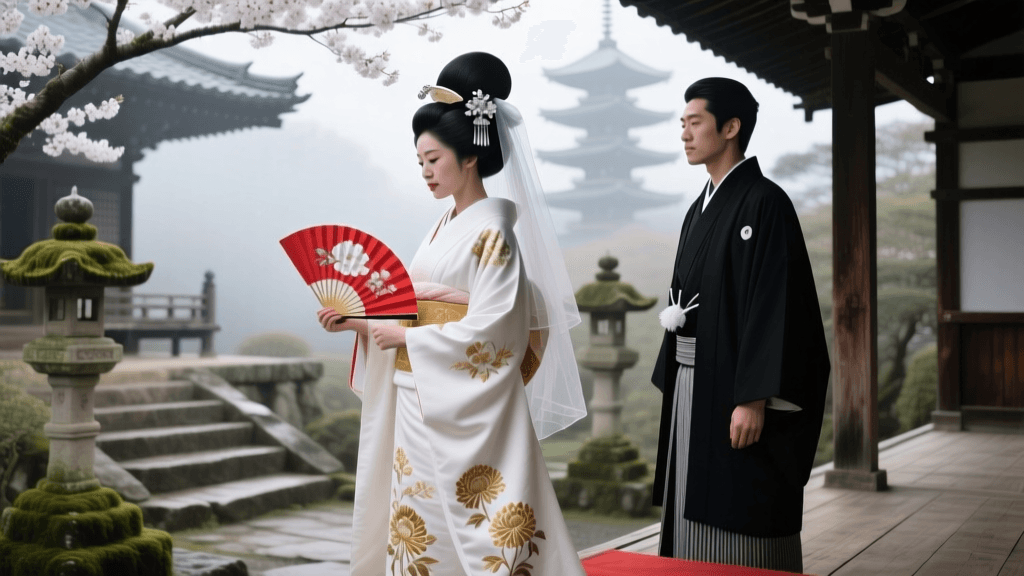
The shiromuku is the most formal wedding attire in Japan, worn exclusively during the Shinto ceremony. Translating to 'pure white,' the ensemble consists of multiple layers of pristine white silk. Historically, white in Japanese culture holds dual symbolism: it represents the purity and maidenhood of the bride, but it also signifies a 'blank canvas.' By wearing white, the bride symbolically demonstrates her willingness to be 'dyed' in the colors and traditions of her new husband's family.
The shiromuku is not a single piece but a complex layering system. It begins with the hadajuban (undergarment) and susoyoke (half-slip), followed by the kakeshita (the main under-robe). Over this sits the uchikake, a heavily padded, unbelted outer robe that trails elegantly on the floor. The ensemble is secured with a maru-obi, the most formal and ornate of all obi belts, often woven with gold and silver threads. The look is completed with either a tsunokakushi (a white hood meant to hide the 'horns' of jealousy and ego) or the bunkin takashimada, an elaborate traditional wig adorned with tortoiseshell kanzashi (hairpins).
Iro-Uchikake: The Celebration of Color
While the shiromuku is reserved for the solemn shrine ceremony, the reception, or hiroen, calls for celebration. Here, the bride transitions into the iro-uchikake (colored outer robe). As highlighted by the Metropolitan Museum of Art, the evolution of the uchikake from the Muromachi period to the Edo period saw it transform from everyday samurai-class wear into highly decorative ceremonial garments. The iro-uchikake is a riot of color and auspicious motifs.
Red is the most popular base color, symbolizing joy, vitality, and protection against evil spirits. Gold, silver, and vibrant greens are heavily embroidered or woven into the silk using techniques like saga nishiki or shishu (Japanese embroidery). The motifs are strictly auspicious: cranes (tsuru) for longevity and marital fidelity, pine, bamboo, and plum (shochikubai) for resilience and prosperity, and peonies for wealth. The iro-uchikake allows the bride to showcase her personal style while adhering to traditional blessings.
Hikifurisode: A Modern Bridal Alternative
For brides seeking a slightly less formal or more contemporary reception look, the hikifurisode is an increasingly popular choice. A furisode is a kimono with long, swinging sleeves (often 100cm to 114cm in length), traditionally worn by unmarried women. The 'hiki' prefix means 'trailing,' indicating that the hem is padded to trail on the floor, much like the uchikake. It offers a youthful, dynamic silhouette and is often paired with modern floral or geometric patterns alongside traditional motifs.
Comparative Guide: Bridal Garments at a Glance
Choosing the right garment depends on the ceremony type, venue, and budget. Below is a structured comparison to aid in decision-making.
| Feature | Shiromuku | Iro-Uchikake | Hikifurisode |
|---|---|---|---|
| Occasion | Shinto Shrine Ceremony | Wedding Reception (Hiroen) | Reception or Rehearsal Dinner |
| Primary Color | Pure White | Red, Gold, Black, or Pastels | Varied, often vibrant patterns |
| Sleeve Length | Standard / Long | Standard / Long | Extra Long (100cm - 114cm) |
| Weight | Heavy (up to 5kg) | Very Heavy (up to 6kg) | Moderate to Heavy (3kg - 4kg) |
| Headpiece | Tsunokakushi or Wig | Floral Kanzashi or Tiara | Floral Kanzashi or Western Updo |
| Average Rental Cost | 150,000 - 250,000 JPY | 200,000 - 350,000 JPY | 100,000 - 180,000 JPY |
The Architecture of the Silhouette: Fitting and Measurements
Unlike Western wedding gowns, which are tailored to hug the curves of the body, the kimono requires a completely different approach to fitting. The ideal kimono silhouette is the naishin-gata, a straight, cylindrical shape that de-emphasizes the bust, waist, and hips. This requires a highly specialized dressing process known as kitsuke.
Actionable Fitting Advice:
- Measurements: Kimono length is generally calculated as your height multiplied by 0.6, but bridal kimono are wrapped and folded at the waist to create the ohashori (the visible tuck under the obi). You do not need to lose or gain weight for a kimono; it is adjusted to your body on the day.
- Padding: Expect your dresser to use 3 to 5 specialized cotton towels or sponges. These are wrapped tightly around the chest, waist, and hips to smooth out natural curves and create the cylindrical foundation.
- The Date-Maki: This is a stiff, elasticized wrap tied around the chest to flatten the bust and secure the padding. It can feel quite restrictive, so practice deep, diaphragmatic breathing during your fitting.
- Collar Placement: The eri (collar) of the under-robe (nagajuban) should sit precisely at the base of the throat, forming a perfect 'V' shape that frames the face and highlights the nape of the neck, considered a highly elegant feature in Japanese aesthetics.
Financial Planning: Rental vs. Purchase Costs
Bridal kimono represent a significant financial investment. The Japan National Tourism Organization notes that traditional garments are treasured heirlooms, but modern brides predominantly opt for rental packages due to the high costs and storage requirements of silk.
Cost Breakdown (Estimates in JPY and USD):
- Rental Packages (150,000 - 350,000 JPY / $1,000 - $2,300 USD): Most bridal salons offer comprehensive packages. This typically includes the shiromuku or iro-uchikake, all undergarments, the obi, accessories, dressing services on the day, and hair/makeup. This is the most practical route for 90% of brides.
- Custom Purchase (800,000 - 3,000,000+ JPY / $5,300 - $20,000+ USD): Commissioning a bespoke, hand-painted (yuzen) or hand-embroidered silk uchikake takes 6 to 12 months. This route is chosen by brides who wish to pass the garment down as a family heirloom.
- Vintage/Second-hand (50,000 - 150,000 JPY / $330 - $1,000 USD): For budget-conscious brides, purchasing a vintage kimono from specialized antique markets in Kyoto or Tokyo is an option. However, you must budget an additional 50,000 JPY for professional cleaning and the purchase of missing accessories.
The Bridal Timeline: When to Book and Fit
Planning a traditional Japanese wedding requires meticulous timing, especially regarding the kimono salon.
- 10-12 Months Prior: Secure your wedding venue and shrine. Once the date is set, begin researching kimono salons. High-end salons in Kyoto and Tokyo book out a year in advance for peak seasons (Spring cherry blossoms and Autumn foliage).
- 6-8 Months Prior: Visit salons for initial viewings. Try on different silhouettes and colors. Book your chosen shiromuku and iro-uchikake, and pay the deposit.
- 3-4 Months Prior: Finalize your hair and makeup trials. If you are wearing a traditional wig, the salon will need to measure your head circumference and custom-style the wig to match your face shape.
- 1-2 Months Prior: The final fitting. While the kimono itself isn't altered, the dresser will practice the exact padding technique and obi-tying style (such as the fukura-suzume or 'puffed sparrow' knot) to ensure timing and comfort on the wedding day.
Essential Accessories and Etiquette
The bridal kimono is incomplete without its accompanying accessories, each holding deep cultural significance. The sensu (folding fan) is held during the ceremony to symbolize a prosperous future that opens up like the fan. The hakoseko is a small, ornate brocade pouch tucked into the front of the obi, historically used to carry a mirror or money, but now serving as a decorative element. Finally, the kaiken is a small, ceremonial dagger tucked into the obi. While its historical purpose was for self-defense or ritual, today it symbolizes the bride's resolve and her commitment to protecting her new family.
When moving in an uchikake, the bride must adopt the suriashi walking technique—sliding the feet along the floor without lifting the heels, keeping the upper body perfectly still. This not only prevents the heavy hem from tangling but also creates the illusion that the bride is gliding gracefully across the shrine grounds.
Conclusion
Selecting a Japanese wedding kimono is an immersion into centuries of textile mastery and cultural philosophy. Whether you choose the blinding purity of the shiromuku for your vows or the vibrant storytelling of the iro-uchikake for your reception, you are participating in a living tradition. By understanding the architecture of the garment, the realities of the fitting process, and the financial and temporal investments required, modern brides can honor this ancient sartorial heritage with grace, confidence, and profound respect.