Vintage Kimono Auctions 2026: Appraising Silk & Obi Values
The 2026 Landscape of Secondhand Kimono Auctions
The global appetite for sustainable, heritage-rich fashion has fundamentally transformed the secondhand Japanese garment market. As we move through 2026, vintage kimono auctions are no longer niche collector circles; they are highly competitive arenas where textile historians, sustainable fashion curators, and international investors converge. The intersection of eco-conscious consumerism and a renewed appreciation for slow fashion has driven the value of authentic, handcrafted silk garments to unprecedented heights. According to recent market analyses from Tokyo-based antique textile syndicates, the demand for pre-1950s silk kimono and hand-woven obi has increased by over 34% year-over-year entering 2026.
For international buyers, navigating Japanese auction houses and digital platforms like Yahoo! Auctions Japan requires more than just a proxy bidding service. It demands a rigorous understanding of textile appraisal, historical context, and condition grading. Whether you are sourcing pieces for a private archive, a museum exhibition, or upcycling into contemporary luxury fashion, mastering the art of kimono valuation is essential in today's market.
Key Metrics for Kimono Value Appraisal
Appraising a vintage kimono requires a nuanced understanding of Japanese textile history, regional dyeing techniques, and formal garment classifications. Unlike Western vintage clothing, where brand labels often dictate price, a kimono's value is intrinsically tied to its craftsmanship, materials, and the complexity of its creation.
1. Era and Provenance
Garments from specific historical periods carry distinct aesthetic and monetary values. The Meiji era (1868 to 1912) is prized for its deep, natural indigo and safflower dyes, alongside heavy, luxurious silk weaves that reflect a pre-industrialized Japan. The Taisho era (1912 to 1926) is currently the most fiercely contested category in 2026 auctions. Taisho-era kimono feature bold, romantic, and sometimes avant-garde motifs, incorporating early synthetic dyes and Art Deco influences that appeal heavily to modern collectors and fashion designers. Early Showa (1926 to 1945) pieces offer a bridge between traditional motifs and wartime austerity, with subtle, elegant patterns that remain highly wearable today.
2. Textile Techniques and Regional Specialties
The Agency for Cultural Affairs, Japan, actively recognizes and protects traditional crafting techniques as Intangible Cultural Properties. When appraising a piece, identifying these protected techniques is the fastest way to determine its premium value.
- Oshima Tsumugi: Originating from Amami Oshima, this mud-dyed, hand-woven silk is among the most expensive textiles in the world. The intricate kasuri (ikat) patterns are woven from threads dyed in iron-rich mud and tea tannins. In 2026, authentic, vintage Oshima Tsumugi with verified paper certificates (shosho) routinely command top-tier auction prices.
- Kaga Yuzen vs. Kyo Yuzen: Kaga Yuzen, from Kanazawa, is characterized by realistic, botanical motifs and a specific five-color palette (kaga gosai), often featuring intentional 'insect-eaten' leaf motifs (mushikui). Kyo Yuzen from Kyoto is more stylized, often incorporating gold leaf and elaborate embroidery. Differentiating the two is a hallmark of an expert appraiser.
- Shibori and Kanoko: Hand-tied resist dyeing, particularly the micro-dot technique known as honza shibori, requires thousands of hours of labor. The three-dimensional texture of authentic kanoko shibori is impossible to replicate with modern machinery, making these pieces highly liquid assets in the auction market.
3. The Formality Hierarchy and Family Crests (Mon)
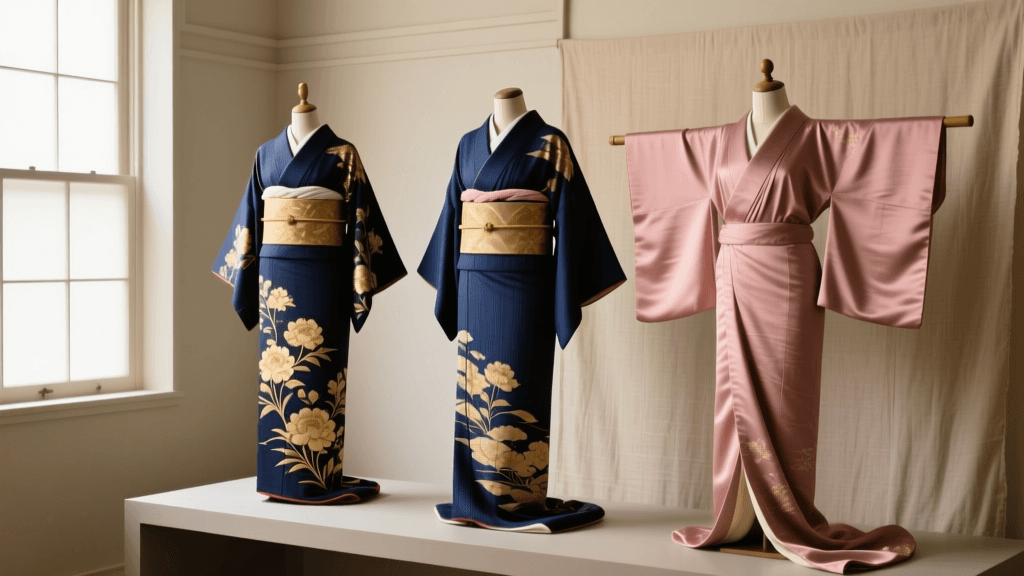
The formality of a kimono directly impacts its auction value, primarily indicated by the number of family crests (mon) dyed onto the fabric. A kurotomesode (black kimono with five crests) is the pinnacle of formal wear for married women and holds significant historical value. However, in the 2026 secondary market, highly decorative, crested houmongi (visiting wear) and furisode (long-sleeved unmarried women's wear) often outperform plain formal wear due to their visual impact and versatility in global fashion exhibitions. As noted by the Metropolitan Museum of Art, the structural and decorative evolution of the kimono reflects deep societal shifts, making highly decorated garments prime targets for historical preservation.
Evaluating Condition: The Dealbreakers in 2026
Condition is paramount in silk appraisal. Japanese auction listings use specific terminology to describe flaws, and understanding these terms prevents costly bidding mistakes. International buyers utilizing AI-powered translation tools in 2026 must still rely on visual inspection of high-resolution macro photos to verify these claims.
- Shimi (Stains): Protein-based stains on silk are notoriously difficult to remove without damaging the fibers. Small, localized shimi on the lower hem or inside the lining (hakkake) are acceptable, but stains on the primary visual panels (maemigoro) drastically reduce value.
- Yake (Sun Fading): Silk is highly susceptible to UV degradation. Yake often appears as a yellowing of white silk or a dulling of vibrant reds and purples. A garment with yake on the shoulders or back is generally considered unfit for museum display, though it may still be purchased for textile upcycling.
- Ise (Stretching/Creasing): Improper storage leads to deep, permanent creases along the fold lines. While a professional kimono washer (arai-hari) can disassemble, wash, and re-stretch the fabric bolts, this service is increasingly rare and expensive in 2026, factoring heavily into the buyer's total acquisition cost.
2026 Kimono Appraisal & Pricing Table
The following table provides a baseline for estimated auction values in USD for pristine to excellent condition garments as of early 2026. Prices fluctuate based on proxy bidding wars and seasonal demand, particularly peaking ahead of global spring fashion weeks and autumn tea ceremony seasons.
| Garment Type | Era / Origin | Key Identifier | Est. 2026 Auction Value (USD) |
|---|---|---|---|
| Oshima Tsumugi Kimono | Mid-Showa / Amami | Mud-dyed kasuri, paper certificate | $1,200 - $3,500 |
| Taisho Roman Furisode | Taisho (1912-1926) | Bold Art Deco motifs, long sleeves | $800 - $2,200 |
| Maru Obi (Formal Sash) | Pre-WWII / Nishijin | Heavy gold/silver brocade, double-sided | $400 - $1,500 |
| Meiji Era Uchikake | Meiji (1868-1912) | Padded hem, heavy silk crepe, embroidery | $2,500 - $6,000+ |
| Kaga Yuzen Houmongi | Early Showa / Kanazawa | Realistic botanicals, kaga gosai palette | $600 - $1,400 |
Navigating Proxy Bidding and Authentication
In 2026, direct participation in domestic Japanese auctions requires a verified Japanese address and bank account. Consequently, international collectors rely on advanced proxy services. Platforms have evolved beyond simple translation; they now offer preliminary authentication checks and high-definition macro-photography requests. When bidding on high-value Nishijin-ori obi or antique Meiji silk, always request photos of the inner lining (the hakkake and the jibitsu) and the selvedge edges (mimi). The selvedge often contains tiny, woven characters indicating the weaver, the region, or the specific silk guild, serving as a crucial authentication marker that modern reproductions lack.
Furthermore, the rise of AI-assisted textile analysis apps in 2026 allows buyers to upload close-up weave photos to identify synthetic blends. While pure silk was the standard for high-end vintage kimono, the introduction of early rayons and synthetic blends in the late Taisho and early Showa periods means that a visual and tactile assessment is vital. Authentic vintage silk possesses a distinct 'scroop' (a crunching sound when manipulated) and a deep, complex luster that flat synthetic fibers cannot replicate.
Spotting Modern Reproductions vs. Antique Silk
As the value of vintage kimono has surged, so has the sophistication of modern reproductions. In the 2026 market, digital printing on silk has become remarkably advanced, mimicking the blurred edges of hand-painted Yuzen. To differentiate, appraisers look for the 'ito-me' (the grain of the fabric). In authentic hand-dyed Yuzen, the dye penetrates the silk threads completely, meaning the color is visible on the reverse side of the fabric. Digital prints often leave the reverse side stark white or faintly tinted. Additionally, hand-applied gold leaf (surihaku) will show microscopic cracking and natural wear over decades, whereas modern metallic foils remain uniformly pristine and sit stiffly on top of the fibers.
The Victoria and Albert Museum highlights that the kimono is not merely a static garment but a dynamic canvas of Japanese art history. Understanding the physical evidence of the artisan's hand is what separates a novice bidder from a master appraiser.
Conclusion: The Investment Potential of Heritage Textiles
The 2026 secondhand kimono market represents a unique intersection of cultural preservation and alternative asset investment. As the generation of master dyers and weavers continues to age, the supply of authentic, handcrafted mid-century and antique silk is strictly finite. By mastering the appraisal of regional techniques, understanding the strict formality hierarchies, and carefully navigating the nuances of Japanese auction condition reports, collectors can acquire breathtaking pieces of wearable art. Whether you are seeking a Taisho-era masterpiece for your archive or a durable Oshima Tsumugi for contemporary styling, the auction block remains the premier destination for securing Japan's most exquisite textile treasures.