Mastering Tanmono: Zero-Waste Kimono Construction in 2026
The Geometry of Sustainability: Introduction to Tanmono
As the global fashion industry faces stringent sustainability mandates in 2026, designers and textile engineers are increasingly looking to the past for zero-waste solutions. At the forefront of this historical revival is the traditional Japanese kimono, specifically its foundational construction method rooted in the Tanmono bolt. Unlike Western tailoring, which relies on curved pattern pieces that generate significant offcut waste, the kimono is a masterclass in geometric efficiency. Every single thread of the woven fabric is utilized, making it one of the most inherently sustainable garment construction techniques in human history.
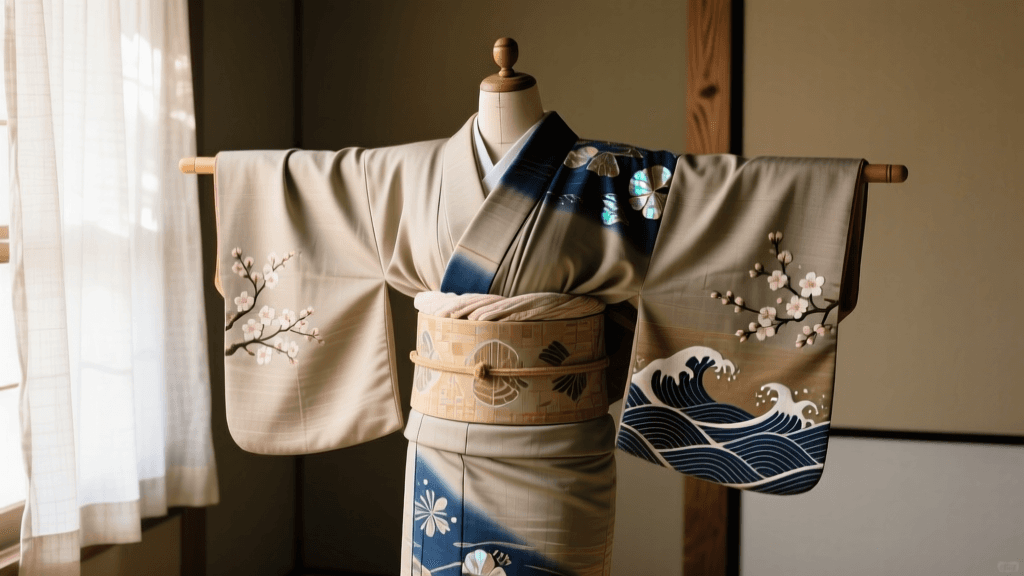
Understanding the Tanmono system requires a departure from modern, body-conforming draping. Instead, it embraces a modular, straight-line philosophy that prioritizes the integrity of the textile. According to the Metropolitan Museum of Art, the kimono's distinctive T-shaped silhouette is not merely an aesthetic choice, but a direct result of the standardized fabric bolt from which it is born. In 2026, as circular fashion becomes a regulatory requirement in many major markets, mastering these ancient cutting and sewing techniques offers a blueprint for the future of apparel manufacturing.
The Anatomy of the Tanmono Bolt
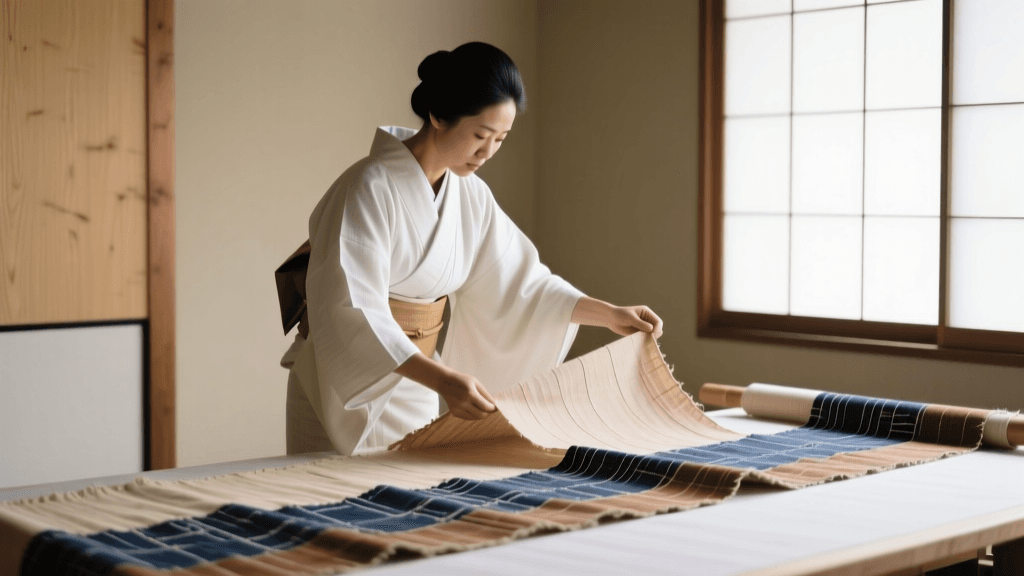
The foundation of zero-waste kimono construction is the Tanmono (反物), a standardized bolt of fabric. Historically woven on narrow backstrap or traditional floor looms, a standard women's kimono bolt measures approximately 36 centimeters (about 14 inches) in width and 11.5 to 12 meters (roughly 38 to 39 feet) in length. This specific dimension is not arbitrary; it is mathematically calculated to yield exactly one adult-sized garment with virtually zero leftover material.
Because the fabric is so narrow, the garment cannot be cut with wide, sweeping curves for armholes or waist darts. Instead, the construction relies on straight-line cutting. The 36cm width dictates the depth of the sleeves and the width of the body panels. When a tailor lays out the pattern, the entire 12-meter length is divided into specific rectangular sections. There is no fabric thrown onto the cutting room floor. Even the smallest remnants are traditionally repurposed for undergarments, collars, or household textiles.
The Eight Panels: A Modular Puzzle
A standard women's kimono is constructed from eight primary rectangular panels. The genius of the Tanmono system lies in how these panels are folded, layered, and sewn together to create a three-dimensional garment from two-dimensional rectangles. The eight panels include:
- Ushiromigoro (Back Body Panels): Two panels that form the back of the garment, usually cut from a single continuous length of fabric that is folded at the center back, eliminating the need for a central seam and preserving the continuity of the woven pattern.
- Maemigoro (Front Body Panels): Two panels that form the front left and right sides of the torso.
- Okumi (Front Overlap Panels): Two narrower panels attached to the front edges to create the overlapping closure (the okumi allows the kimono to wrap securely across the body).
- Sode (Sleeves): Two rectangular panels that are folded in half and attached to the body, creating the iconic deep, pouch-like sleeves that can serve as pockets.
In addition to these eight main panels, the construction includes the Eri (collar) and the Kake-eri (collar cover), which are cut from the remaining fabric at the very end of the bolt. The precision required to ensure the bolt yields exactly these pieces without shortage is a testament to centuries of refined textile mathematics.
Sewing Techniques: Basting and Straight Seams
The sewing techniques (shitate) used in kimono construction are as vital to its zero-waste and circular nature as the cutting method. Unlike Western garments that are sewn with tight, permanent lockstitches meant to last a lifetime without alteration, kimono seams are designed to be temporary and modular.
The primary seams are sewn using a running stitch, and the allowances are left untrimmed and unclipped. Because the edges are straight, they are simply folded inward and blind-stitched (kuke) to hide the raw edges without cutting away any excess fabric. This means that if the garment needs to be resized, or if the fabric needs to be cleaned, the seams can be easily unpicked without damaging the textile.
Furthermore, the extensive use of shitsuke (basting threads) during the construction and fitting process ensures that the fabric is handled without the need for pins, which can mar delicate silk or leave permanent holes. In 2026, modern zero-waste designers are adopting these exact basting and folding techniques to eliminate the micro-plastic pollution associated with synthetic interfacings and permanent overlocking threads.
Data Table: Tanmono Zero-Waste vs. Western Draped Construction
| Feature | Japanese Tanmono (Kimono) | Standard Western Tailoring |
|---|---|---|
| Pattern Geometry | Straight lines, rectangles, folds | Curved armholes, darts, tapered seams |
| Fabric Waste | 0% (Entire bolt utilized) | 15% - 25% offcut waste on average |
| Seam Construction | Running stitch, folded allowances, basting | Lockstitch, overlocked/serged edges, trimmed |
| End-of-Life Recyclability | Fully deconstructable to original bolt state | Difficult to separate mixed fibers and threads |
| Alteration Potential | High (can be resized across generations) | Low (limited by seam allowance and cuts) |
The 2026 Revival: AI Grading and Modern Zero-Waste Mandates
In 2026, the intersection of traditional craftsmanship and modern technology has given rise to a new wave of Tanmono-inspired fashion. With the European Union's Strategy for Sustainable and Circular Textiles enforcing strict waste-reduction quotas on apparel manufacturers, fashion houses are utilizing AI-driven pattern grading software to simulate the 36cm modular constraint of the Tanmono bolt on modern, wider fabrics.
By programming algorithms to restrict pattern pieces to straight lines and modular rectangles, contemporary brands are achieving near-zero waste on 60-inch wide industrial looms. The Victoria and Albert Museum has frequently highlighted how Asian textile traditions offer profound lessons in material respect, a concept that is now central to modern eco-design curricula worldwide. Designers are no longer viewing the lack of curves as a limitation, but as a sophisticated design constraint that forces innovation in volume, draping, and layering.
Arai-Hari: The Ultimate Circular Lifecycle
Perhaps the most remarkable aspect of kimono construction is the Arai-hari (wash and stretch) technique, which represents the pinnacle of circular fashion. Because the kimono is constructed entirely of straight, easily unpicked seams, a garment that has become soiled or faded over decades of wear can be completely deconstructed back into its original rectangular panels.
These panels are then washed, stretched on wooden frames (shinshi), and dried, effectively erasing the creases and wear patterns of the previous owner. Once dried, the fabric is re-basted and sewn into a brand-new kimono. This process allows a single high-quality silk Tanmono to be passed down through three or four generations, being resized, re-dyed, or simply refreshed as needed. In an era where 2026 consumers are demanding true garment longevity and repairability, the Arai-hari philosophy proves that the most advanced circular economy models were perfected centuries ago.
Conclusion
The Tanmono zero-waste cutting technique is far more than a historical curiosity; it is a highly sophisticated, mathematically precise system of garment construction that perfectly aligns with the ecological imperatives of 2026. By embracing straight-line geometry, modular paneling, and deconstructable sewing methods, the traditional kimono offers a timeless masterclass in sustainable design. As the fashion industry continues to pivot away from the wasteful practices of the past, the enduring wisdom of the Japanese Tanmono bolt remains a vital guide for the future of global apparel.