Hakama and Keikogi: Uniforms in Martial Arts and Tea Ceremony
The Intersection of Discipline and Textile
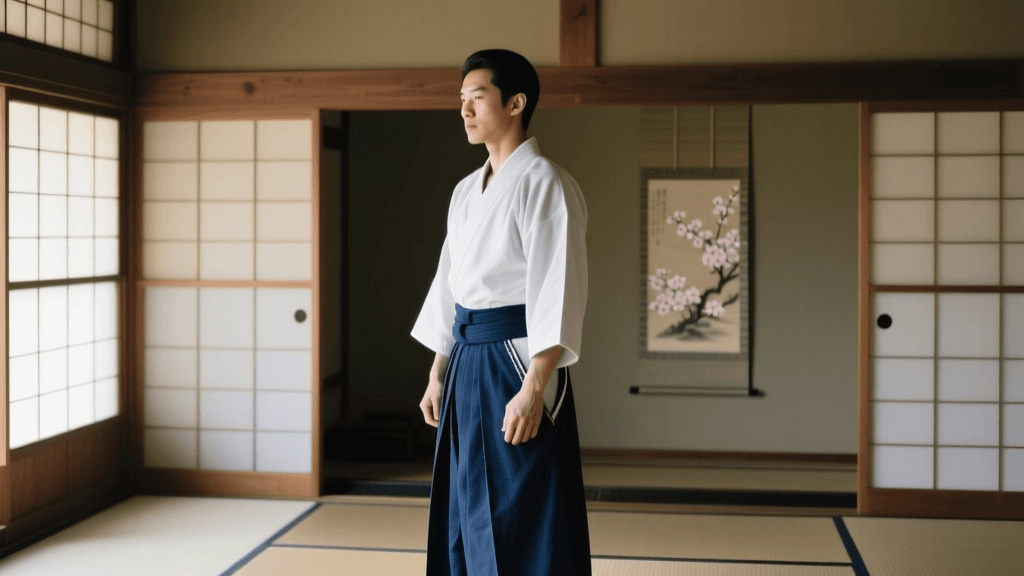
In the realm of Japanese traditions, clothing is never merely functional; it is a physical manifestation of philosophy. Whether one is stepping onto the tatami mats for martial arts (Budo) or entering the serene confines of a chashitsu for the tea ceremony (chado), the uniform serves as a boundary between the mundane world and the space of disciplined practice. The two most iconic garments in these spheres are the keikogi (training jacket) and the hakama (pleated trousers). Understanding their construction, symbolism, and proper usage is essential for any serious practitioner or collector of Asian traditional garments.
The Keikogi: Engineering for Movement
The keikogi, often simply called a gi, was developed in the late 19th century by Jigoro Kano, the founder of Judo. Before its invention, practitioners trained in everyday kimono, which were prone to tearing during grappling. Kano designed a heavy, reinforced cotton jacket that could withstand rigorous throwing and pinning.
Weaving Techniques and Fabric Weights
Modern keikogi are defined by their weaving patterns, which dictate their weight, durability, and grip:
- Sashiko (Rice Grain Weave): Characterized by a textured, raised pattern that resembles grains of rice. This weave provides excellent grip for martial arts like Judo and Aikido while remaining relatively lightweight and breathable.
- Hishisashi (Diamond Weave): A tighter, flatter weave that is highly resistant to stretching. It is often used on the skirt of the judogi to prevent opponents from easily gripping the fabric.
- Single vs. Double Weave: Single weave jackets (approx. 350–450g/m²) are preferred for Karate and Aikido due to their mobility. Double weave jackets (700–1000g/m²) are the standard for Judo and Kendo, offering armor-like protection and durability.
The Hakama: Symbolism in Every Pleat
As highlighted by historical analyses of traditional Japanese garments, the hakama originated as outerwear for samurai to protect their legs while riding horses. Over centuries, it transitioned into formal wear and eventually became the standard lower-body uniform for high-level martial arts and tea ceremony practitioners.
The Seven Virtues of Bushido
The traditional martial arts hakama features seven deep pleats—five in the front and two in the back. These are widely interpreted to represent the seven virtues of the samurai code (Bushido):
- Jin (Benevolence)
- Gi (Justice / Righteousness)
- Rei (Etiquette / Respect)
- Chi (Wisdom)
- Shin (Sincerity)
- Chu (Loyalty)
- Ko (Filial Piety)
"The hakama is not just a piece of clothing; it is a constant, physical reminder of the moral compass a practitioner must uphold both on and off the mat."
Comparative Analysis: Hakama Across Disciplines
While the basic silhouette remains consistent, the materials and structural elements of the hakama vary drastically depending on the physical demands of the practice. Below is a detailed comparison chart:
| Discipline | Primary Fabric | Koshita (Back Plate) | Typical Color | Key Structural Feature |
|---|---|---|---|---|
| Kendo | Heavy Cotton / Tetron | Rigid Plastic / Leather | Navy Blue (Kon) / Black | Extremely stiff pleats; reinforced hips to support armor (bogu). |
| Aikido | Cotton / Poly Blend | Soft or None | Black / Navy | Softer drape; allows for deep kneeling (seiza) and rolling (ukemi). |
| Iaido | Stiff Tetron / Silk | Rigid | Black / Navy / White | Anti-snag fabric; sharp creases to prevent catching the drawing sword. |
| Tea Ceremony | Silk (Sendai-hira) / Cotton | None | Subdued (Edo-komon patterns) | Elegant, quiet fabric; no rigid parts to avoid damaging tea utensils. |
Actionable Buying and Sizing Guide
Purchasing a traditional uniform requires precise measurements, as Japanese sizing differs significantly from Western apparel standards. According to guidelines from the All Japan Kendo Federation, proper fit is crucial not just for aesthetics, but for safety and mobility.
How to Measure for a Hakama
Hakama sizes are traditionally measured in shaku and sun (e.g., Size 24, 25, 27), which correspond to the length of the garment in centimeters.
- Starting Point: Tie a string around your waist where the hakama will sit. For Kendo, this is slightly above the navel (the himo rests on the iliac crest). For Aikido and Tea Ceremony, it rests lower on the hips.
- Ending Point: Measure down to the kurubushi (the protruding outer ankle bone). The hem should ideally rest exactly at or one centimeter above the ankle bone to prevent stepping on the fabric.
- Sizing Example: If your measurement from the iliac crest to the ankle is 91 cm, you require a Size 24 hakama. If it is 102 cm, you need a Size 27.
Cost Expectations
- Entry-Level (Tetron/Polyester): $40 – $70. Ideal for beginners. Wrinkle-resistant but lacks breathability and traditional drape.
- Mid-Tier (Cotton/Tetron Blend): $80 – $150. The best balance of durability, traditional feel, and ease of care.
- Master-Crafted (Hand-dyed Cotton / Silk): $250 – $800+. Reserved for high-ranking practitioners and formal tea ceremonies. Requires meticulous care and specialized dry cleaning.
Etiquette, Care, and the Art of Folding
In both Budo and Chado, the way you treat your uniform reflects your state of mind. The act of folding the hakama (tatamikata) is a meditative practice that concludes the training session.
Step-by-Step Hakama Folding
- Alignment: Lay the hakama flat, face down. Align the front and back pleats meticulously. Misaligned pleats show a lack of attention to detail.
- Folding the Sides: Fold the left and right sides inward along the natural crease lines.
- Length Folds: Fold the bottom hem up to the waistband. This is usually done in two or three overlapping folds, depending on the length.
- Securing the Himo (Straps): The long front straps are crossed over the folded body, wrapped around, and tied in a specific, flat knot that will not create bulk. The short back straps are tucked neatly beneath.
Washing and Maintenance
Never machine-wash a stiff Kendo or Iaido hakama, as the agitation will destroy the pleats and the rigid koshita. Instead, soak in cold water with a mild detergent, gently press out the water (do not wring), and hang to dry in the shade while clipping the pleats into place with specialized hakama clips. For cotton keikogi, wash in cold water to prevent shrinkage, but avoid fabric softeners, which degrade the cotton fibers and reduce the grip necessary for grappling.
Conclusion
The keikogi and hakama are far more than historical costumes; they are highly engineered, deeply symbolic tools that facilitate the pursuit of mastery. Whether you are executing a flawless sword draw, engaging in rigorous randori, or whisking matcha in a silent tea room, your uniform anchors you to centuries of tradition. By understanding the nuances of fabric, fit, and etiquette, practitioners honor the lineage of their arts and elevate their own spiritual journey.