Guide to Japanese Martial Arts and Tea Ceremony Attire
The Philosophy of the Uniform: Budo and Chado
In traditional Japanese culture, the pursuit of mastery is often encapsulated in the concept of Do (the Way). Whether one is stepping onto the tatami mats of a dojo for martial arts (Budo) or entering the serene, dimly lit space of a tea room for the tea ceremony (Chado), the garments worn are never merely functional. They are deeply symbolic uniforms designed to dictate posture, influence mindset, and show respect to the lineage of the practice. While martial arts demand garments that facilitate explosive movement and endurance, the tea ceremony requires attire that promotes quiet elegance, humility, and deliberate grace. Understanding the nuances of these traditional uniforms—from the pleated hakama to the subdued chafuku—is essential for any practitioner or collector of Asian traditional garments.
Martial Arts Uniforms: The Keikogi and Hakama
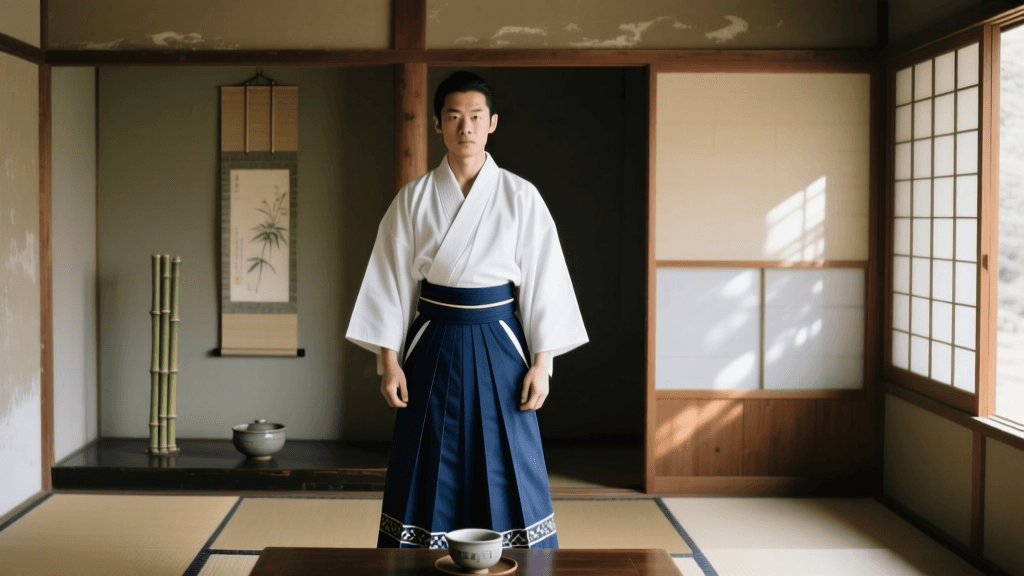
In disciplines such as Aikido, Kendo, Kyudo (archery), and Iaido, the standard uniform consists of a keikogi (training jacket) and a hakama (wide, pleated trousers). The keikogi is typically constructed from heavy, quilted cotton to absorb sweat and withstand the rigorous grappling or striking inherent in martial arts. However, it is the hakama that truly defines the silhouette of the traditional Japanese martial artist.
According to the All Japan Kendo Federation, the hakama worn in Kendo and Iaido is traditionally dyed with natural indigo (aizome). This natural dye process not only provides a deep, rich navy color but also acts as a natural insect repellent and fabric stiffener, which is crucial for maintaining the garment's structure during rapid footwork (suriashi). For modern practitioners, synthetic blends like Tetron (a polyester-rayon mix) are highly popular due to their affordability and ability to hold pleats permanently without the need for meticulous ironing.
The Seven Pleats of the Hakama
The traditional martial arts hakama features five pleats in the front and two in the back. These seven pleats are widely interpreted to represent the seven virtues of the samurai code (Bushido):
- Gi (Justice/Integrity): Making the right decision and acting with moral rectitude.
- Yu (Courage): The bravery to stand up for what is just, even in the face of fear.
- Jin (Benevolence/Compassion): Showing empathy and generosity toward others.
- Rei (Respect/Etiquette): Treating others with courtesy and honoring the traditions of the dojo.
- Makoto (Honesty/Sincerity): Speaking the truth and living authentically.
- Chugi (Loyalty): Remaining faithful to one's teacher, peers, and principles.
- Meiyo (Honor): Upholding one's reputation and the dignity of the martial art.
Tea Ceremony Attire: Chafuku, Kimono, and Samue
While martial arts uniforms are built for durability and dynamic movement, tea ceremony attire is governed by the principles of Wa, Kei, Sei, Jaku (Harmony, Respect, Purity, and Tranquility). The Urasenke Foundation, one of the most prominent schools of Japanese tea ceremony, emphasizes that a host's attire must never distract from the tea, the utensils, or the guests. Therefore, loud patterns, flashy jewelry, and strong perfumes are strictly prohibited.
For formal tea gatherings (chaji), both hosts and guests typically wear traditional silk kimono, with the host wearing a more subdued, elegant pattern that reflects the current season. However, for daily practice, cleaning the tea room, or preparing charcoal, practitioners often wear a samue (a traditional two-piece work garment made of cotton or linen) or modern chafuku (tea ceremony clothing). Chafuku often includes tailored, ankle-length trousers and modest, wrap-style tops that mimic the silhouette of a kimono but allow for easier movement and washing. The color palette is strictly earthy and muted: charcoal gray, deep olive, navy, and plum.
The evolution of these garments is deeply tied to the broader history of Japanese dress. As noted in the Victoria and Albert Museum's exploration of the Kimono, the shift from elaborate courtly robes to the streamlined, functional elegance of the Edo-period kimono perfectly mirrors the wabi-sabi aesthetic of the tea ceremony, which finds beauty in simplicity and imperfection.
Comparison Chart: Budo vs. Chado Garments
| Feature | Martial Arts Hakama (Budo) | Tea Ceremony Attire (Chado) |
|---|---|---|
| Primary Fabric | Heavy cotton, Indigo-dyed, Tetron (Poly/Rayon) | Silk (formal), Cotton/Linen Samue, Poly-blend Chafuku |
| Pleat Structure | 5 front, 2 back (stiffened for movement) | N/A for Kimono; soft, flowing drape for Chafuku |
| Color Palette | Black, Navy, White, Indigo | Muted earth tones, seasonal pastels, subdued patterns |
| Footwear | Barefoot (usually) or Tabi for Kyudo/Iaido | White split-toe Tabi socks (mandatory) |
| Estimated Cost | $45 (Synthetic) to $250+ (Natural Indigo) | $60 (Samue) to $500+ (Formal Silk Kimono) |
Actionable Sizing and Measurement Guide
Purchasing traditional Japanese garments online requires an understanding of Japanese sizing metrics, which differ significantly from Western apparel standards. Here is how to accurately measure for your uniform.
Sizing the Hakama
Hakama are sized by a number system (typically 18 to 30) that corresponds to the length of the garment. To find your correct size:
- Stand up straight and locate your navel. The hakama is worn higher than Western trousers, resting precisely at or just below the navel.
- Using a soft measuring tape, measure from your navel down to the outer ankle bone (the lateral malleolus).
- Convert this measurement to the Japanese sizing chart. For example, a measurement of 91 cm (approx. 36 inches) usually corresponds to a size 24 hakama.
- Pro Tip: If you plan to wear the hakama barefoot (as in Aikido), measure to the floor. If you will wear zori sandals or tabi (as in Kyudo or tea ceremony), measure to the ankle bone to prevent the fabric from dragging and soiling.
Selecting Tabi Socks
Tabi socks are essential for the tea ceremony and certain martial arts. Unlike Western socks, Tabi are sized in exact centimeters, corresponding to the Japanese shoe sizing system.
- Measure your foot from the heel to the tip of your longest toe in centimeters.
- If your foot measures 24.5 cm, purchase a 25.0 cm Tabi. Tabi should fit snugly without excess fabric bunching at the toe, as a smooth silhouette is critical for the formal aesthetics of the tea room.
- For tea ceremony, always select white cotton or silk-blend Tabi. For martial arts like Kyudo, black or navy Tabi are standard.
Fabric Choices and Cost Breakdown
When investing in these traditional garments, your budget and commitment level will dictate your fabric choice. Beginners in martial arts are highly encouraged to purchase a Tetron Hakama ($45 - $80). Tetron is a proprietary polyester-rayon blend that resists wrinkling, holds its pleats permanently, and can be machine-washed. This allows the student to focus on their technique rather than garment maintenance.
Advanced practitioners and instructors often invest in Aizome (Natural Indigo) Hakama ($180 - $300+). Natural indigo is a living dye; it fades beautifully over time, molding to the practitioner's body and movements. However, it requires strict hand-washing and careful drying. In the realm of the tea ceremony, a high-quality Samue ($70 - $150) made from woven Kurume cotton or linen is an excellent investment for daily practice, offering breathability during the humid Japanese summers while maintaining a dignified, traditional silhouette.
Care, Folding, and Maintenance
The maintenance of a hakama is considered a secondary practice in martial arts—a moving meditation that teaches patience and respect for one's tools. Folding a hakama is a precise ritual. The pleats must be aligned perfectly before the garment is folded into a compact square, secured by the long himo (ties). Improper folding will ruin the pleats and show disrespect to the dojo.
For natural indigo garments, avoid harsh detergents and prolonged exposure to direct sunlight, which will cause the dye to degrade unevenly. Hand wash in cool water with a mild, pH-neutral soap, and hang to dry in a shaded, well-ventilated area. For tea ceremony kimono and chafuku, professional dry cleaning is recommended for silk, while cotton samue can be gently machine-washed on a delicate cycle, provided they are immediately hung to prevent deep creases.
"The uniform is not merely a covering for the body; it is the armor of the mind. When you tie the himo of your hakama, you are binding yourself to the virtues of the Way." — Traditional Dojo Proverb
Whether you are drawing a sword or whisking matcha, the garments of Budo and Chado serve as a bridge between the modern practitioner and centuries of Asian tradition. By selecting the right fabrics, understanding the precise measurements, and maintaining your attire with reverence, you honor the profound cultural heritage woven into every thread.