Japanese Natural Dye Plants: 2026 Eco-Friendly Methods Guide
The Renaissance of Kusaki-zome in 2026
As the global fashion industry faces mounting pressure to adopt circular and regenerative practices in 2026, traditional Asian textile arts are offering profound solutions. Among the most celebrated is Kusaki-zome, the ancient Japanese art of plant-based natural dyeing. Unlike synthetic dyes, which are derived from petrochemicals and account for roughly 20% of global industrial water pollution, Japanese natural dye plants offer a closed-loop, biodegradable alternative that actively supports soil health and biodiversity.
In 2026, the intersection of heritage craftsmanship and modern eco-consciousness has elevated Kusaki-zome from a niche artisanal practice to a cornerstone of sustainable slow fashion. Designers and textile artists are increasingly turning to indigenous Japanese flora—not just for their unparalleled aesthetic depth, but for their minimal environmental footprint. By utilizing agricultural byproducts, composting spent dye vats, and employing non-toxic mordants, today's practitioners are proving that traditional methods are the blueprint for a sustainable future.
Top Sustainable Japanese Natural Dye Plants
The foundation of eco-friendly Kusaki-zome lies in selecting plants that are renewable, locally abundant, and beneficial to their surrounding ecosystems. Here are the premier natural dye plants utilized in 2026.
Ai (Japanese Indigo)
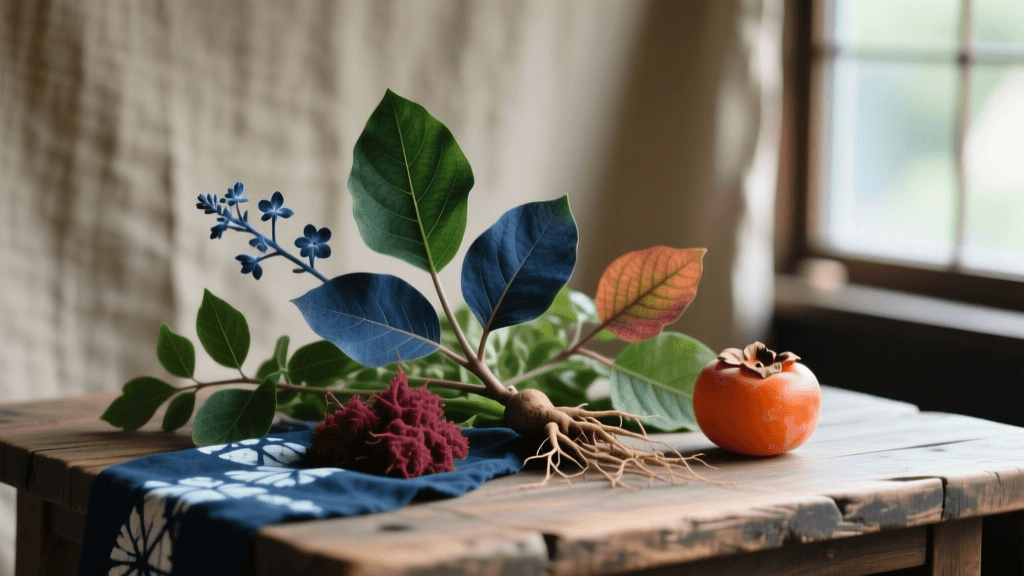
Japanese indigo (Persicaria tinctorium) is distinct from tropical indigo varieties. Cultivated primarily in Tokushima Prefecture, the leaves are harvested, dried, and composted to create Sukumo, the base for traditional indigo vats. From a sustainability perspective, Ai is a powerhouse. The plant thrives in nutrient-rich soil and, when rotated with winter crops like wheat, it prevents soil depletion. Furthermore, the composting process of the leaves generates immense heat and beneficial microbes, and the spent vat liquid is routinely diluted and used as a nitrogen-rich fertilizer for nearby crops, ensuring zero waste.
Kakishibu (Persimmon Tannin)
Kakishibu is a remarkable liquid extracted from the fermentation of unripe, astringent persimmons. Historically used to waterproof paper, preserve wood, and dye textiles a rich, earthy brown, it is experiencing a massive resurgence in 2026. Because it utilizes unripe or blemished fruits that would otherwise be discarded by the agricultural sector, Kakishibu is a masterclass in upcycling. When applied to organic cotton or hemp, the tannins bind to the cellulose without the need for metallic mordants, and the fabric naturally gains UV-resistant and antibacterial properties over time as it oxidizes in the sun.
Akane (Japanese Madder)
Akane (Rubia argyi) yields a spectrum of vibrant reds, pinks, and deep terracottas from its roots. Cultivating madder requires patience, as the roots must grow for three to four years before harvesting. However, modern regenerative farming techniques implemented in 2026 have optimized its yield. The deep taproots of the madder plant help aerate compacted soils and draw up trace minerals. When processed using eco-friendly extraction methods, the exhausted roots are composted, returning organic matter to the earth.
Eco-Friendly Mordanting and Extraction Methods
A critical component of natural dyeing is the mordant—the substance used to bind the dye to the textile fiber. Historically, some mordants relied on heavy metals like chrome or tin, which are highly toxic and environmentally devastating. In 2026, the Kusaki-zome community strictly adheres to bio-based and non-toxic mordanting alternatives.
- Symplocos Leaf: A plant-based alternative to mineral alum. The dried leaves of the Symplocos tree naturally accumulate aluminum from the soil. Boiling these leaves creates a safe, effective mordant bath that is entirely biodegradable.
- Soy Milk Binder: For cellulose fibers like cotton and linen, which are notoriously difficult to dye with plant pigments, artisans use diluted, unflavored soy milk. The plant proteins in the soy milk bind to the cellulose, creating a receptive surface for the natural dyes without introducing synthetic chemicals.
- Oak Galls and Sumac: Rich in natural tannins, these are used to mordant fibers prior to dyeing with madder or indigo, significantly improving colorfastness and depth without the use of synthetic tannic acid.
For a deeper understanding of non-toxic dye chemistry, educational resources from institutions like Maiwa's Natural Dyeing Guide provide extensive, up-to-date protocols on safe mordanting and fiber preparation.
Comparison Chart: Plant Dyes vs. Synthetic Alternatives
To understand the environmental imperative of transitioning to Kusaki-zome, it is essential to compare traditional Japanese plant dyes with conventional synthetic counterparts used in mass manufacturing.
| Feature | Japanese Plant Dyes (Kusaki-zome) | Conventional Synthetic Dyes |
|---|---|---|
| Source Material | Renewable flora, agricultural byproducts | Petrochemicals, coal tar derivatives |
| Water Footprint | Low; water is often recycled or used for irrigation | Extremely high; requires massive volumes for rinsing |
| Effluent Toxicity | Non-toxic; spent vats used as compost/fertilizer | High; heavy metals and toxic runoff pollute waterways |
| Biodegradability | 100% biodegradable at end of garment life | Microplastics and synthetic polymers persist for centuries |
| Colorfastness | High (with proper eco-mordants); ages gracefully | Very high, but fades harshly and unevenly |
As highlighted by environmental analyses on the textile industry's ecological impact, such as those discussed in BBC Future's coverage on the return of natural dyes, the shift back to botanical pigments is not merely a nostalgic trend, but a vital ecological correction.
Step-by-Step Guide: Eco-Friendly Indigo Vat Preparation
Building a traditional Sukumo indigo vat is a living process. The vat is a living ecosystem of bacteria that reduce the indigo pigment, making it soluble in water. Here is how artisans prepare an eco-friendly vat in 2026.
- Prepare the Sukumo: Begin with 500g of premium, composted Tokushima Sukumo. In 2026, a 500g bag retails for approximately $45 USD from specialized sustainable suppliers. Place the Sukumo in a breathable cotton bag to prevent leaf debris from clinging to your textiles later.
- Create the Alkaline Solution: Traditional vats use wood ash lye. Sift hardwood ash and mix it with boiling water. Let it settle overnight, then carefully decant the clear, highly alkaline liquid (pH 11-12). This replaces harsh synthetic sodium hydroxide.
- Build the Vat: In a dedicated stainless steel or ceramic pot, combine the Sukumo bag, the wood ash lye, and a nutrient source like wheat bran or sake lees (another agricultural byproduct). Heat the mixture gently to 50°C (122°F).
- Fermentation and Care: Maintain the temperature and stir gently once a day. Within 5 to 7 days, the vat will develop a metallic, coppery sheen on the surface and smell of sweet earth and ammonia. This indicates the bacteria are active and the vat is ready.
- Dyeing and Oxidation: Submerge pre-scoured, soy-milk-treated fabric into the vat for 10 minutes. Remove it gently. The fabric will emerge yellow-green but will magically transform into deep blue as it reacts with the oxygen in the air. Repeat for deeper shades.
'The indigo vat is not a chemical formula; it is a living entity. You must feed it, keep it warm, and respect its rhythms. When you care for the vat, it yields colors that synthetic chemistry simply cannot replicate.' — Master Dyer, Tokushima Prefecture.
Sourcing Sustainable Dye Materials in 2026
Accessing authentic, ethically sourced Japanese dye materials is easier than ever in 2026, thanks to global cooperatives and direct-to-artisan supply chains. When purchasing Sukumo, Kakishibu, or Akane, always look for certifications indicating organic farming practices and fair-trade partnerships with Japanese agricultural cooperatives.
Brands like Buaisou in Tokushima have pioneered the 'farm-to-closet' model, growing their own indigo, composting it, and dyeing garments in a fully transparent, zero-waste loop. For international practitioners, purchasing from established natural dye educators and suppliers ensures that the materials are harvested sustainably, supporting the rural economies that keep these ancient agricultural traditions alive.
Conclusion
The practice of Kusaki-zome in 2026 represents a harmonious blend of ancestral wisdom and urgent ecological responsibility. By embracing Japanese natural dye plants like Ai, Kakishibu, and Akane, and utilizing bio-based mordants, textile artists and fashion brands can drastically reduce their environmental impact. As we continue to navigate the climate challenges of the decade, the deep, living colors of traditional Japanese plant dyes offer a beautiful, sustainable path forward for the global textile industry.