Sustainable Japanese Natural Dye Plants & Eco Methods 2026
The Renaissance of Kusaki-Zome in 2026
As the global fashion industry faces unprecedented scrutiny over water consumption and microplastic pollution in 2026, the ancient Japanese art of kusaki-zome (plant and tree dyeing) has transitioned from a niche heritage craft to a cornerstone of sustainable textile design. Unlike synthetic dyes, which rely heavily on petrochemicals and toxic heavy metal mordants, traditional Japanese natural dyeing utilizes renewable botanical resources, closed-loop water systems, and biodegradable waste. For modern artisans, eco-conscious designers, and slow-fashion enthusiasts, mastering these methods is no longer just about preserving history—it is about engineering the future of sustainable garments.
The year 2026 has seen a massive surge in the cultivation of heritage dye plants across rural Japan, supported by new government subsidies aimed at revitalizing agricultural communities and promoting eco-tourism. From the legendary indigo fields of Tokushima to the persimmon orchards of Nara, Japanese natural dye plants offer a masterclass in ecological harmony. In this comprehensive guide, we explore the most vital botanical dyes in the Japanese tradition, the eco-friendly mordanting techniques replacing toxic chemicals, and actionable steps to integrate these methods into your 2026 textile practice.
Top Japanese Natural Dye Plants for Sustainable Textiles
1. Ai (Japanese Indigo - Persicaria tinctoria)
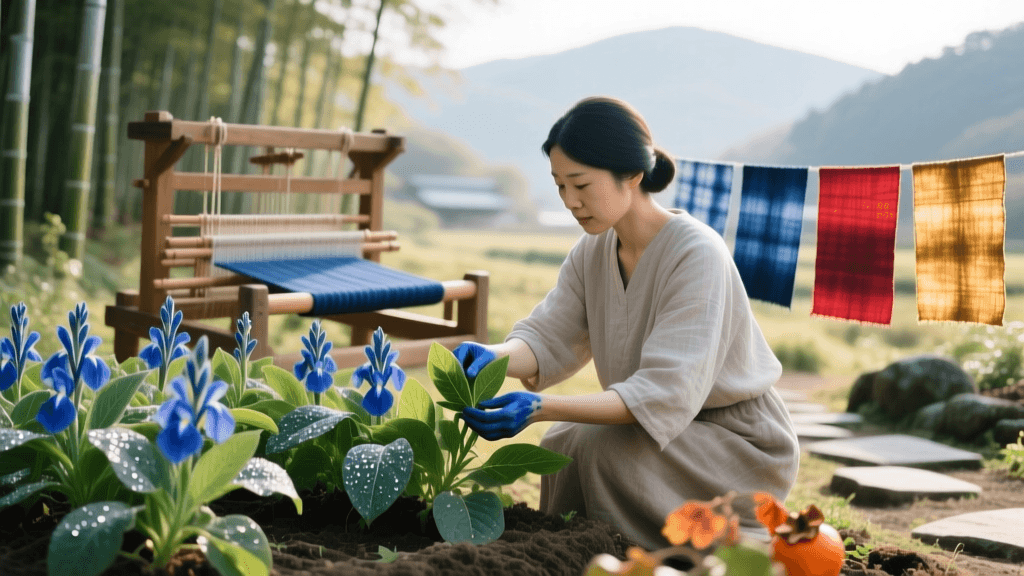
While the world is familiar with indigo, Japanese ai is distinct. Derived from the leaves of Persicaria tinctoria, the process of creating sukumo (fermented indigo leaves) is a 100-day microbial ballet. Artisans in Tokushima meticulously turn and water the composting leaves, fostering the bacteria necessary to produce indican, the precursor to indigo blue. In 2026, authentic Tokushima sukumo is highly prized, with premium grades retailing between $55 and $75 per kilogram. Unlike synthetic indigo, which requires chemical reducing agents like sodium dithionite, traditional Japanese indigo vats are reduced using natural alkaline agents like wood ash lye (akumizu) and sake or wheat bran, making the wastewater entirely safe for agricultural irrigation.
2. Kakishibu (Persimmon Tannin)
Kakishibu is the dark, astringent juice extracted from unripe persimmons. High in tannins, it has been used for centuries to waterproof paper, treat fishing nets, and dye textiles a beautiful, earthy brown. When applied to fabric and exposed to ultraviolet sunlight, the tannins polymerize, creating a natural, water-resistant coating. In 2026, sustainable outdoorwear brands are heavily researching kakishibu as a biodegradable alternative to synthetic DWR (Durable Water Repellent) coatings. Artisans can source aged kakishibu—which ferments and matures over two to three years to eliminate its initial foul odor and deepen its color profile—for approximately $30 per liter from specialized cooperatives in Nara and Kyoto.
3. Akane (Japanese Madder - Rubia argyi)
For centuries, akane roots have been the primary source of vibrant reds and deep crimsons in Japanese court garments. The roots contain alizarin and purpurin, which require careful temperature control during extraction. Boiling akane extracts muddy brown compounds; therefore, modern eco-dyers in 2026 strictly maintain extraction baths at 60°C to 70°C (140°F to 158°F) to isolate the brilliant red alizarin. Due to the plant's deep taproot system, it takes three to four years to cultivate a harvestable crop, making ethically sourced akane a premium investment for luxury sustainable fashion houses.
4. Tamanegi (Onion Skins)
While not exclusive to Japan, the use of tamanegi (yellow onion skins) is a staple in Japanese urban and zero-waste dyeing workshops. Rich in quercetin, onion skins yield brilliant golds, warm oranges, and deep olives without the need for intensive agricultural land. In 2026, community dye gardens and urban foraging initiatives in Tokyo and Osaka have formalized the collection of onion skins from local restaurants, creating a circular, zero-waste dye supply chain that costs virtually nothing but yields professional-grade, lightfast colors.
Eco-Friendly Mordanting: Moving Beyond Heavy Metals
Historically, some natural dyeing practices relied on toxic heavy metals like chrome or tin to fix colors to fibers. Today, the Japanese natural dyeing community strictly adheres to eco-friendly mordanting and binding methods that align with modern environmental standards. As highlighted by the Fashion Revolution's Transparency Index, eliminating toxic runoff is a primary metric for sustainable textile certification in 2026.
Gomamaki (Soy Milk Protein Binder)
Cellulose fibers like cotton, linen, and hemp are notoriously difficult to dye with plant-based colorants because they lack the natural protein sites that animal fibers (silk and wool) possess. The traditional Japanese solution is gomamaki, the process of treating fabric with soy milk. The proteins in the soy milk bind to the cellulose, creating a receptive surface for natural dyes. In 2026, dyers use organic, additive-free soy milk, diluting it at a 1:5 ratio with water, and allowing the fabric to dry completely before dyeing. This method is 100% vegan, biodegradable, and drastically improves colorfastness.
Safe Mineral Mordants: Alum and Iron
For color shifting and fixing, modern practitioners rely on Potassium Aluminum Sulfate (alum) and Iron (ferrous sulfate). Alum is a naturally occurring mineral salt that brightens and fixes colors without altering their hue. Iron, often sourced sustainably by submerging rusty nails in a vinegar and water solution (tetsu-medi), acts as a 'saddening' agent, shifting bright yellows to mossy greens and reds to deep purples. Both are used in highly controlled, low-concentration baths, and the exhausted iron water can be safely used to fortify garden soil in trace amounts.
Step-by-Step Zero-Waste Dyeing Process
To achieve professional, sustainable results at home or in the studio, follow this optimized 2026 workflow for cellulose fibers:
- Step 1: Scouring (1 Hour): Boil the raw cotton or linen in a pot with 1 tablespoon of pH-neutral soap and 1 tablespoon of washing soda (sodium carbonate) to strip natural waxes and oils. Rinse thoroughly.
- Step 2: Gomamaki (24 Hours): Submerge the scoured fabric in a 1:5 soy milk and water bath for 2 hours. Wring out gently and hang to dry completely. Repeat this process three times for optimal protein buildup.
- Step 3: Extraction (2 Hours): Simmer your chosen plant material (e.g., onion skins or madder root) in water. Remember the 60°C rule for madder to preserve reds. Strain the botanical waste into a compost bin.
- Step 4: The Dye Bath (1 to 12 Hours): Submerge the prepared fabric in the warm dye bath. For deep shades, allow the fabric to steep overnight as the bath cools, which promotes even absorption and saves energy.
- Step 5: Mordanting (1 Hour): Dissolve 10% alum (by weight of fabric) in warm water. Submerge the dyed fabric for 45 minutes to lock in the color.
- Step 6: Final Wash & Cure: Rinse in cool water until it runs clear. Hang to dry out of direct sunlight (except for kakishibu, which requires UV curing). Wait two weeks before washing the garment with mild detergent to allow the dye molecules to fully oxidize and bond.
2026 Plant Dye Comparison & Sustainability Matrix
The following table outlines the core characteristics, environmental impact, and current market costs of primary Japanese natural dyes for the 2026 season.
| Botanical Name | Japanese Term | Target Color Profile | Eco-Mordant Required | Water Footprint | 2026 Avg. Cost (USD/kg) |
|---|---|---|---|---|---|
| Persicaria tinctoria | Ai (Indigo) | Deep Navy to Sky Blue | Alkaline Ash Lye (No metal mordant) | Low (Closed-loop vat) | $55.00 - $75.00 (Sukumo) |
| Diospyros kaki | Kakishibu (Persimmon) | Earth Brown / Amber | None (UV Polymerization) | Very Low (No rinse required) | $30.00 / Liter |
| Rubia argyi | Akane (Madder) | Crimson / Brick Red | Alum | Medium (Requires temp control) | $45.00 - $60.00 (Dried Root) |
| Allium cepa | Tamanegi (Onion) | Gold / Olive / Orange | Alum or Iron | Low (Urban foraged waste) | $0.00 (Zero-waste) |
| Artemisia princeps | Yomogi (Mugwort) | Soft Sage / Forest Green | Alum | Low (Wildcrafted) | $15.00 (Dried Leaf) |
Sourcing Authentic Materials and Future Outlook
As the demand for traceable, eco-friendly textiles grows, the provenance of dye materials has become paramount. The BBC Future's extensive coverage on Awa-ai indigo highlights how multi-generational farming families in Tokushima have adapted to global demand by offering direct-to-consumer export channels, ensuring fair compensation and authentic, chemical-free products. When sourcing sukumo or akane in 2026, always look for JAS (Japanese Agricultural Standard) organic certifications or direct partnerships with regional cooperatives to guarantee that the plants were cultivated without synthetic pesticides.
Furthermore, institutions like the Victoria and Albert Museum's Textile Conservation Department continue to study historical Japanese dyed garments, proving that when properly mordanted and cared for, natural dyes possess incredible longevity and lightfastness, often outlasting their synthetic counterparts which tend to degrade and fade uniformly over decades.
"The true sustainability of kusaki-zome lies not just in the absence of toxic chemicals, but in the deep, reciprocal relationship it forces the dyer to have with the local ecology, the seasons, and the soil." — 2026 Global Slow Textile Symposium Keynote.
Embracing Japanese natural dye plants in 2026 is an investment in both environmental stewardship and cultural preservation. Whether you are formulating a commercial sustainable fashion line or simply dyeing linen at home, the methods of kusaki-zome offer a vibrant, non-toxic, and profoundly beautiful alternative to the synthetic status quo.