Hualou Drawloom Replicas for Yunjin Weaving: 2026 Guide
The Resurgence of the Hualou Drawloom in 2026
The year 2026 has marked a monumental renaissance in traditional Chinese textile arts, driven largely by the explosive global popularity of the Xin Zhongshi (New Chinese Style) fashion movement. At the very heart of this sartorial revival is Nanjing Yunjin, or "Cloud Brocade," a fabric so intricate and luxurious that it was once reserved exclusively for imperial dragon robes during the Ming and Qing dynasties. Today, boutique design studios and serious heritage artisans are moving beyond mass-produced jacquard imitations, seeking out authentic Hualou (drawloom) replicas to produce genuine, hand-woven Yunjin textiles.
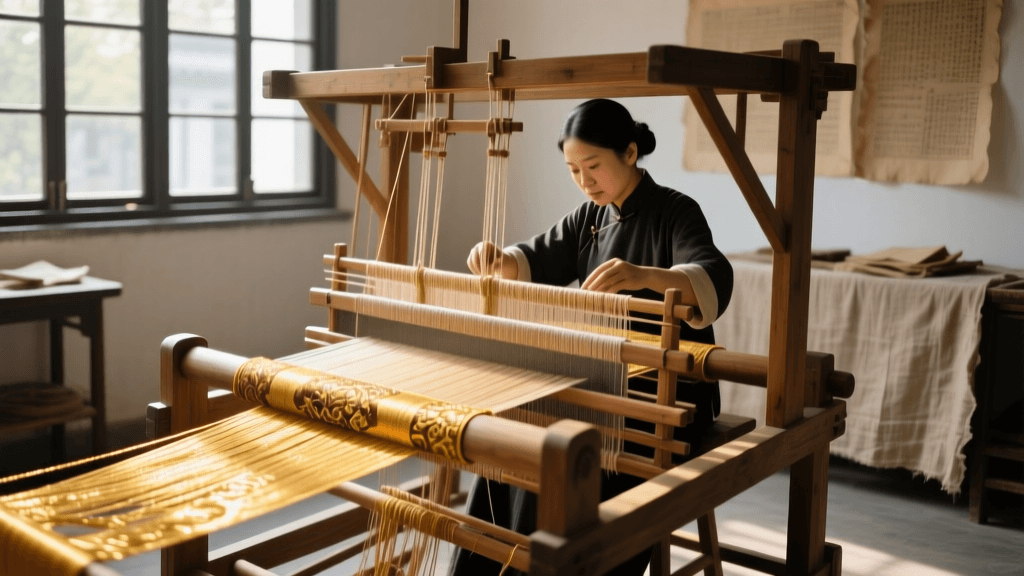
Unlike standard floor looms, the Hualou is a massive, multi-story drawloom that requires a two-person operation and an ancient form of "programming" using knotted cords. As demand for authentic heritage garments surges in 2026, master woodworkers in Suzhou and Nanjing have begun producing highly accurate, functional replicas of these ancient machines. This guide provides a comprehensive overview of acquiring, operating, and maintaining a Hualou drawloom replica for contemporary Yunjin weaving.
Anatomy of the Traditional Hualou Loom
To understand the investment required for a Hualou replica, one must first understand its unique architecture. The loom is defined by its towering height, often exceeding four meters, which accommodates the complex pattern harness system.
- The Figure Tower (Hua Lou): The elevated platform at the top of the loom where the "drawboy" (wan hua jiang) sits. This is where the pattern harness is manipulated to lift specific warp threads.
- The Pattern Harness (Jie Ben): An intricate web of knotted cords that acts as the loom’s memory. Each cord corresponds to a specific warp thread, allowing for the creation of massive, non-repeating asymmetrical patterns.
- The Warp Beam and Heddles: Located at the weaver’s level, these components manage the ground weave and structural tension of the silk.
- The Shuttle Race: Designed to accommodate wide, heavy shuttles that carry the supplementary weft threads, including metallic foils and peacock feather yarns.
According to the Metropolitan Museum of Art’s Heilbrunn Timeline, the complexity of Chinese silk drawlooms laid the foundational groundwork for early programmable machinery, predating the European Jacquard loom by centuries. Operating a Hualou today is a direct continuation of this unbroken technological lineage.
2026 Buyer’s Guide: Sourcing Authentic Hualou Replicas
Acquiring a functional Hualou replica in 2026 requires commissioning specialized heritage woodworking cooperatives. Mass-market textile suppliers do not stock these items; they are built-to-order by artisans trained in traditional mortise-and-tenon joinery. Pricing varies significantly based on the wood species and the scale of the replica.
| Model Tier | Wood Material | Dimensions (L x W x H) | 2026 Price (USD) | Best For |
|---|---|---|---|---|
| Studio Replica | Old Growth Elm (Lao Yumu) | 3.5m x 2.0m x 4.2m | $14,500 - $18,000 | Professional Xin Zhongshi Studios |
| Master Artisan | Hongmu (African Rosewood) | 4.0m x 2.5m x 4.8m | $32,000 - $45,000 | Museum Exhibitions & Master Weavers |
| Portable Hobbyist | Treated Pine & Bamboo | 2.0m x 1.2m x 2.5m | $4,200 - $6,500 | Textile Students & Small-Scale Sampling |
When commissioning a Studio Replica in 2026, expect a lead time of six to eight months. It is highly recommended to purchase the loom directly from cooperatives affiliated with the Nanjing Yunjin Research Institute to ensure the structural tolerances can handle the extreme tension of metallic brocade weaving.
Mastering the Technique: Tiao Hua Jie Ben (Pattern Programming)
The most daunting aspect of the Hualou is the Tiao Hua Jie Ben, the ancient method of programming the pattern harness. Before a single thread is woven, the design must be translated into a physical matrix of knotted cords.
- Drafting the Grid: The design is first painted on a specialized grid paper where each square represents one warp and one weft intersection.
- Knotting the Harness: The drawboy ties specific knots in the vertical cords of the figure tower. A knot indicates a warp thread that must be raised during a specific pick of the weft.
- The Weaving Sequence: As the weaver operates the treadles for the ground weave, the drawboy pulls the knotted cords in sequence from the top down. This lifts the precise pattern warps, creating the "shed" through which the weaver throws the shuttle.
In 2026, while some studios use CAD software to map the grid, the physical knotting of the harness remains entirely manual. A single complex Yunjin collar pattern can require over 10,000 individual knots and take three weeks to program.
Sourcing Premium Yunjin Threads in 2026
A Hualou loom is only as good as the threads it weaves. Yunjin is famous for its "three treasures": gold thread, silver thread, and peacock feather yarn. The Victoria and Albert Museum’s Asian collections highlight the structural integrity and lasting brilliance of Ming and Qing dynasty brocades, a testament to the historical quality of these materials.
2026 Thread Sourcing Checklist:
- Pian Jin (Gold Foil Thread): Sourced from specialized mills in Nanjing that laminate 24k gold foil onto mulberry paper, then slice it into micro-millimeter strips and wrap it around a silk core. Expect to pay approximately $120 per 100-meter spool in 2026.
- Peacock Feather Yarn: Created by twisting the iridescent barbs of molted peacock feathers with a silk base thread. Due to ethical sourcing standards enforced in 2026, only certified molted feathers from sanctuary farms in Yunnan are used, driving the price to roughly $85 per 50-meter spool.
- Degummed Mulberry Silk: The foundation warp and weft must be high-grade, heavily degummed silk to ensure the brocade remains flexible enough for modern garment tailoring.
As noted in Britannica’s comprehensive guide to Chinese silk, the incorporation of metallic threads requires specialized tensioning; the weaver must constantly adjust the shuttle speed to prevent the fragile gold foil from cracking or peeling.
Loom Maintenance and Climate Control
Wooden drawlooms are living structures that react to environmental changes. Maintaining a Hualou replica requires a strict adherence to climate control and physical upkeep, especially when weaving with high-tension metallic threads.
Monthly Maintenance Routine:
- Humidity Calibration: The weaving studio must be kept at a strict 45% to 55% relative humidity. If the air is too dry, the silk warp threads will snap under tension; if too humid, the wooden heddles will swell and stick.
- Waxing the Race: The shuttle race and all wooden guides must be rubbed with pure beeswax or specialized camellia oil to reduce friction. Never use synthetic lubricants, as they will degrade the silk fibers over time.
- Tension Checks: Inspect the mortise-and-tenon joints on the main frame. The immense lateral pull of 5,000 warp threads can slowly loosen joints over a year of continuous weaving.
- Cord Inspection: The drawboy must check the pattern harness cords for fraying. Hemp or cotton cords should be replaced immediately if they show signs of thinning to avoid pattern errors mid-weave.
Integrating Yunjin into Modern Xin Zhongshi Garments
The ultimate goal of operating a Hualou drawloom in 2026 is to produce textiles for the contemporary Xin Zhongshi wardrobe. Unlike the flowing, lightweight silks used in standard Hanfu, Yunjin brocade is thick, heavily structured, and possesses a stiff, sculptural drape.
Modern designers are utilizing Yunjin not for entire garments, but as high-impact focal points. The most popular applications in 2026 include:
- Mamian Skirt Panels: Weaving narrow, highly detailed Yunjin borders (lan gan) that are subsequently pleated and attached to solid-color silk skirts, reducing the overall weight of the garment while maximizing visual impact.
- Structured Jackets (Ao): Using the stiff drape of the brocade to create sharp, architectural shoulders and standing collars on winter jackets, blending Ming dynasty silhouettes with modern minimalist tailoring.
- Obi-Inspired Sashes: Leveraging the non-fraying, dense nature of the brocade to weave wide, structural sashes that cinch modern wrap dresses.
Operating a Hualou drawloom is a profound commitment to the preservation of Asian textile heritage. By mastering this ancient technology, contemporary artisans are ensuring that the breathtaking complexity of Nanjing Yunjin continues to shape the future of global fashion in 2026 and beyond.