Styling a Silk Haori Jacket for 2026 Minimalist Streetwear
The Renaissance of the Haori in 2026 Streetwear
As the global fashion landscape of 2026 continues to pivot away from fleeting micro-trends and hyper-visible logomania, a profound appreciation for 'heritage minimalism' has taken root. At the forefront of this movement is the integration of traditional Asian garments into everyday, modern wardrobes. Among these, the Japanese haori—a traditional hip- or thigh-length jacket worn over a kimono—has emerged as the ultimate statement piece for contemporary streetwear and smart-casual ensembles. With its striking T-shaped silhouette, intricate interior linings, and fluid drape, the haori offers a masterclass in sustainable, archival fashion.
Historically, the haori was worn by samurai and later adopted by the merchant classes during the Edo period as a way to express personal wealth and aesthetic taste through hidden, luxurious linings, due to strict sumptuary laws. According to the Victoria and Albert Museum's extensive archives on Japanese dress, the structural elegance of the haori and its kimono counterparts has continuously influenced global textile design and garment construction. Today, wearing a vintage silk haori is not merely a nod to history; it is a deliberate styling choice that bridges centuries of craftsmanship with the cutting-edge, relaxed silhouettes of 2026 streetwear.
Choosing the Right Haori for Modern Layering
When sourcing a haori for a modern wardrobe, understanding traditional fabrics is crucial for achieving the right drape and seasonal appropriateness. For spring and autumn layering, look for chirimen (silk crepe), which offers a beautiful, textured matte finish that resists wrinkling and pairs exceptionally well with modern cotton and technical nylons. For winter, rinzu (silk damask) provides a subtle, tone-on-tone patterned sheen that elevates evening wear.
In 2026, the most sought-after vintage haori feature 'boro' (mended) details or subtle, abstract geometric patterns from the Taisho era (1912–1926), which align perfectly with modern minimalist aesthetics. Avoid heavily embroidered, overly bright ceremonial haori unless you are intentionally aiming for a maximalist look. The goal is to let the garment's cut and fabric quality speak for themselves against a backdrop of muted, contemporary basics.
Core Outfit Formulas for 2026
Integrating a traditional garment requires a careful balance of proportions. Here are three highly actionable outfit formulas tailored for the 2026 fashion climate.
1. The Elevated Techwear Commute
Contrast the organic, delicate nature of vintage silk with the utilitarian edge of modern technical fabrics. Start with a mid-weight, waterproof shell hoodie in slate grey or olive. Layer a dark, unpatterned silk haori over the hoodie, leaving it completely open. Pair this with wide-leg, water-repellent tailored trousers that pool slightly at the ankle. Finish the look with a pair of Asics Gel-NYC or the 2026 iteration of the Salomon XT-6. The juxtaposition of the haori's flowing sleeves against the structured, technical hood creates a striking, futuristic silhouette grounded in tradition.
2. The Relaxed Weekend Minimalist
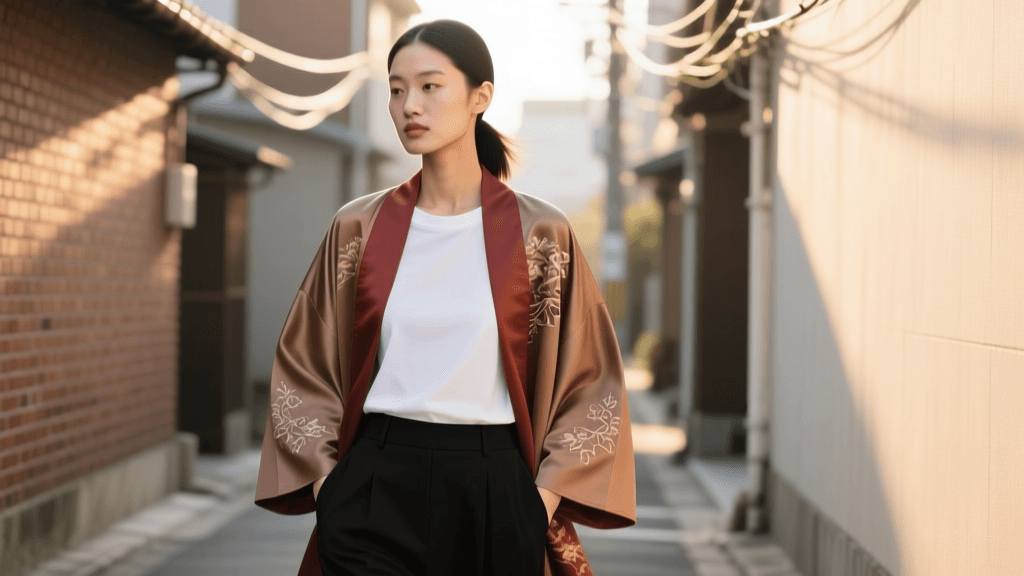
For a softer, everyday approach, lean into tonal layering. Wear a heavyweight, boxy cotton t-shirt in off-white or cream, paired with relaxed-fit, raw denim or heavy canvas trousers. Drape a lightweight, beige or pale grey chirimen silk haori over the top. The key here is the drop of the sleeve; the haori's wide, open underarms (known as sodetsuke) allow for comfortable movement and create a beautiful, cape-like effect when walking. Accessorize with a minimalist leather crossbody bag and simple silver jewelry.
3. Smart-Casual Evening Transition
The haori can easily replace the standard blazer in a 2026 smart-casual setting. Wear a fine-gauge merino wool turtleneck in charcoal, paired with pleated wool trousers and polished leather derby shoes. Choose a haori with a dark, solid exterior but a vibrant, patterned interior lining (the uragi). As you move, the subtle flash of the silk lining provides the same visual interest as a pocket square or a bold tie, but with a distinctly modern, cultural edge.
Proportions and Measurements: Getting the Fit Right
One of the most common mistakes when styling traditional Asian garments is ignoring the fundamental differences in pattern making. Traditional Japanese garments are constructed from straight bolts of fabric, resulting in a boxy, non-tapered fit. Below is a comparison to help you map traditional haori measurements to modern 2026 outerwear expectations.
| Garment Feature | Traditional Haori (Standard) | Modern 2026 Oversized Outerwear | Styling Adjustment & Advice |
|---|---|---|---|
| Mitake (Back Length) | 80cm - 95cm | 70cm - 85cm (Cropped) or 100cm+ (Long) | Aim for a haori that hits mid-thigh. If it is too long, it will overwhelm modern wide-leg trousers. |
| Yuki (Center back to wrist) | 65cm - 75cm | 80cm - 95cm (Drop-shoulder) | Traditional sleeves will sit above the wrist. Embrace this by letting the inner layer's sleeves extend past the haori. |
| Mihaba (Total Body Width) | 120cm - 140cm (Flat) | 110cm - 130cm (Relaxed fit) | Ensure the haori's chest width is at least 15cm wider than your inner layer to prevent pulling at the shoulders. |
| Sodetsuke (Sleeve Attachment) | Open underarm gusset | Closed, tailored armhole | The open underarm provides ventilation and allows for thick hoodies or sweaters underneath without bulk. |
Rethinking the Haori Himo (Ties)
Traditionally, a haori is secured at the front using a braided silk cord called a haori himo. While beautiful, the ornate, tasseled himo can sometimes clash with a minimalist 2026 aesthetic, pushing the outfit into the realm of costume. For a contemporary look, many streetwear enthusiasts and archivists choose to remove the himo entirely, wearing the haori open to emphasize its drape and the layering beneath.
If you prefer to keep the jacket closed, consider replacing the traditional silk cords with modern alternatives. Matte black paracord, thin leather toggles, or even custom-machined metal carabiner clips can bridge the gap between Edo-period tradition and modern techwear utility. This small modification drastically alters the garment's vibe, anchoring it firmly in the present day.
Footwear and Accessory Pairings
Footwear can make or break the integration of a traditional piece. Avoid traditional Japanese footwear like geta or zori unless you are attending a specific cultural event. Instead, ground the haori with chunky, architectural sneakers or sleek, modern boots. The New Balance 1906R, with its complex, layered upper, mirrors the intricate layering of the haori itself. For a smarter look, a pair of square-toed leather boots from contemporary designers like Guidi or Maison Margiela provides a sharp, avant-garde contrast to the soft silk.
When it comes to bags, avoid anything too structured or corporate. Slouchy leather totes, technical nylon messenger bags, or minimalist canvas crossbody bags complement the relaxed, flowing nature of the silk without competing for attention.
Care and Maintenance for Vintage Silk
Investing in a vintage silk haori requires a commitment to proper garment care. Silk is a protein fiber that is highly susceptible to UV damage, moisture, and improper storage. According to the conservation guidelines outlined by The Metropolitan Museum of Art's Heilbrunn Timeline of Art History, the preservation of historical silk garments necessitates careful environmental control and gentle handling.
- Cleaning: Never machine wash or hand wash a vintage silk haori. The internal linings and hidden stitching will shrink at different rates, destroying the garment's shape. Always take it to a dry cleaner who specializes in vintage or archival textiles.
- Storage: Avoid wire hangers, which will distort the shoulder seams. Use a wide, padded wooden hanger. For long-term storage, fold the haori using the traditional tato paper method and store it in a breathable cotton cover or a traditional paulownia wood box (tansu), which naturally regulates humidity and repels insects.
- Airing Out: Once a season, take the haori out of storage and let it air out in a shaded, well-ventilated room for a few hours. Never expose vintage silk to direct sunlight, as the dyes will fade rapidly and the fibers will become brittle.
Conclusion: A Timeless Silhouette for the Modern Era
The integration of the traditional silk haori into a 2026 minimalist streetwear wardrobe is a testament to the timelessness of thoughtful garment construction. By respecting the history of the piece while boldly recontextualizing its proportions, fabrics, and styling, you create a look that is deeply personal, sustainable, and undeniably modern. Whether draped over a technical hoodie for a city commute or layered over a fine knit for an evening out, the haori proves that true style transcends both borders and centuries.