Japanese Natural Dye Plants: Sustainable Eco Methods 2026
The 2026 Renaissance of Kusaki-Zome in Circular Fashion
As the global textile industry faces mounting pressure to eliminate toxic runoff and reduce its massive carbon footprint, the ancient Japanese art of kusaki-zome (plant and tree dyeing) has emerged as a cornerstone of sustainable fashion in 2026. Unlike synthetic azo dyes, which rely on petrochemicals and heavy metal mordants, traditional Japanese botanical dyes utilize renewable flora, agricultural byproducts, and natural fermentation processes. This shift is not merely a nostalgic return to the past; it is a highly engineered, eco-friendly methodology that aligns perfectly with modern circular economy principles. According to the Ellen MacArthur Foundation, transitioning to circular models in the textile sector requires designing out waste and pollution from the very beginning of the supply chain. Kusaki-zome achieves exactly this by ensuring that all dye vat effluents are biodegradable and safe enough to irrigate agricultural land.
In 2026, artisanal dye houses and large-scale sustainable brands alike are scaling these traditional methods. By leveraging modern temperature-controlled fermentation rooms and solar-powered oxidation yards, contemporary dyers are preserving the heritage of Japanese botanical color while meeting the rigorous environmental standards of today's eco-conscious consumers.
Core Botanical Dyes Driving the Eco-Movement
The brilliance of Japanese natural dyeing lies in its deep understanding of local botany and seasonal harvesting. Three primary plants dominate the sustainable dye landscape in 2026, each offering unique structural benefits to the textiles they color.
Ai (Japanese Indigo - Persicaria tinctoria)
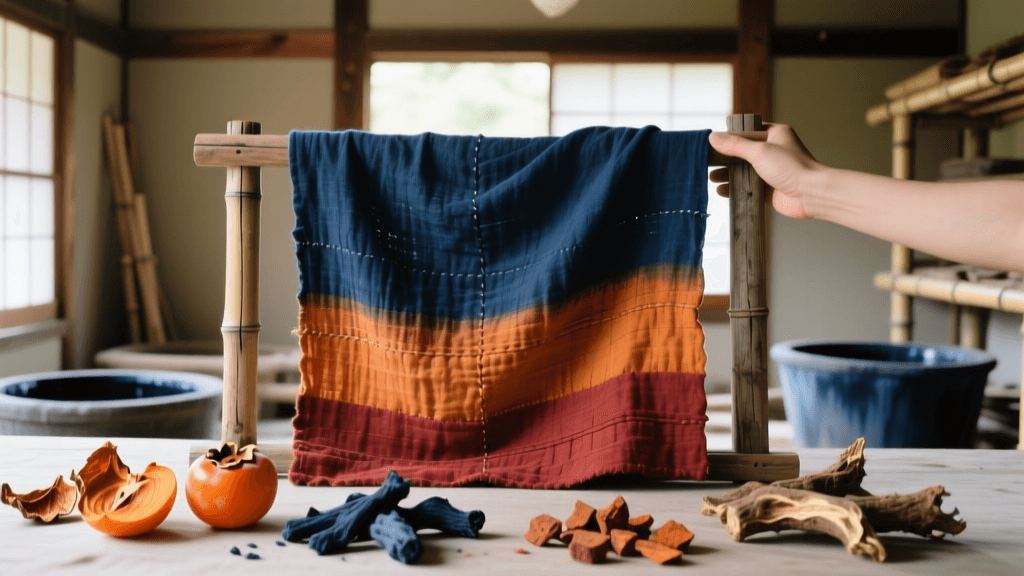
Japanese indigo, or ai, is distinct from tropical indigofera tinctoria. Grown primarily in Tokushima Prefecture, the leaves are harvested in late summer and composted by master artisans known as ai-shi to create sukumo (fermented indigo mulch). In 2026, the fermentation process is closely monitored using digital pH and moisture sensors to ensure optimal bacterial activity without the need for synthetic reducing agents like sodium hydrosulfite. Instead, traditional alkaline builders like wood ash lye (akumizu) and natural fructose from wheat bran are used to reduce the indigo vat. The resulting wastewater is rich in nitrogen and completely non-toxic, often repurposed as a high-grade organic fertilizer for local farms.
Kakishibu (Persimmon Tannin)
Kakishibu is a remarkable natural dye and fabric sealant extracted from unripe, astringent persimmons. The green fruits are crushed, fermented, and aged for up to two years. When applied to natural cellulose fibers like cotton, hemp, or linen, the high concentration of tannins undergoes polymerization when exposed to ultraviolet sunlight. This creates a natural, waterproof, and insect-repellent coating on the fabric. In 2026, kakishibu is heavily utilized in sustainable outdoor and workwear, replacing toxic perfluorinated chemicals (PFCs) traditionally used for water resistance. Because it requires no heat setting and no metallic mordants, it represents one of the lowest-impact dyeing methods available.
Akane (Japanese Madder - Rubia argyi)
Valued for its rich, warm reds and deep terracottas, akane relies on the roots of the madder plant. Historically, harvesting roots meant destroying the plant. However, modern sustainable agriculture techniques introduced in 2026 involve cultivating akane in deep, aerated soil beds that allow for the selective pruning of secondary roots without killing the primary taproot. This perennial harvesting method ensures a continuous yield year after year, sequestering carbon in the soil and preventing erosion. When paired with plant-based mordants, akane produces colorfast reds that rival synthetic alternatives in vibrancy but completely eliminate the risk of heavy metal contamination in local waterways.
Zero-Waste Mordanting: Moving Away from Heavy Metals
A critical component of eco-friendly dyeing is the mordant—the substance used to bind the dye molecule to the textile fiber. Historically, and even in some modern 'natural' dye practices, alum (aluminum potassium sulfate) or copper and iron salts are used. While alum is relatively safe, mining it carries an environmental cost, and copper/iron can be toxic to aquatic life if discharged improperly.
In 2026, the vanguard of Japanese kusaki-zome has fully embraced bio-mordanting and tannin-based fixation. For protein fibers like silk and wool, soy milk (go-jiu) is used as a natural binder. The proteins in the soy milk coat the fibers, providing ample sites for the plant dyes to attach. For cellulose fibers, dyers utilize tannin-rich extracts from fallen acorn cups (kuri no kawa) or myrobalan nuts. These bio-mordants are entirely foraged or sourced from food industry waste, ensuring a closed-loop system. Furthermore, certified sustainable studios registered with B Lab are now mandating these zero-waste mordanting protocols to maintain their eco-certifications, proving that high-performance colorfastness does not require mined minerals.
Comparative Analysis: Synthetic vs. Kusaki-Zome (2026 Standards)
To understand the environmental impact of adopting traditional Japanese plant dyes, it is essential to compare them against conventional synthetic dyeing processes. The table below outlines the key environmental metrics based on 2026 textile industry lifecycle assessments. When evaluating the base textiles, organizations like the World Wildlife Fund (WWF) emphasize that pairing organic, regenerative cotton with botanical dyes drastically reduces the overall water and chemical footprint of the final garment.
| Metric | Synthetic Azo Dyes | Kusaki-Zome (Eco-Standard) |
|---|---|---|
| Water Toxicity | High (contains heavy metals, formaldehyde) | None (effluent is biodegradable/compostable) |
| Mordant Source | Synthetic fixatives, mined heavy metals | Soy milk, foraged tannins, wood ash |
| Energy Requirement | High (requires sustained boiling/steam) | Low (ambient fermentation, solar oxidation) |
| Microplastic Shedding | Often paired with synthetic poly-blends | Exclusively applied to natural cellulose/protein |
| End-of-Life Impact | Leaches toxins in landfills | 100% compostable, enriches soil microbiome |
Actionable Guide: Sourcing and DIY Application in 2026
For designers, artisans, and hobbyists looking to integrate kusaki-zome into their practice, the barrier to entry has never been lower. The global supply chain for authentic, sustainably harvested Japanese dye materials has matured significantly. Here is how you can begin your eco-friendly dye practice this year.
Sourcing Authentic Materials
When purchasing sukumo (fermented indigo), look for suppliers who provide transparency regarding their ai-shi and the specific harvest year. In 2026, a premium 5kg bag of Tokushima sukumo retails for approximately $120 to $150 USD through specialized global botanical dye distributors. For kakishibu, a 500ml bottle of aged, double-fermented persimmon tannin costs between $35 and $50 USD. Always ensure the supplier certifies that the persimmons were sourced from unsprayed, organic orchards to avoid introducing agricultural pesticides into your dye vat.
Step-by-Step Kakishibu Sun-Curing Method
Kakishibu is the most accessible entry point for beginners due to its lack of complex vat chemistry. Follow these steps for a durable, water-resistant finish on linen or hemp:
- Preparation: Scour your natural fiber thoroughly using a pH-neutral, biodegradable soap. Rinse well and let it dry completely.
- Dilution: Mix your aged kakishibu with distilled water at a 1:3 ratio for a medium amber tone, or a 1:1 ratio for a deep, rich brown.
- Application: Submerge the fabric in the solution, massaging it gently to ensure even penetration. Leave it in the bath for 20 minutes.
- Wring and Hang: Remove the fabric and wring it out gently. Hang it outdoors in direct sunlight. The UV rays are the catalyst that triggers the tannin polymerization.
- Oxidation and Curing: For maximum water resistance, repeat the dip-and-dry process three to five times. After the final sun-dry, hang the fabric in a well-ventilated indoor space for 30 days to allow the tannins to fully cure and harden within the fiber matrix.
The Future of Botanical Dyes in Global Textiles
The integration of Japanese natural dye plants into the modern fashion ecosystem represents a profound shift in how we value color, labor, and environmental stewardship. As we move through 2026, the fusion of ancestral wisdom—like the meticulous fermentation of indigo and the solar-curing of persimmon tannins—with contemporary ecological standards offers a viable, scalable path away from the petrochemical dependency of the fast fashion era. By embracing kusaki-zome, we do not just wear beautiful, living colors; we actively participate in the regeneration of the earth's soil, water, and botanical heritage.