Japanese Natural Dye Plants: Sustainable Eco Methods for 2026
The Renaissance of Kusaki-zome in 2026
As the global fashion industry accelerates its transition toward regenerative and circular systems in 2026, traditional textile arts are experiencing a profound renaissance. Among the most celebrated of these is Kusaki-zome, the ancient Japanese art of plant-based dyeing. Unlike synthetic dyes, which rely on petrochemicals and heavy metal fixatives, Kusaki-zome harnesses the botanical wealth of Japan to produce rich, living colors that evolve beautifully over time. For modern artisans, sustainable fashion brands, and eco-conscious hobbyists, mastering Japanese natural dye plants is no longer just a nod to heritage—it is a vital component of the 2026 sustainable textile toolkit.
According to the Textile Exchange, the demand for naturally dyed, biodegradable fibers has surged by over 40% in the past three years as consumers and designers actively reject toxic effluent. By integrating traditional Japanese botanicals with modern green chemistry principles, today’s dyers are achieving unprecedented colorfastness without compromising ecological integrity. This guide explores the premier Japanese natural dye plants, eco-friendly mordanting alternatives, and actionable protocols for sustainable dyeing in 2026.
Top Japanese Natural Dye Plants for Sustainable Textiles
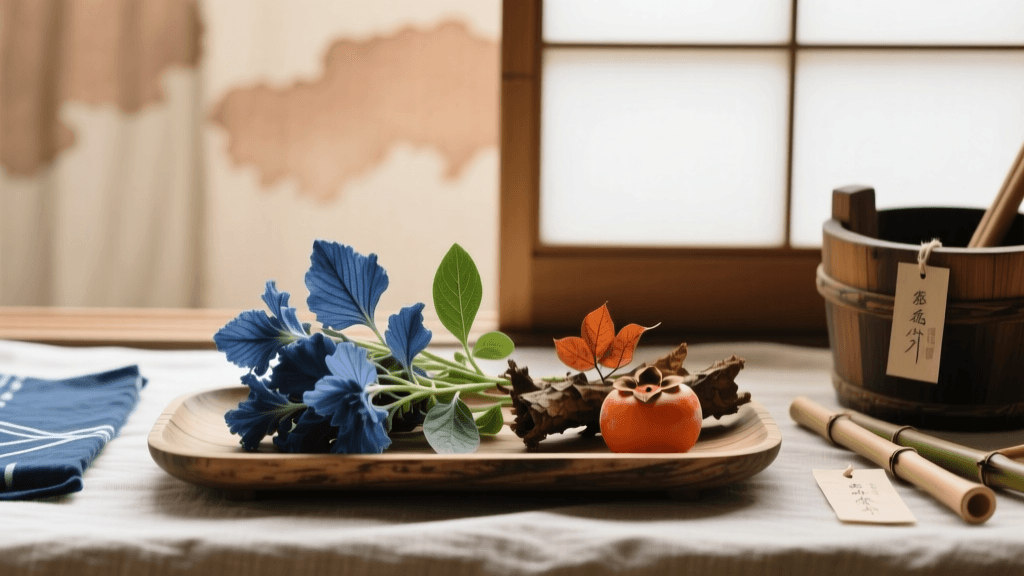
Japan’s diverse climate, ranging from the subarctic north to the subtropical south, supports a wide array of dye-bearing flora. The following four plants form the cornerstone of traditional and contemporary Japanese eco-dyeing.
1. Ai (Japanese Indigo)
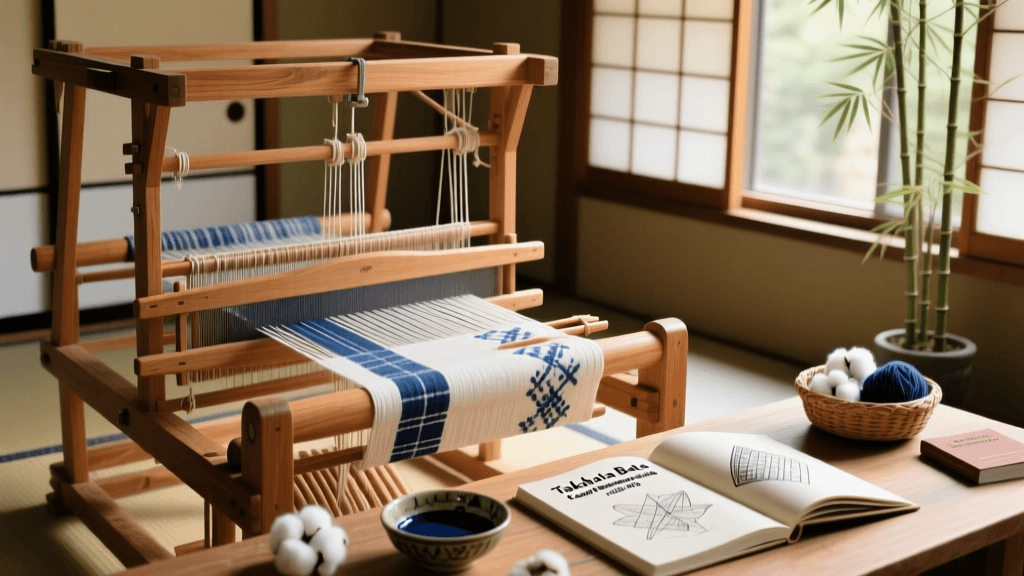
Persicaria tinctoria, known as Ai, is the source of Japan’s iconic deep blue. Unlike tropical indigofera, Japanese indigo is an annual knotweed that thrives in temperate climates. The leaves are harvested in late summer and undergo a meticulous 100-day fermentation process to create sukumo (fermented indigo cake). In 2026, artisanal sukumo from Tokushima Prefecture remains the gold standard, retailing at approximately $55 per kilogram. The dye vat relies on an alkaline environment, traditionally maintained using wood ash lye (akudama) and sake, creating a completely biodegradable, closed-loop system that nourishes the soil when eventually composted.
2. Kakishibu (Persimmon Tannin)
Extracted from unripe Diospyros kaki (Japanese persimmon) fruits, Kakishibu is a powerhouse of natural tannins. When applied to cotton, hemp, or silk and exposed to ultraviolet sunlight, the tannins oxidize and polymerize, creating a waterproof, rot-resistant, and insect-repellent finish in a warm, earthy brown. Kakishibu requires no heat or chemical mordants, making it one of the most energy-efficient dyes available. Artisans in 2026 frequently use aged Kakishibu (fermented for 2 to 3 years) for Shibori tie-dyeing and as a base layer to deepen the hues of other botanical dyes.
3. Akane (Japanese Madder)
Rubia argyi yields a spectacular spectrum of reds, from soft peach to deep crimson, thanks to the pigment alizarin found in its roots. Historically, Akane was reserved for the elite due to the labor-intensive cultivation required. Today, sustainable farms in Nara and Kyoto supply ethically harvested roots. Akane requires a mordant to bind to cellulose and protein fibers, but modern eco-dyers have successfully replaced traditional alum with bio-mordants to maintain a zero-toxicity footprint.
4. Kariyasu (Amur Cork Tree)
The inner bark of the Phellodendron amurense tree contains berberine, a brilliant, fluorescent yellow pigment. Historically used to dye the robes of Buddhist monks and high-ranking courtiers, Kariyasu is highly valued for its natural insect-repelling properties. Because berberine is a substantive dye, it can bind directly to protein fibers like silk and wool without a mordant, though cellulose fibers benefit from a tannin pre-treatment.
Eco-Friendly Mordants: Replacing Heavy Metals
Historically, metal salts like alum, chrome, and tin were used to fix dyes to fibers. However, the mining and disposal of these metals contradict modern sustainability goals. The EPA's Principles of Green Chemistry strongly advocate for the reduction of auxiliary substances and toxic catalysts. In 2026, the Kusaki-zome community has widely adopted bio-mordants and naturally occurring mineral alternatives that are safe for home studios and municipal water systems.
- Soy Milk (Protein Binder): The proteins in soy milk act as a bridge between cellulose fibers (cotton, linen) and natural dyes. A 2026 standard recipe involves diluting pure, unsweetened soy milk at a 1:5 ratio with water, soaking the fabric, and air-drying it before dyeing.
- Iron Water (Fermented Iron): Created by soaking rusty iron scraps in a solution of water and white vinegar for 3 to 4 weeks. Iron acts as a saddening agent, shifting reds to deep purples and yellows to olive greens, while dramatically improving lightfastness.
- Tannin-Rich Botanicals: Gallnuts, pomegranate rinds, and sumac leaves provide high concentrations of natural tannins, which mordant cellulose fibers beautifully without the need for metallic salts.
- Wood Ash Lye (Akumizu): Essential for indigo vats, hardwood ash is boiled in water, and the alkaline supernatant is used to reduce the indigo, completely eliminating the need for synthetic hydrosulfite.
Step-by-Step Sustainable Dyeing Protocol (Akane Red)
To achieve a vibrant, colorfast red using Akane (Madder) on organic cotton in 2026, follow this eco-friendly protocol. For comprehensive foundational knowledge, studios frequently refer to the Botanical Colors Natural Dye Basics guidelines, which align perfectly with these traditional Japanese methods.
- Scouring: Wash 100g of organic cotton fabric using 5g of pH-neutral, biodegradable soap and 1 tablespoon of washing soda. Simmer at 80°C (176°F) for 60 minutes to remove natural waxes. Rinse thoroughly.
- Tannin Pre-Treatment: Simmer the fabric in a bath of 10g oak gallnut powder for 45 minutes. Let it cool in the bath, then wring out gently.
- Bio-Mordanting: Submerge the tannin-treated fabric in a diluted soy milk bath (1 part soy milk to 4 parts water) for 12 hours. Hang to dry without rinsing. Repeat this step twice for deep color saturation.
- Dye Extraction: Simmer 50g of crushed Akane roots in 3 liters of water at 60°C (140°F) for one hour. Crucial: Do not exceed 70°C, or the brown pigments in the root will extract, muddying the red. Strain the liquid through a fine mesh cloth.
- Dyeing: Enter the damp, mordanted fabric into the warm dye bath. Maintain at 55°C for 90 minutes, stirring gently with a wooden spoon to ensure even penetration.
- Post-Mordant (Optional): For a deeper burgundy, dip the dyed fabric into a weak iron water bath for 5 minutes.
- Washing: Rinse in cool water until the runoff is clear. Wash once more with pH-neutral soap and line dry in the shade to prevent UV degradation during the initial curing phase.
2026 Comparison Chart: Japanese Dye Plants & Eco-Mordants
| Botanical Name | Japanese Name | Color Profile | Recommended Eco-Mordant | Lightfastness | 2026 Avg. Cost (per 100g) |
|---|---|---|---|---|---|
| Persicaria tinctoria | Ai (Indigo) | Deep Blue to Navy | Wood Ash Lye (Alkaline) | Excellent | $5.50 (Sukumo) |
| Diospyros kaki | Kakishibu | Earth Brown / Amber | None (UV Oxidation) | Excellent | $3.00 (Liquid Extract) |
| Rubia argyi | Akane (Madder) | Crimson to Peach | Soy Milk + Tannin | Good to Very Good | $8.00 (Dried Root) |
| Phellodendron amurense | Kariyasu | Fluorescent Yellow | None (for Silk/Wool) | Moderate | $12.00 (Inner Bark) |
Environmental Impact and Circular Fashion
The integration of Kusaki-zome into modern textile production represents a massive leap toward circular fashion. Unlike synthetic dye houses, which are responsible for roughly 20% of global industrial water pollution, a natural dye studio utilizing Japanese botanicals operates on a closed-loop water system. The exhausted dye baths from Ai, Akane, and Kariyasu are entirely non-toxic and can be safely used to irrigate garden beds or returned to the local watershed without filtration.
Furthermore, the agricultural practices surrounding these plants promote biodiversity. Indigo cultivation, for instance, acts as a cover crop that fixes nitrogen in the soil, improving land health for subsequent food crops. As we navigate 2026, the fusion of ancestral Japanese wisdom with contemporary ecological standards proves that true luxury in fashion is not just about aesthetic beauty, but about a profound, regenerative respect for the natural world.