Japanese Kimono Types & Formality Buying Guide 2026

The Enduring Elegance of Japanese Garments in 2026
As we navigate the global fashion landscape of 2026, the Japanese kimono remains a masterclass in textile artistry, structural engineering, and cultural heritage. Far from being a static relic of the past, traditional Japanese garments have experienced a massive renaissance, driven by a new generation of collectors, sustainable fashion advocates, and international enthusiasts. According to the Victoria and Albert Museum's extensive textile archives, the kimono is not merely a piece of clothing but a canvas that reflects the wearer's age, marital status, and the precise season of the year.
For international buyers and cultural enthusiasts looking to invest in authentic Japanese garments this year, understanding the strict hierarchy of formality is paramount. Whether you are attending a formal tea ceremony in Kyoto, a summer festival in Tokyo, or simply curating a museum-quality textile collection, this comprehensive 2026 guide will demystify Japanese kimono types, sizing metrics, and current market pricing.
The Hierarchy of Kimono Formality
The Japanese concept of TPO (Time, Place, Occasion) dictates every aspect of traditional dress. In 2026, while modern styling rules have relaxed slightly for casual wear, formal occasions still demand strict adherence to traditional classifications. As noted by The Metropolitan Museum of Art's Heilbrunn Timeline of Art History, the evolution of these garments is deeply tied to Japan's socio-political shifts, yet the core formality markers established in the Edo and Meiji periods remain largely intact today.
Furisode (振袖): The Pinnacle of Unmarried Formality
The Furisode, characterized by its dramatically long, swinging sleeves (ranging from 100 cm to 114 cm in length), is the most formal kimono for unmarried women. It is the garment of choice for Coming of Age Day (Seijin no Hi) and formal wedding attendance. In 2026, authentic, hand-painted Yuzen silk Furisode remain a significant investment. The sleeves are designed to sway gracefully, historically serving as a non-verbal signal of romantic availability. Today, they are celebrated purely for their breathtaking visual impact, often featuring lavish gold leaf (kinpaku) and intricate embroidery.
Homongi (訪問着) & Tsukesage (付け下げ): Formal & Semi-Formal
For married women, or unmarried women attending slightly less formal events, the Homongi (literally "visiting wear") is the standard. Its defining feature is the eba pattern—a continuous, hand-painted design that flows seamlessly across the seams of the kimono when laid flat. The Tsukesage is a step down in formality; its patterns are dyed onto the fabric bolt before cutting, meaning the designs do not cross the seams. Both are highly versatile for 2026 tea ceremonies, graduation ceremonies, and upscale gallery openings.
Komon (小紋) & Tsumugi (紬): Everyday Elegance
For casual outings, dining, and theater visits, the Komon is the go-to garment. It features a repeating pattern all over the fabric. A highly prized sub-category is the Edo Komon, which utilizes micro-patterns that appear solid from a distance but reveal incredible geometric or nature-inspired motifs up close. Tsumugi, woven from spun silk (often using flawed cocoons), offers a rustic, textured aesthetic. Despite its high cost and incredible craftsmanship, Tsumugi is technically classified as casual wear due to its historical roots as a peasant garment, making it a favorite among modern textile connoisseurs who value subtlety over flash.
Kimono vs. Yukata vs. Hakama: 2026 Comparison
Understanding the distinction between these three foundational garments is critical for any buyer. The table below outlines the primary differences, including current 2026 market averages for new, authentic garments purchased directly from artisans in Japan.
| Garment Type | Formality Level | Primary Material | Required Undergarments | 2026 Avg. Retail Price (JPY) |
|---|---|---|---|---|
| Furisode / Homongi | High Formal | 100% Mulberry Silk (Rinzu/Chirimen) | Juban, Hada-juban, Koshi-himo, Date-jime | ¥350,000 - ¥800,000+ |
| Komon / Tsumugi | Casual / Smart Casual | Silk, Silk-Wool Blends, Washable Synthetics | Juban, Hada-juban, Koshi-himo | ¥45,000 - ¥150,000 |
| Yukata (浴衣) | Informal / Summer Festival | Cotton, Hemp, Cotton-Poly Blends | Susoyoke (slip), Hada-juban (optional) | ¥5,000 - ¥25,000 |
| Hakama (袴) | Ceremonial / Martial Arts | Silk, Polyester (for martial arts) | Worn over a standard Kimono | ¥20,000 - ¥120,000 |
Note: Prices reflect 2026 retail markets in Kyoto and Tokyo. Vintage and upcycled markets offer these garments at 30% to 60% of the retail cost.
Mastering Kimono Sizing & Measurements
Unlike Western clothing, kimono are not sized by small, medium, or large. They are constructed from a single bolt of fabric called a tanmono, which is traditionally about 38 centimeters (15 inches) wide and 12 meters (13 yards) long. Because the fabric is cut in straight lines and folded rather than tailored to curves, the fit is adjusted during the dressing process (kitsuke).
How to Measure Your 'Yuki' (裄)
The most critical measurement for purchasing a kimono online in 2026 is the Yuki. To find your Yuki:
- Stand upright and extend one arm horizontally to the side.
- Measure from the center bump of your spine at the base of your neck, across your shoulder, and down to your wrist bone.
- For a standard modern fit, the kimono's Yuki should match this measurement exactly. For a traditional, slightly relaxed fit, add 2 to 3 centimeters.
If you are exceptionally tall (over 175 cm) or have a broader frame, you will need to seek out hiro-haba (wide-width) tanmono, which are woven at 42 cm to 44 cm to accommodate larger body types without compromising the structural integrity of the side seams.
Where to Buy Authentic Garments in 2026
The post-pandemic shift toward sustainable, slow fashion has made 2026 a golden year for vintage and artisanal kimono shopping. The Japan National Tourism Organization heavily promotes regional textile tourism, encouraging buyers to visit the source of the craft.
Kyoto: The Heart of Nishijin-ori and Yuzen
For high-end formal wear and obis (sashes), Kyoto's Nishijin district remains unmatched. In 2026, many multi-generational Nishijin weaving houses have opened direct-to-consumer showrooms, allowing international buyers to commission custom Fukuro obi woven with genuine metallic threads. For vintage treasures, the Toji Temple Flea Market (held on the 21st of every month) and the Tenjin-san market (25th of the month) are prime hunting grounds for pre-1950s silk Komon at bargain prices.
Tokyo: Modern Styling and Upcycling
Tokyo's Asakusa and Jimbocho districts cater to the modern enthusiast. In 2026, Tokyo-based boutiques are leading the "neo-vintage" movement, where damaged vintage silk is expertly upcycled into modern silhouettes, haori jackets, and even structural handbags. This approach allows buyers to own a piece of history while participating in the circular fashion economy.
Fabric Care & Modern Maintenance
Caring for a silk kimono requires specialized knowledge. Traditional dry cleaning can strip the natural luster from high-grade mulberry silk and ruin delicate gold-leaf applications. In 2026, the gold standard for deep cleaning is arai-hari (洗い張り). This centuries-old technique involves completely unstitching the kimono back into its original flat fabric panels, washing them in specialized water baths, stretching them on bamboo frames to dry, and then having a tailor restitch the garment. While it costs between ¥15,000 and ¥25,000 per garment, it restores the silk's structural tension and removes decades of hidden stains.
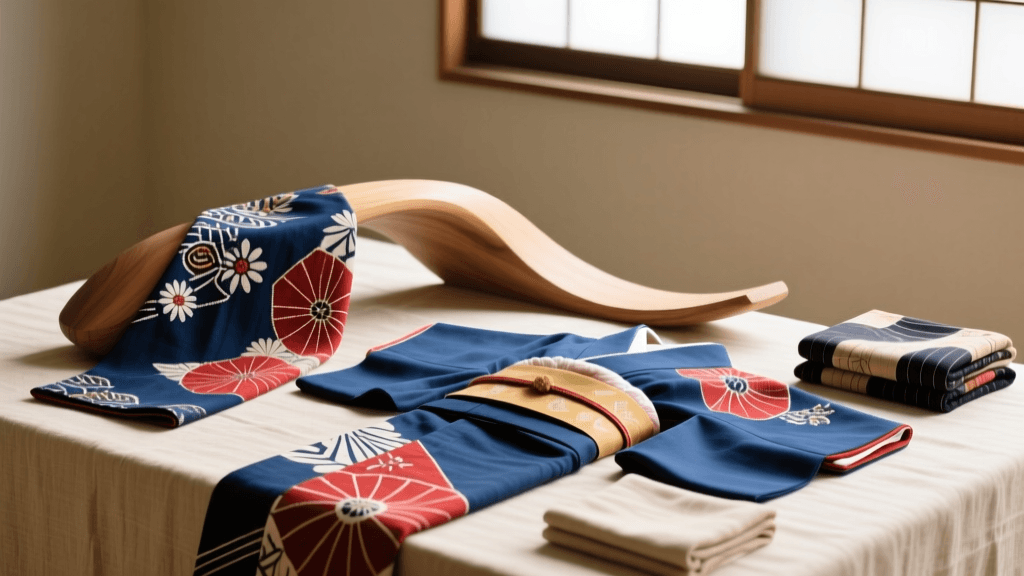
For everyday maintenance, always air out your silk kimono on a specialized wooden hanger (emono-kake) in a shaded, well-ventilated room for 24 hours after wearing. Never store silk in plastic bags; the trapped moisture will cause mold (kabi). Instead, wrap the garment in acid-free tatou paper and store it in a breathable paulownia wood drawer (tansu), which naturally regulates humidity and repels insects.
Conclusion: Embracing the Tradition
Investing in a Japanese kimono in 2026 is an exercise in cultural appreciation and sartorial excellence. By understanding the rigid formality of the Furisode, the subtle elegance of the Komon, and the precise metrics of the tanmono, international buyers can navigate this complex market with confidence. Whether you are draping a breathable cotton Yukata for a summer evening or commissioning a bespoke silk Homongi for a lifetime milestone, the Japanese garment remains one of the most sophisticated and deeply meaningful clothing traditions in the world.