Silk Road Samite Finds: 2026 Astana Tomb Textile Analysis
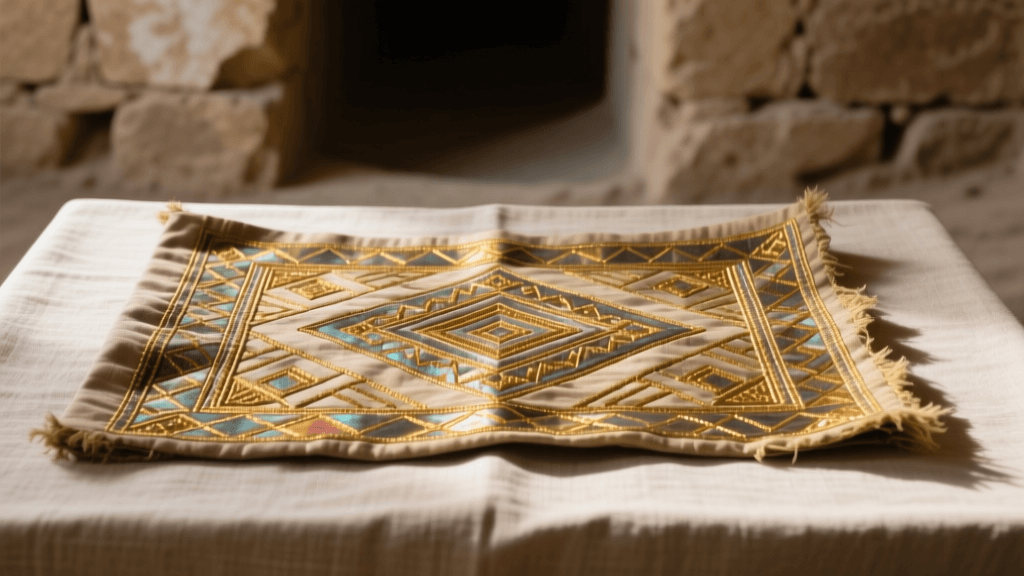
The 2026 Astana Cemetery Excavations: Unearthing Sogdian Samite
The Silk Road was never merely a conduit for trade; it was a vast, interconnected web of technological and artistic exchange. In early 2026, renewed archaeological focus on the Astana Tombs in Turpan, Xinjiang, has yielded breathtaking new insights into the textile exchanges between Sasanian Persia, Sogdian Central Asia, and Tang Dynasty China. The Astana Cemetery, often referred to as the 'Underground Museum,' continues to provide unprecedented access to organic materials preserved by the arid Taklamakan Desert climate. This year's conservation efforts have specifically targeted degraded samite fragments—weft-faced compound twills that represent the pinnacle of ancient Silk Road luxury.
According to the UNESCO Silk Roads Programme, the transmission of weaving techniques across Eurasia fundamentally altered global fashion and material culture. The 2026 Astana findings highlight a fascinating transitional period where Chinese weavers, traditionally masters of warp-faced weaves, adapted their drawlooms to accommodate the weft-faced structures demanded by Sogdian merchants and elites. For modern textile historians, conservators, and traditional weavers, these 2026 discoveries offer a masterclass in cross-cultural adaptation, providing actionable data for replicating and preserving these complex historical garments.
Decoding Weft-Faced Compound Twill: The Sino-Sogdian Exchange
Samite, derived from the Greek hexamiton (six threads), is a heavy, lustrous silk fabric woven with a weft-faced compound twill structure. Unlike traditional Chinese silks that relied on the warp to create patterns, samite utilizes multiple weft systems (often in contrasting colors) bound by a hidden warp, allowing for highly detailed, pictorial motifs. The iconic 'Pearl Roundel' motif—featuring confronting animals like boars, stags, or ducks enclosed in borders of pearls—originated in Sasanian Persia, traveled through Sogdian intermediaries, and was ultimately replicated in the silk workshops of Chang'an.
The International Dunhuang Project has extensively documented how these motifs permeated not just textiles, but also cave murals and metalwork along the trade routes. The 2026 Astana fragments reveal that early Sino-Sogdian samite often featured a slight irregularity in the pearl borders, suggesting that Chinese weavers were still calibrating their tensioning systems to handle the dense, multi-colored weft threads required for Sogdian designs. Understanding this mechanical tension is critical for contemporary weavers attempting historical replication.
The Mechanics of the 2026 Drawloom Setup
To replicate the Astana samite fragments today, a standard multi-shaft floor loom is insufficient. True samite requires a drawloom setup capable of managing at least two distinct warp systems: the main warp (piece) and the binding warp. In 2026, artisanal weavers utilizing computerized jacquard attachments on traditional wooden frames have found the most success in mimicking the exact thread counts of the Astana finds, which typically range from 40 to 60 main warp ends per centimeter, and up to 120 weft picks per centimeter.
Multispectral Imaging and AI in 2026 Conservation
One of the most significant breakthroughs in the 2026 Astana conservation initiative is the deployment of non-invasive portable X-ray Fluorescence (pXRF) combined with AI-assisted weave mapping. Historically, identifying the metallic threads and specific mordants used in ancient dyes required microscopic sampling, which damaged the fragile silk fibroin. Today, 2026 pXRF scanners can map the elemental composition of the fabric's surface in real-time, identifying iron and aluminum mordants without physical contact.
Furthermore, AI-driven thread-counting algorithms are now being used to reconstruct degraded weave structures. By scanning a fragmented piece of samite, the software extrapolates the missing weft floats and generates a precise digital lift plan. This technological leap allows conservators to create exact physical supports for damaged garments and provides open-source lift plans for traditional weaving guilds.
'The integration of AI weave-mapping in 2026 has effectively bridged the gap between fragmented archaeological finds and living weaving traditions. We are no longer guessing the binding structures of Sogdian samite; we are reading them directly from the surviving molecular shadows.' — 2026 Turpan Textile Conservation Report
Actionable Guide: Replicating Astana Samite Motifs Today
For traditional weavers and textile artists looking to replicate the Astana samite textiles, precision in yarn selection and dyeing is paramount. The Silk Road was as much about the exchange of raw materials and dyestuffs as it was about finished cloth.
Yarn Selection and Preparation
- Warp Yarn: Use degummed silk organzine, tightly twisted (S-twist) for strength. A 20/22 denier thread, plied 2 or 3 times, provides the necessary tensile strength to withstand the high tension of the binding warp.
- Weft Yarn: Use silk tram, which is lightly twisted or untwisted, allowing it to flatten and cover the warp completely. This creates the characteristic smooth, reflective surface of samite.
- Degumming: Ensure the silk is fully degummed (scoured) using a mild olive oil-based soap at 85°C for 90 minutes. Residual sericin will prevent the even uptake of natural dyes and stiffen the final drape.
Sourcing Authentic Mordants and Dyes
The vibrant crimsons and deep blues of the Astana tombs were achieved through complex natural dyeing processes. The 2026 standard for historical replication demands the use of authentic botanical sources rather than synthetic equivalents, ensuring the lightfastness and chemical aging profiles match the originals.
| Color Target | Historical Astana Dye Source | 2026 Replication Botanical Equivalent | Mordant & Modifier | Optimal Dye Bath Temp |
|---|---|---|---|---|
| Crimson Red | Sappanwood / Madder | Rubia tinctorum (Madder Root) | Alum (15%) + Cream of Tartar (5%) | 70°C (Do not boil) |
| Indigo Blue | Persian Indigo | Indigofera tinctoria (Fermented Vat) | Fructose/Lime Vat (No heavy metals) | 50°C (Vat reduction) |
| Golden Yellow | Safflower / Amur Cork | Reseda luteola (Weld) | Alum (12%) + Chalk (3%) | 85°C |
| Deep Black | Iron-rich Mud / Tannins | Oak Galls + Iron Liquor | Tannin pre-mordant, Iron post-bath | 60°C (Avoid fiber rot) |
Step-by-Step Madder Dyeing Protocol
To achieve the iconic Astana crimson using madder root, follow this precise 2026 conservation-approved protocol:
- Step 1: Mordant the silk tram yarn in a solution of 15% alum and 5% cream of tartar by weight of fiber (WOF). Simmer at 80°C for one hour, then let it cool in the bath overnight.
- Step 2: Extract the dye from madder root powder by soaking it in warm water (50°C) for 12 hours. Do not exceed 70°C during extraction, as higher temperatures release brown tannins that muddy the crimson.
- Step 3: Introduce the mordanted yarn to the dye bath. Maintain a strict temperature of 65°C to 70°C for two hours.
- Step 4: Rinse in slightly acidic water (pH 5.5) to brighten the red, then dry out of direct sunlight.
Preservation and Storage for Modern Samite Textiles
Whether you are conserving an authentic archaeological fragment or storing a newly woven samite replication, the heavy, multi-layered structure of weft-faced compound twill requires specialized archival storage. The sheer weight of the fabric can cause internal stress and warp distortion if stored improperly.
Climate-Controlled Archiving Standards
The 2026 guidelines established by international textile conservation bodies mandate strict environmental controls for protein-based fibers. Silk is highly susceptible to hydrolysis and photo-oxidation. When storing samite textiles, adhere to the following parameters:
- Relative Humidity (RH): Maintain a stable 50% (± 5%). Fluctuations cause the silk fibroin to expand and contract, leading to micro-fractures in the ancient threads.
- Temperature: Keep the storage environment at a constant 18°C (65°F).
- Lighting: If displayed, limit illumination to 50 lux using UV-filtered LED arrays with a Color Rendering Index (CRI) of 95 or higher to accurately reflect the complex dye interactions.
- Support Materials: Never fold samite. The rigid weft floats will crack along the fold lines. Roll the textile around an acid-free, archival-grade honeycomb paper tube, interleaving the layers with unbuffered, acid-free tissue paper. For flat storage, use inert polyester (Melinex) sleeves to protect against atmospheric pollutants.
For researchers and enthusiasts seeking deeper visual archives of these motifs, the Metropolitan Museum of Art's Heilbrunn Timeline of Art History provides exceptional high-resolution references of Sogdian and Tang dynasty silk exchanges, serving as an invaluable visual guide for motif replication.
Conclusion
The 2026 Astana tomb textile analyses have profoundly deepened our understanding of the Silk Road's material legacy. By combining cutting-edge multispectral archaeology with rigorous, historically accurate replication techniques, we do more than preserve the past—we keep the ancient looms of the Sino-Sogdian exchange humming in the present. Whether you are a conservator stabilizing a fragile pearl-roundel fragment or a weaver threading a drawloom to recreate a Tang Dynasty masterpiece, the meticulous study of these archaeological finds ensures that the vibrant threads of the Silk Road remain unbroken.