Japanese Kimono Types 2026: The Complete Style Guide
The Enduring Legacy of Japanese Garments in 2026
As we navigate the global fashion landscape of 2026, the Japanese kimono remains a masterclass in structural elegance, zero-waste design, and cultural storytelling. Far from being relegated to museums, traditional Japanese garments are experiencing a vibrant renaissance. Driven by a growing global interest in sustainable fashion and artisanal craftsmanship, modern enthusiasts and heritage preservationists alike are embracing both vintage restoration and contemporary textile innovation. According to the Victoria and Albert Museum's extensive textile archives, the kimono's T-shaped, straight-seamed construction has influenced global couturiers for over a century, yet its deep cultural roots continue to dictate how, when, and why specific garments are worn in Japan today.
Whether you are a collector seeking rare Oshima Tsumugi silk, a traveler preparing for a summer festival in Kyoto, or a fashion student studying zero-waste pattern making, understanding the strict hierarchy of Japanese garment types is essential. This comprehensive guide breaks down the complete spectrum of Japanese traditional wear, from ultra-formal wedding attire to breathable summer loungewear, complete with 2026 market pricing and styling advice.
The Foundation: Tanmono and Zero-Waste Construction
Unlike Western tailoring, which relies on curved cutting and fabric waste, the traditional kimono is constructed from a single bolt of fabric known as a tanmono. A standard tanmono is approximately 36 centimeters wide and 12 meters long. The fabric is cut into eight straight rectangular pieces—two for the body, two for the sleeves, and smaller strips for the collar and overlap. This ingenious geometric construction means the garment can be entirely disassembled, cleaned, re-dyed, and resewn, making it one of the most inherently sustainable garments in human history. In 2026, this circular lifecycle is highly prized, with specialized AI-assisted scanning services now helping collectors map vintage tanmono for precise modern restorations.
The Pinnacle of Formality: Tomesode and Furisode
Kurotomesode and Irotomesode
The Kurotomesode (black with five family crests) and Irotomesode (colored with one to five crests) represent the absolute peak of women's formal wear. Kurotomesode is strictly reserved for married women, most commonly worn by the mothers of the bride and groom at Shinto wedding ceremonies. The designs are confined to the lower half of the skirt, featuring elaborate, auspicious motifs like cranes, pine trees, and flowing water, heavily embellished with gold and silver leaf. In 2026, renting a pristine, hand-painted Kurotomesode in Tokyo or Kyoto typically costs between $150 and $300 for the day, while purchasing a newly commissioned artisan piece can easily exceed $5,000.
Furisode
The Furisode is the most formal kimono for young, unmarried women. It is instantly recognizable by its dramatically long, swinging sleeves, which can measure up to 114 centimeters in length (the oh-furisode style). Historically, the waving of these sleeves was believed to ward off evil spirits and attract good fortune. Today, it is the standard attire for Seijin no Hi (Coming of Age Day) and university graduation ceremonies. Modern 2026 furisode trends heavily feature bold, high-contrast color blocking and 3D embroidered florals, moving away from the pastel palettes of the previous decade.
Semi-Formal Elegance: Houmongi and Tsukesage
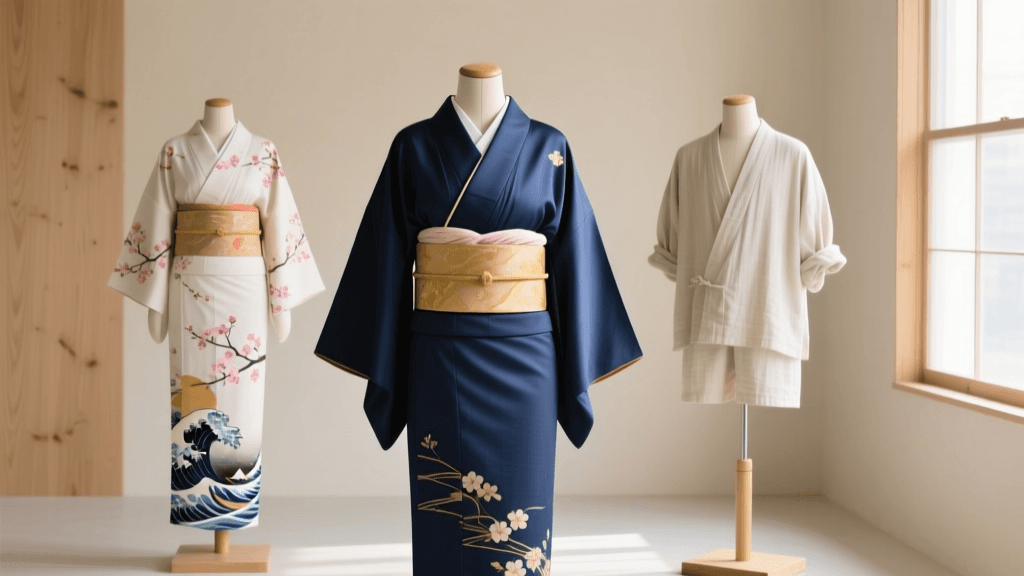
For events that require elegance without the strict ceremonial weight of a Tomesode, the Houmongi (visiting wear) is the premier choice. The defining characteristic of a Houmongi is its eba-moyo pattern—a continuous picture or landscape that flows seamlessly across the seams when the kimono is laid flat. It is appropriate for both married and unmarried women and is the standard garment for attending weddings as a guest, participating in high-level tea ceremonies, or attending formal galas.
Slightly less formal is the Tsukesage. Unlike the Houmongi, the patterns on a Tsukesage are applied to the fabric before it is cut, meaning the motifs do not cross the seams. The designs are generally concentrated on the lower half and the upper back of the sleeves. It is an incredibly versatile piece, bridging the gap between semi-formal gatherings and upscale dining.
Everyday Sophistication: Komon and Tsumugi
The Komon is the quintessential everyday kimono, characterized by a repeating micro-pattern that covers the entire garment. The most prestigious variation is Edo Komon, a technique recognized by the Japanese government as an Important Intangible Cultural Property. Using incredibly fine paper stencils, artisans dye thousands of tiny dots per square inch, creating a pattern that appears solid from a distance but reveals intricate geometric or natural motifs up close.
Another cornerstone of everyday and smart-casual wear is Tsumugi, a silk woven from pre-dyed threads, often resulting in a textured, slightly nubby fabric that resembles tweed or linen. As highlighted by the UNESCO Intangible Cultural Heritage list, techniques like Yuuki Tsumugi require immense skill, sometimes taking months to weave a single bolt. In 2026, Tsumugi kimonos are highly sought after by global collectors for their understated luxury and exceptional durability.
Summer and Casual Wear: Yukata and Jinbei
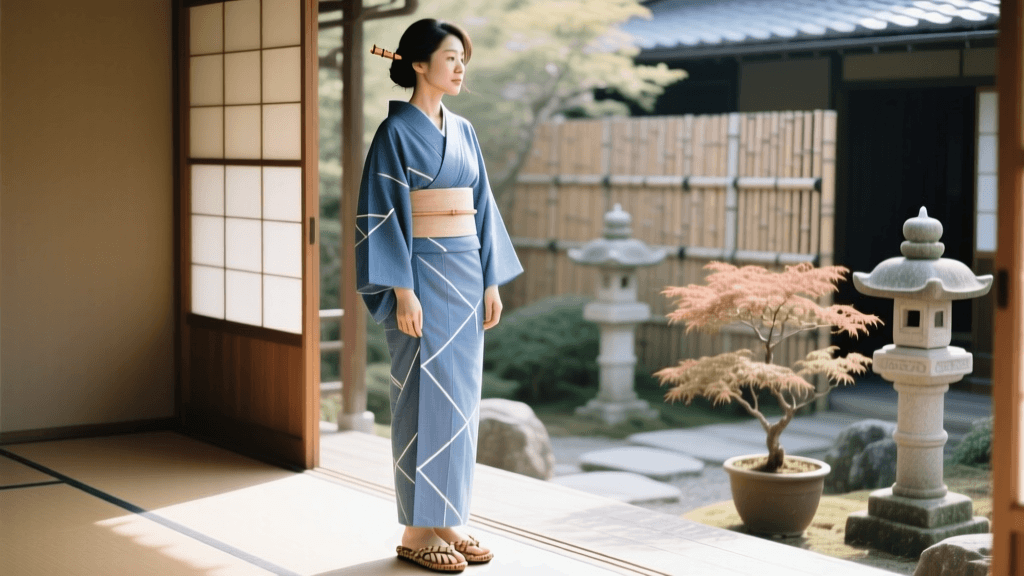
When the humid Japanese summer arrives, the wardrobe shifts dramatically to breathable, unlined garments. The Yukata is the most famous of these, traditionally made from lightweight cotton or modern hemp-blends. Originally worn as a bathrobe by the nobility in the Heian period, it evolved into the standard attire for summer fireworks festivals (hanabi taikai) and bon odori dances. The Metropolitan Museum of Art notes that the yukata's accessibility and ease of wear have made it the most globally recognized Japanese garment. In 2026, climate-adaptive cooling fabrics are increasingly popular in high-end yukata lines, blending traditional aesthetics with modern textile technology.
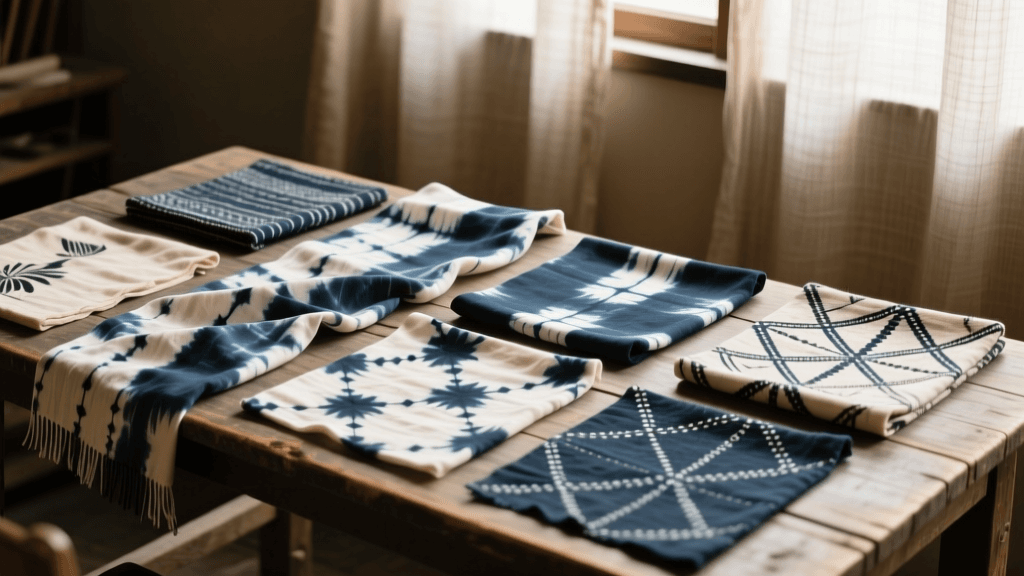
For ultimate casual comfort, the Jinbei takes precedence. A two-piece garment consisting of a short-sleeved top and matching shorts, the Jinbei is the ultimate summer loungewear. Often featuring indigo-dyed shibori patterns, it is worn by men, women, and children alike at home, in traditional inns (ryokan), or at casual neighborhood festivals.
Men's Traditional Wardrobe
While women's kimono feature vast variations in color and pattern, men's traditional wear is defined by subtlety, texture, and silhouette. The most formal ensemble is the Montsuki Hakama, featuring a black crested kimono paired with pleated, skirt-like trousers (hakama). For everyday wear, men often opt for subdued Komon or Tsumugi kimonos paired with a simple wool or silk Haori (jacket). The Samue, a two-piece cotton workwear garment originally worn by Zen Buddhist monks, has also surged in popularity in 2026 as premium, artisanal loungewear for men and women globally.
The Art of the Obi and Accessories
A kimono is incomplete without its Obi (sash). The formality of the obi must match the kimono. The Fukuro Obi is the standard for formal and semi-formal wear, woven with heavy brocade and gold threads. The Nagoya Obi, which is pre-folded and stitched for easier tying, is the workhorse for everyday Komon and Tsumugi. For Yukata, a simple, unlined Hanhaba Obi (half-width sash) is used.
Essential accessories include the Obijime (a decorative cord tied over the obi), the Obiage (a silk scarf peeking out above the obi), Tabi (split-toe socks), and footwear such as Zori (flat, formal sandals) or Geta (wooden clogs for casual wear).
2026 Market Trends and Pricing Guide
The 2026 market for Japanese garments is heavily driven by the vintage recycling boom and sustainable fashion movements. High-quality vintage silk kimonos from the mid-20th century are being upcycled into modern jackets, skirts, and home decor. Below is a comparative guide to current market averages for authentic, newly crafted or premium vintage pieces in 2026.
| Garment Type | Formality Level | Primary Fabric | Standard Obi Pairing | 2026 Avg. Price (USD) |
|---|---|---|---|---|
| Kurotomesode | Ultra-Formal | Heavy Silk Crepe (Chirimen) | Fukuro / Maru | $800 - $3,000+ |
| Furisode | Formal (Unmarried) | Silk Crepe / Satin | Fukuro | $600 - $2,500 |
| Houmongi | Semi-Formal | Silk / Rinzu (Figured Silk) | Fukuro / Nagoya | $400 - $1,500 |
| Komon | Everyday / Casual | Silk / Wool Blend | Nagoya | $150 - $600 |
| Tsumugi | Smart Casual | Pongee Silk / Hemp | Nagoya / Hanhaba | $300 - $1,200 |
| Yukata | Summer / Casual | Cotton / Hemp Blend | Hanhaba | $40 - $150 |
| Jinbei | Loungewear | Cotton / Linen | N/A (Belt tied) | $30 - $90 |
Care, Storage, and Maintenance
Proper care is vital to preserving these garments for future generations. Silk kimonos should never be washed in water; instead, they require specialized dry cleaning or traditional arai-hari (disassembling, washing the flat fabric panels, and resewing). When storing kimonos, always wrap them in acid-free washi paper or breathable cotton covers. Avoid plastic bags, which trap moisture and cause silk to yellow or develop mildew. In 2026, smart humidity-controlled storage closets designed specifically for textile preservation have become a popular investment for serious collectors.
Conclusion
The world of Japanese traditional garments is vast, governed by centuries of aesthetic rules yet continually adapting to modern sensibilities. Whether you are investing in a breathtaking Houmongi for a formal event, slipping into a breezy cotton Yukata for a summer evening, or appreciating the zero-waste genius of the tanmono, these garments offer a profound connection to Japanese heritage. By understanding the distinct types, proper pairings, and current market values, you can navigate the beautiful, intricate world of Japanese fashion with confidence and deep cultural respect.