Decoding Japanese Kimono Symbolism: Motifs & Colors
The Language of Threads: Understanding Kisetsukan
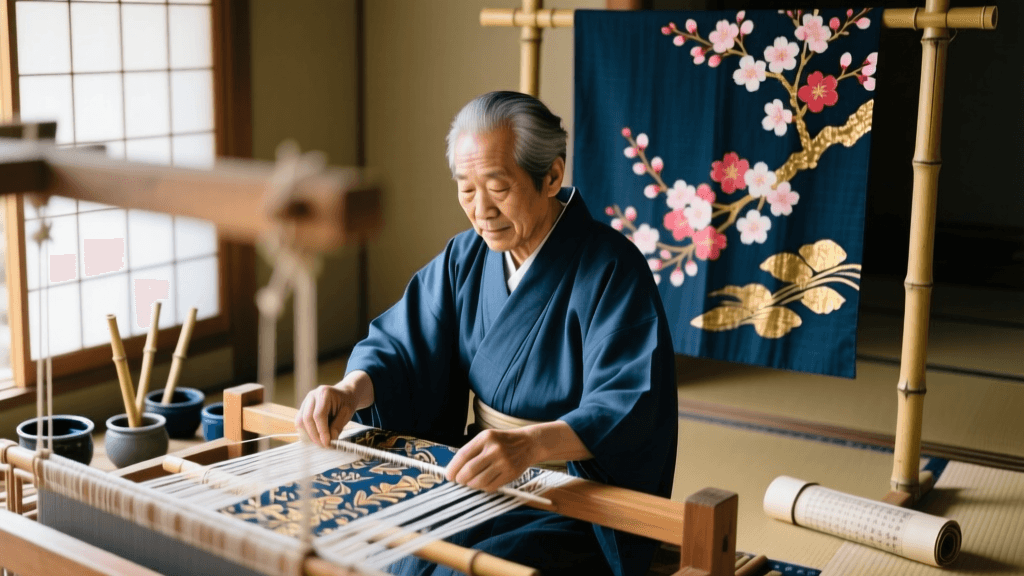
The Japanese kimono is far more than a mere garment; it is a canvas that reflects the natural world, social status, and the fleeting passage of time. At the heart of this sartorial poetry is the concept of kisetsukan, or seasonal awareness. In traditional Japanese culture, wearing a motif that aligns with the current season—or slightly anticipates it—is a mark of refinement and cultural literacy. According to the Metropolitan Museum of Art, the evolution of kimono textiles during the Edo period saw an explosion of naturalistic motifs, transforming the garment into a walking reflection of Japan's deep reverence for nature.
Understanding the symbolism behind these patterns and colors is essential for anyone looking to wear, collect, or study traditional Japanese clothing. From the auspicious cranes of a wedding uchikake to the protective thorns of an Ainu attus, every thread tells a story.
Decoding Seasonal Colors and Motifs
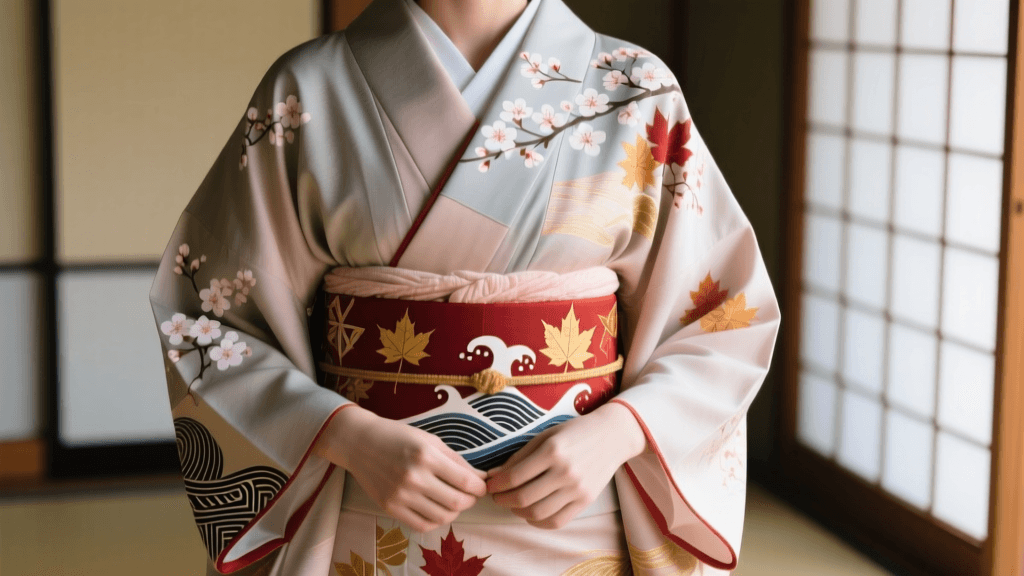
The rule of thumb for seasonal kimono wearing is anticipation. You should wear motifs of a season just before it begins, celebrating the arrival rather than the departure of the season. For instance, cherry blossom (sakura) motifs are worn in late February and March, but wearing them in April when the petals are actually falling is considered slightly out of touch, as it evokes impermanence and loss.
| Season | Primary Motifs | Traditional Colors | Best Occasions |
|---|---|---|---|
| Spring | Sakura (Cherry Blossom), Wisteria, Peony, Butterflies | Pastel pinks, soft greens, pale yellows | Graduations, Tea Ceremonies, Hanami |
| Summer | Water streams, Fans, Fireflies, Morning Glory | Indigo, cool blues, crisp whites, translucent fabrics | Festivals (Matsuri), Firework displays |
| Autumn | Maple leaves (Momiji), Chrysanthemum, Pampas grass | Rust, deep orange, burgundy, gold | Moon viewing (Tsukimi), Autumn weddings |
| Winter | Pine, Bamboo, Plum (Sho-Chiku-Bai), Snow rings | Deep reds, pure whites, rich blacks, emerald | New Year (Oshogatsu), Formal winter gatherings |
The Auspicious Motifs (Oshogatsu and Weddings)
Celebratory garments, such as the kurotomesode (black formal kimono for married women) or the vibrant furisode (long-sleeved kimono for unmarried women), heavily feature auspicious motifs. The tsuru (crane) and kame (turtle) represent longevity, stemming from the proverb that a crane lives a thousand years and a turtle ten thousand. The sho-chiku-bai (pine, bamboo, and plum) trio is a staple of New Year and wedding attire, symbolizing resilience, prosperity, and endurance through harsh winters.
Beyond the Mainland: Ainu and Ryukyuan Motif Symbolism
While the mainstream Japanese kimono garners global attention, the indigenous and regional garments of Japan offer equally profound symbolic languages. The Ainu people of Hokkaido create traditional garments like the attus (elm bark cloth) and cotton robes adorned with distinct, abstract motifs. Unlike the representational nature motifs of the mainland, Ainu patterns like the moreu (swirls) and aiushi (thorn-like shapes) are deeply spiritual. Placed at the edges of collars, cuffs, and hems, these geometric patterns serve as talismans to trap and repel evil spirits from entering the body. The traditional color palette relies heavily on natural indigo, black, and white, reflecting the rugged, forested environment of Hokkaido.
Similarly, the Ryukyuan islands (modern-day Okinawa) boast the vibrant bingata dyeing tradition. Ryukyuan garments reject the muted subtlety of mainland Edo aesthetics in favor of explosive, sun-drenched colors: brilliant yellows (historically reserved for royalty), deep reds, and oceanic blues. Motifs frequently include the hibiscus, ocean waves, and dragons, reflecting the Ryukyu Kingdom's historical maritime trade networks with China and Southeast Asia. Wearing a bingata garment is a celebration of Ryukyuan resilience and tropical vitality.
Actionable Guide: Selecting, Sizing, and Cost
Whether you are attending a formal tea ceremony in Kyoto or simply wish to incorporate a vintage haori (jacket) into your modern wardrobe, understanding measurements and market costs is crucial. Traditional kimono are not sized by standard S, M, L metrics. Instead, they are tailored to specific body measurements.
- Mitake (Body Length): The ideal kimono length is roughly your total height minus 30 cm. For a person who is 165 cm tall, the kimono back-length should be around 135 cm. The extra fabric is folded at the waist (the ohashori) to adjust the hemline.
- Yuki (Sleeve Length): Measured from the center of the back of the neck, across the shoulder, and down to the wrist. A standard modern yuki is between 64 cm and 68 cm for women. When holding your arms out horizontally, the sleeves should reach just past your wrist bone.
- Rental Costs: For tourists and short-term wearers, renting is highly practical. In districts like Asakusa (Tokyo) or Higashiyama (Kyoto), a standard daily rental including dressing service costs between 4,000 and 8,000 JPY ($25 to $55 USD). Premium silk or furisode rentals can reach 15,000 JPY ($100 USD).
- Vintage Market (Recycle Shops): Purchasing vintage is the most sustainable and affordable route. A high-quality, mid-century silk kimono can be found in Tokyo's Shin-Okubo or Kyoto's Toji flea markets for 3,000 to 15,000 JPY ($20 to $100 USD). Always inspect the collar and hem for hidden stains.
- New Formal Wear: A brand new, custom-tailored silk tomesode or furisode, complete with hand-painted yuzen dyeing and gold leaf, will typically start at 200,000 JPY ($1,300 USD) and can easily exceed 1,000,000 JPY ($6,500 USD) for master-crafted pieces.
Styling the Obi: Color Contrast and Balance
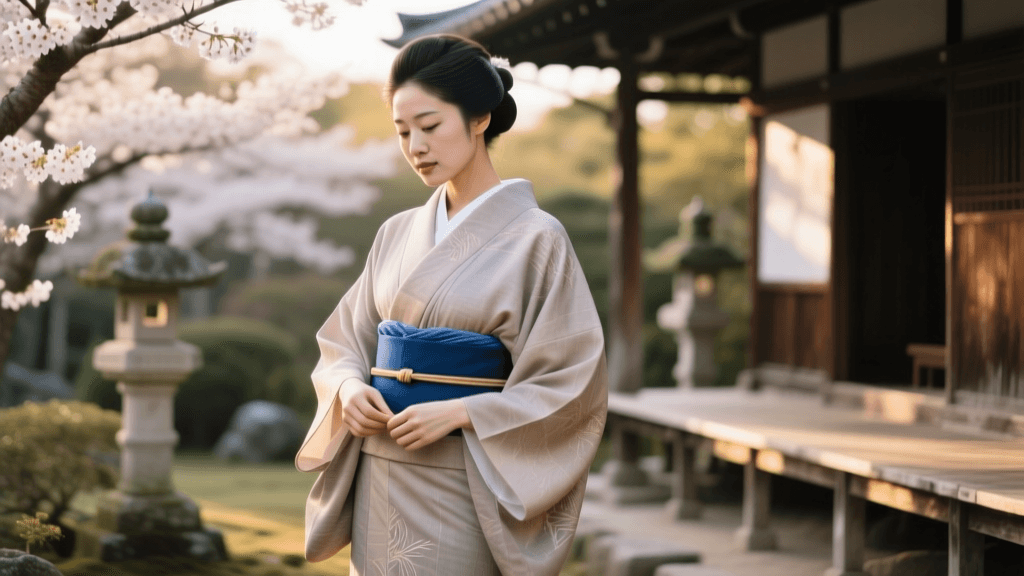
The obi (sash) is the anchor of the kimono ensemble, and its color and motif must harmonize with, yet contrast against, the main garment. The Victoria and Albert Museum highlights how the obi evolved from a simple functional tie into a massive, heavily brocaded centerpiece of Edo-period fashion.
When styling, apply the principle of hikizuri (visual weight). If your kimono features a busy, multi-colored pattern (like a spring floral komon), choose a solid-colored obi that picks up the least dominant accent color in the kimono. Conversely, if you are wearing a solid, subtle kimono (such as an edomon with micro-patterns), you have the freedom to wear a lavishly patterned fukuro obi featuring metallic threads and seasonal motifs.
Timing also applies to the obi. A dark, heavy brocade obi with winter pine motifs should not be paired with a lightweight, sheer summer ro or sha silk kimono, as the visual and physical weight will clash. Summer obi are often made of woven hemp, bamboo, or lightweight silk with cooling motifs like flowing water or bell crickets.
The beauty of a Japanese kimono lies not just in the silk, but in the space between the motifs—the negative space that allows the wearer's movement to bring the garment to life.
Contemporary Relevance and Global Styling
Today, the strict rules of kisetsukan are sometimes relaxed outside of Japan, but understanding them adds a layer of profound respect when wearing these garments. Modern fashion enthusiasts are increasingly pairing vintage haori jackets with denim, or using antique obi as table runners and wall art, appreciating the textile craftsmanship independent of the garment's original function.
For those traveling to Japan, participating in a kimono dressing experience is a highly recommended cultural immersion. The Japan National Tourism Organization frequently highlights kimono rentals in historic preservation districts as a premier way to engage with local heritage. When you select your garment, take a moment to look closely at the dyed flora, the woven fauna, and the carefully chosen hues. You are not just putting on a piece of clothing; you are wrapping yourself in centuries of poetic observation, spiritual protection, and artistic mastery.