Ceremonial vs Everyday Kimono and Hanbok: 2026 Wear Guide
The Evolution of Asian Traditional Garments in 2026
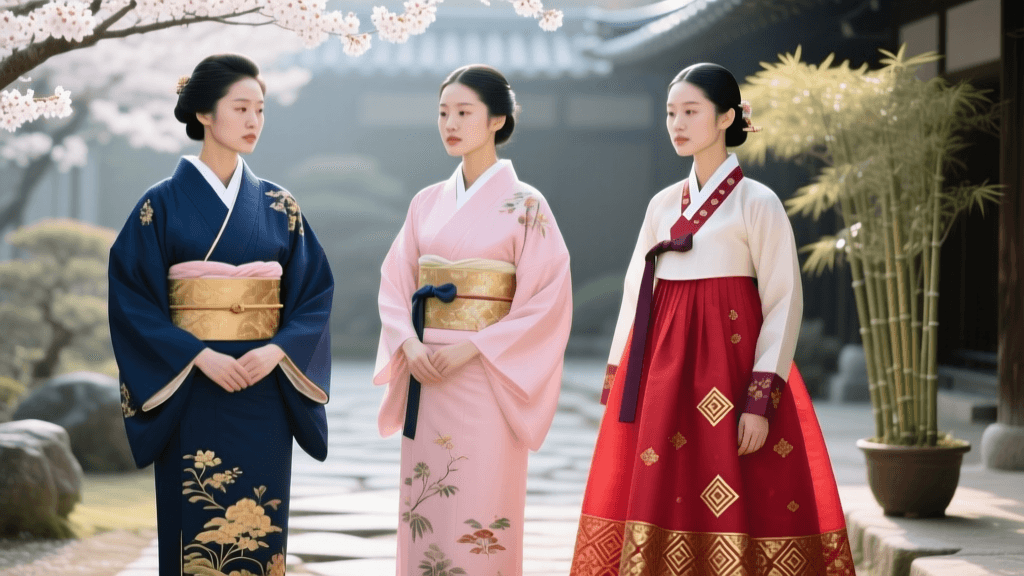
In 2026, the global appreciation for Asian traditional garments has reached a fascinating crossroads. No longer relegated strictly to museums or annual holidays, traditional dress is experiencing a vibrant renaissance. However, a distinct dichotomy remains between ceremonial wear—steeped in centuries of strict sartorial rules—and everyday wear, which has been thoughtfully adapted for modern, fast-paced lifestyles. Understanding the nuances between these two categories is essential for anyone looking to respectfully and stylishly integrate Asian heritage fashion into their wardrobe.
This guide explores the profound differences between ceremonial and everyday iterations of two of Asia’s most iconic garments: the Japanese kimono and the Korean hanbok. From fabric weights and structural silhouettes to modern styling and maintenance, we break down everything you need to know about navigating these beautiful traditions today.
The Japanese Kimono: A Spectrum of Formality
The kimono is perhaps the most globally recognized Asian garment. According to the Victoria and Albert Museum, the kimono's defining T-shape structure has remained remarkably consistent for centuries, yet its surface design, fabric, and styling communicate highly specific social messages. In 2026, the divide between ceremonial and everyday kimono is defined by sleeve length, pattern placement, and the complexity of the obi (sash).
Ceremonial Kimono: Furisode, Tomesode, and Uchikake
Ceremonial kimono are masterpieces of textile art, reserved for weddings, coming-of-age ceremonies (Seijin Shiki), and formal tea ceremonies.
- Furisode: Worn by unmarried women, the furisode is characterized by its dramatically long, swinging sleeves (often measuring 100cm to 114cm in drop). It features lavish, all-over patterns and is paired with a heavily brocaded maru obi tied in elaborate knots like the fukura-suzume.
- Kurotomesode: The most formal wear for married women. It is a black silk kimono with patterns restricted only to the lower hem below the waist, featuring five family crests (kamon).
- Uchikake: A highly padded, heavily embroidered outer robe worn over a base kimono, primarily seen in traditional Shinto weddings. In 2026, vintage uchikake are frequently upcycled into modern formal evening wear by high-end designers.
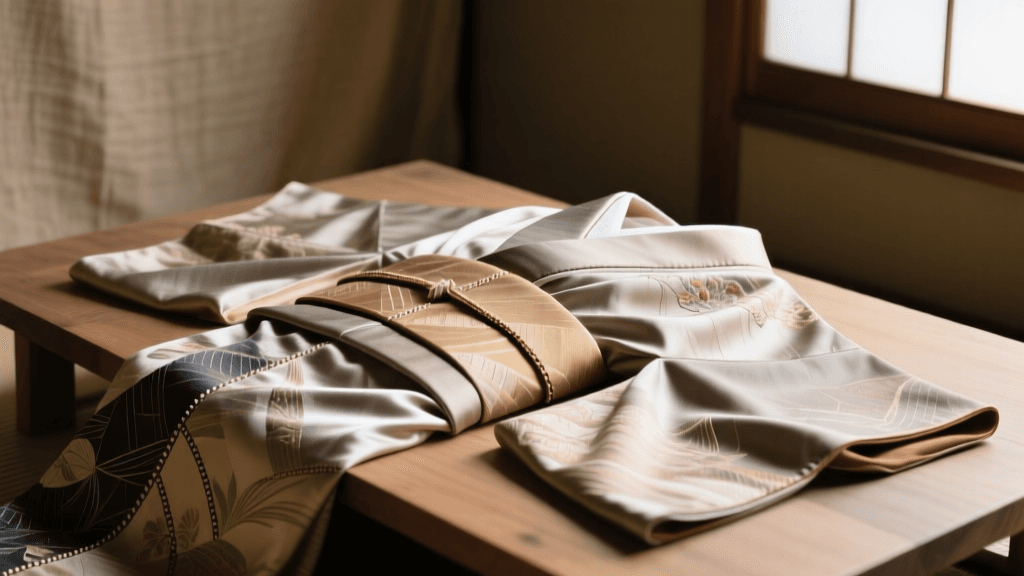
Ceremonial kimono are almost exclusively crafted from heavy, pure silk (chirimen or crepe silk) and require professional dressing (kitsuke), as the layering and binding process can take over an hour.
Everyday Kimono: Komon, Yukata, and Modern Two-Piece Sets
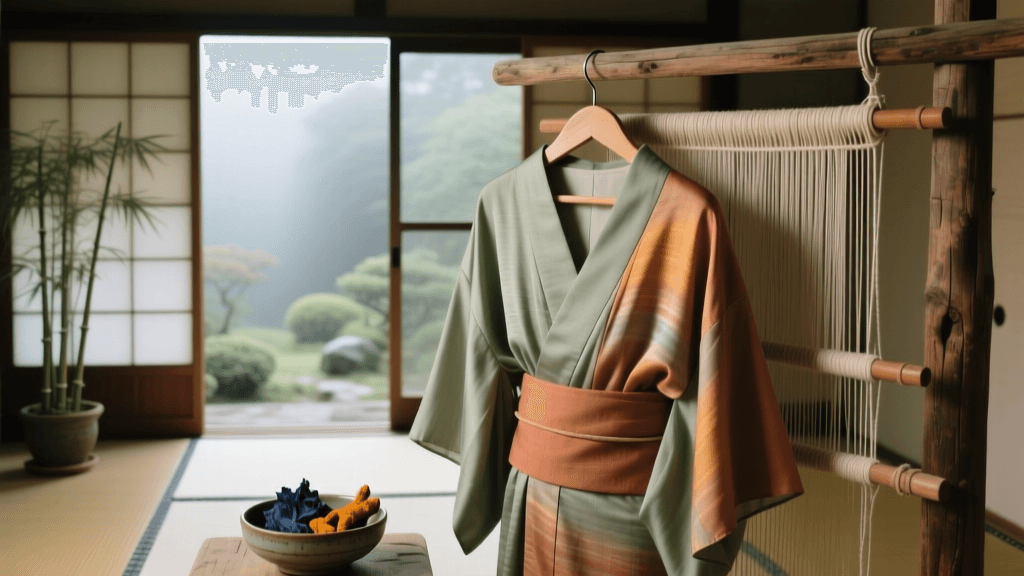
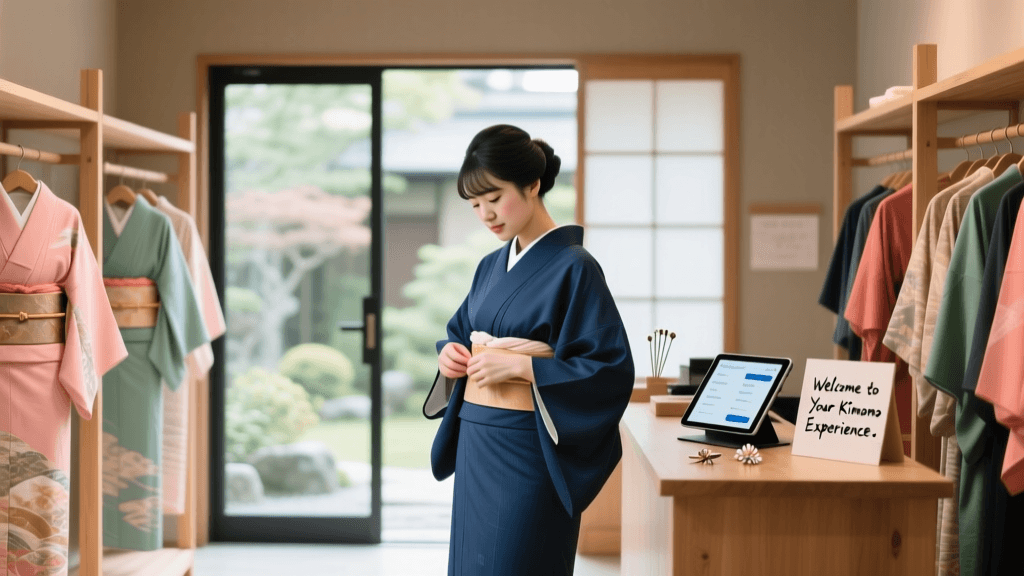
Everyday kimono prioritize comfort, ease of movement, and simple care routines, making them accessible for daily wear, casual outings, and summer festivals.
- Komon: The casual staple of the kimono wardrobe. Komon feature small, repeating patterns across the entire garment. In 2026, washable polyester and blended-fabric komon are incredibly popular, offering the aesthetic of silk with the practicality of machine washing.
- Yukata: Originally a bathrobe, the yukata is now the ultimate summer casual garment. Made from breathable, lightweight cotton or modern cooling-tech synthetics, it is worn without the complex undergarments (juban) required for silk kimono.
- Two-Piece Kimono: A massive trend in 2026 street fashion is the two-piece kimono set. These separate top and bottom pieces mimic the overlapping silhouette of a traditional kimono but utilize elastic waists and Velcro closures, eliminating the need for obi tying entirely.
The Korean Hanbok: Elegance Meets Utility
The hanbok is celebrated for its graceful lines, vibrant colors, and voluminous skirts. The Korean Culture and Information Service notes that the hanbok's defining characteristic is its harmonious balance between the structured upper garment and the flowing lower garment. Like the kimono, the hanbok is strictly categorized by its intended use.
Ceremonial Hanbok: Myeongjeol and Hwalot
Ceremonial hanbok are worn during major holidays like Chuseok and Seollal, as well as weddings and first-birthday celebrations (doljanchi).
- Myeongjeol Hanbok: The standard formal holiday hanbok. It features a long, voluminous skirt (chima) that pools slightly at the ankles, and a short jacket (jeogori) tied with a long, elegant bow (goreum). Ceremonial versions utilize luxurious myeongju (traditional Korean silk) or rich brocades woven with gold thread.
- Hwalot: A highly ornate, long-sleeved ceremonial robe historically worn by royalty and later adopted for traditional weddings. It is heavily embroidered with auspicious symbols like peonies, butterflies, and cranes.
Ceremonial hanbok demand specific undergarments, including the sokchima (petticoat) and sokbaji (underpants), to achieve the signature bell-like silhouette. They are also paired with traditional braided hairstyles adorned with daenggi (silk ribbons) or elaborate hairpins (binyeo).
Everyday Hanbok: The Saenghwal Revolution
The saenghwal (daily life) hanbok has undergone a massive design evolution leading into 2026, transforming the garment into a viable option for office wear, cafe-hopping, and casual travel.
- Shorter Chima: Everyday hanbok skirts are typically shortened to midi or knee-length, preventing the hems from dragging on wet city streets or subway floors.
- Modern Fabrics: While ceremonial hanbok rely on delicate silks, 2026 saenghwal hanbok heavily feature organic cotton, linen blends, and even denim. Ramie (mosi) remains highly prized for summer everyday wear due to its exceptional breathability.
- Simplified Jeogori: The traditional jacket is often modified with hidden snaps, zippers, or simplified tie-knots, allowing the wearer to dress in under two minutes.
2026 Comparison: Ceremonial vs Everyday Garments
To help you navigate your purchasing and styling decisions, here is a comprehensive breakdown of the practical differences between these garment types in the current market.
| Garment Type | Classification | Primary Fabric (2026) | Avg. Cost (USD) | Care & Maintenance |
|---|---|---|---|---|
| Furisode / Tomesode | Ceremonial Kimono | Heavy Crepe Silk | $3,000 - $8,500 | Professional dry clean; air out in shade; store folded in tato paper. |
| Komon / Yukata | Everyday Kimono | Cotton / Washable Poly | $80 - $350 | Machine wash cold (mesh bag); hang dry; iron on low. |
| Myeongjeol Hanbok | Ceremonial Hanbok | Myeongju Silk / Brocade | $600 - $2,500 | Specialist hand wash or dry clean; steam to remove wrinkles. |
| Saenghwal Hanbok | Everyday Hanbok | Linen / Cotton Blends | $70 - $250 | Machine wash gentle; tumble dry low or hang; standard ironing. |
Footwear and Accessories: Bridging the Gap
The choice of footwear and accessories is often the easiest way to identify whether a wearer is dressed for a ceremony or for everyday life.
Kimono Footwear
For ceremonial kimono, the strict rule is the pairing of white split-toe socks (tabi) with formal zori sandals featuring thick, brocaded straps. In 2026, it remains a major faux pas to wear bare feet or standard socks with a formal kimono. Conversely, everyday yukata and komon allow for much more flexibility. While traditional wooden geta are still worn during summer festivals, it is increasingly common to see young people pairing casual komon with modern leather sandals, loafers, or even minimalist white sneakers in urban centers like Tokyo and Kyoto.
Hanbok Footwear
Ceremonial hanbok are traditionally worn with kkotsin (embroidered silk shoes) or hye (leather shoes with curved toes). However, the everyday saenghwal hanbok movement has entirely rewritten the footwear rules. In 2026, pairing a modern, knee-length hanbok skirt with chunky sneakers, combat boots, or Mary Janes is a dominant streetwear trend in Seoul's Hongdae and Ikseon-dong neighborhoods. This fusion of historical silhouette and modern utility perfectly encapsulates the everyday Asian traditional garment ethos.
Care and Storage: Preserving the Heritage
The maintenance required for these garments heavily influences their categorization. Ceremonial silks are notoriously delicate. A single drop of water can spot a ceremonial furisode or myongjeol chima. They must be carefully folded along specific seam lines using acid-free tato paper to prevent permanent creasing and moisture buildup. In 2026, smart-storage solutions with built-in humidity sensors are popular among serious collectors to protect these high-value investments.
Everyday garments, by contrast, are engineered for resilience. The 2026 market is dominated by "wash-and-wear" traditional garments. Modern textile engineering has produced polyester threads that mimic the slub and luster of raw silk but can withstand a standard washing machine cycle. This technological leap is the primary reason everyday kimono and hanbok have seen such a massive surge in daily wearability over the last five years.
Conclusion: Respecting Tradition in the Modern Era
The distinction between ceremonial and everyday Asian traditional garments is not about one being superior to the other; rather, it is about understanding the context, history, and purpose of the clothing. Ceremonial garments like the furisode and myongjeol hanbok serve as vital cultural anchors, preserving ancient weaving techniques, dyeing methods, and social rituals. Meanwhile, everyday adaptations like the yukata and saenghwal hanbok ensure that these beautiful traditions remain living, breathing parts of daily life rather than static museum exhibits. By understanding these differences, modern wearers in 2026 can confidently and respectfully celebrate Asia's rich sartorial heritage every single day.