2026 Japanese Kimono Guide: Komon, Houmongi and Furisode
Introduction to Japanese Kimono Formality in 2026
The Japanese kimono is far more than a beautiful garment; it is a complex system of visual communication. In 2026, the global appreciation for traditional Asian garments has surged, yet navigating the strict rules of kimono formality remains a daunting task for both newcomers and seasoned collectors. At the heart of this sartorial diplomacy is the concept of TPO—Time, Place, and Occasion. Understanding TPO is essential to selecting the correct garment, ensuring you show proper respect to your hosts and the event itself.
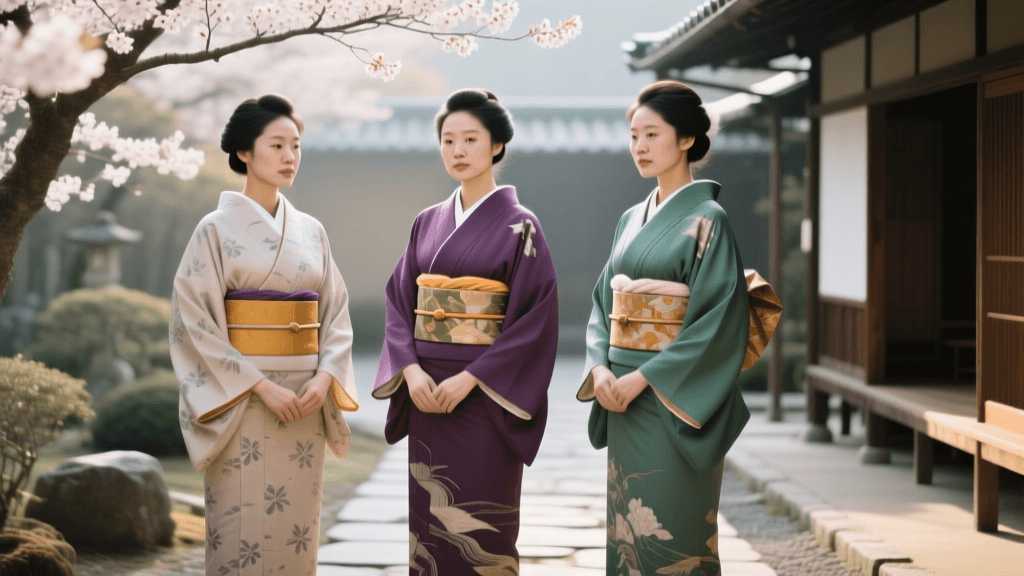
While the kimono landscape includes dozens of specialized variations, three primary categories dominate the modern wardrobe for women: the versatile Komon, the elegant Houmongi, and the spectacular Furisode. According to the Victoria and Albert Museum, the evolution of these garments reflects centuries of shifting social hierarchies, sumptuary laws, and artistic movements. Today, in 2026, these garments continue to evolve, blending ancestral silk-weaving techniques with contemporary styling sensibilities. This comprehensive guide will dissect these three essential kimono types, providing actionable advice on styling, sourcing, and maintaining your traditional Japanese wardrobe.
Komon: The Canvas of Daily Elegance
The Komon (小紋), translating literally to 'small pattern,' is the workhorse of the kimono wardrobe. It is characterized by a repeating motif that covers the entire garment, regardless of the direction of the pattern. Because the design does not align across the seams in a continuous, upward-flowing picture, the Komon is classified as informal or semi-formal wear.
Variations and Craftsmanship
Not all Komon are created equal. The most highly prized variation is the Edo Komon, a technique originating in the Edo period where microscopic, dot-like patterns are stenciled onto silk. From a distance, an Edo Komon appears to be a solid color, but up close, it reveals breathtaking geometric precision. Another popular style is the Kyo Komon, which features larger, more expressive, and colorful motifs, often dyed using the traditional Yuzen resist-dyeing method. The Kyoto City Official Travel Guide notes that Kyo Yuzen remains a cornerstone of the city's living heritage, with artisans in 2026 still utilizing hand-painted rice paste resists to achieve vibrant, bleeding-edge color gradients.
Styling and Occasions
In 2026, the Komon is the go-to choice for theater outings, casual dining, shopping trips, and informal tea ceremony practice. It is typically paired with a Nagoya obi—a pre-folded, shorter sash that is easier to tie than formal alternatives. For a modern, fashionable look, younger wearers are increasingly pairing vintage, muted-toned Komon with bold, geometric, or even pop-culture-inspired hanhaba (half-width) obis, creating a striking juxtaposition of old and new.
Houmongi: The Art of the Visiting Garment
Stepping up the formality ladder, we find the Houmongi (訪問着), or 'visiting wear.' This is the most versatile formal kimono, appropriate for both married and unmarried women. The defining feature of the Houmongi is the Eba-moyo pattern technique. Unlike the Komon, the design on a Houmongi is meticulously dyed so that it flows continuously across the seams, creating a single, cohesive canvas that wraps around the body.
The Eba-moyo Technique
Creating an Eba-moyo pattern is an astonishing feat of textile engineering. The artisan must temporarily baste the silk bolt together, sketch the design across the seams, take the garment apart to dye and embroider each panel individually, and then re-sew it perfectly. As detailed by the Metropolitan Museum of Art, this method of treating the garment as a continuous, wrap-around painting elevates the kimono from mere clothing to a masterwork of portable art.
Styling and Occasions
The Houmongi is the standard attire for attending weddings (as a guest), formal tea ceremonies, graduation ceremonies, and high-end gallery openings. The motifs are often auspicious, featuring cranes, pine trees, or flowing water. In 2026, pastel backgrounds like soft lavender, pale mint, and champagne gold are highly sought after for spring weddings. A Houmongi must be paired with a Fukuro obi—a long, wide, and heavily brocaded formal sash—tied in an elaborate knot such as the Taiko musubi (drum knot) or the Niju-daiko (double drum knot) for married women.
Furisode: The Pinnacle of Youthful Formality
The Furisode (振袖), meaning 'swinging sleeves,' is the most formal kimono reserved exclusively for unmarried women. It is instantly recognizable by its dramatically long sleeves, which historically served as a visual signal of a woman's marital availability and youth.
Sleeve Lengths and Classifications
Furisode are categorized by their sleeve length, which dictates their specific level of formality:
- Oh-furisode (Large): Sleeves measure over 114 cm. This is the ultimate formal wear, often seen on brides during the traditional iro-uchikake reception changes or by close family members at weddings.
- Chu-furisode (Medium): Sleeves measure between 90 cm and 114 cm. This is the most common type, widely worn for Coming of Age Day (Seijin no Hi) and formal wedding attendance.
- Ko-furisode (Small): Sleeves measure between 75 cm and 90 cm. Slightly more practical, often worn for graduation ceremonies.
The 2026 Coming of Age Day Trends
During the 2026 Seijin no Hi celebrations, we witnessed a fascinating shift in Furisode styling. While classic motifs like peonies and cherry blossoms remain popular, there is a massive trend toward 'retro-modern' aesthetics. Deep, jewel-toned backgrounds (emerald, navy, and burgundy) paired with oversized, almost Art Deco floral patterns are dominating the rental market. Furthermore, young women are increasingly opting for elaborate, three-dimensional Fukura-suzume (puffed sparrow) obi knots, adorned with intricate obijime (decorative cords) and vintage pearl obidome (sash clasps).
2026 Comparison Chart: Formality, Cost, and Occasions
To help you navigate your wardrobe choices, refer to this structured comparison of the three primary garment types based on 2026 market data.
| Garment Type | Formality Level | Target Demographic | 2026 Avg. Purchase Price (JPY) | Primary Occasions |
|---|---|---|---|---|
| Komon | Informal / Semi-Formal | All Women | ¥40,000 - ¥150,000 | Dining, Theater, Casual Tea Practice |
| Houmongi | Formal | Married & Unmarried | ¥250,000 - ¥800,000 | Weddings (Guest), Formal Tea, Galas |
| Furisode | Highest Formal (Unmarried) | Unmarried Women | ¥350,000 - ¥1,500,000+ | Coming of Age, Weddings (Close Kin) |
The Architecture of the Ensemble: Obi, Juban, and Zori
A kimono is never worn alone; it is the foundation of a complex architectural ensemble. In 2026, mastering the undergarments and accessories is just as critical as the outer silk layer.
The Juban and Koshihimo
Beneath the kimono lies the Nagajuban, an under-kimono that protects the expensive outer silk from sweat and oils. The collar of the juban (the han-eri) is visible at the nape of the neck, and in 2026, interchangeable, heavily embroidered han-eri are a major trend, allowing wearers to customize their look without buying a new kimono. The garment is secured using koshihimo (thin silk or cotton ties) and an obi-ita (a stiff board inserted into the sash to ensure a perfectly smooth, uncreased front).
Footwear: Zori and Tabi
Formal kimono require Zori—flat, thonged sandals. For Houmongi and Furisode, zori made of brocade or vinyl with a raised heel are standard. These must be worn with pristine white Tabi (split-toe socks). A crucial rule of TPO: wooden Geta are strictly for informal wear (like Yukata or casual Komon) and should never be paired with a formal Houmongi or Furisode.
Sourcing, Pricing, and the 2026 Rental Market
Acquiring a kimono in 2026 offers multiple pathways, depending on your budget and commitment. The new silk market remains expensive due to the shrinking number of master weavers in regions like Nishijin and Kiryu. A brand-new, custom-tailored Houmongi can easily exceed ¥500,000.
Consequently, the rental market and the vintage (recycle) market are booming. In cities like Kyoto, Tokyo, and Kanazawa, premium rental shops offer full-dressing services (kitsuke) for Houmongi at around ¥15,000 to ¥25,000 per day, which includes professional hair styling and accessories. For those looking to build a permanent collection, vintage kimono shops (recycle shops) in neighborhoods like Tokyo's Shinjuku and Kyoto's Shijo offer high-quality, mid-century silk Komon for as little as ¥5,000 to ¥15,000. However, buyers must carefully inspect vintage garments for 'shimi' (age spots) and structural weakening along the fold lines.
Preservation and Garment Care
Silk is a protein fiber that is highly susceptible to humidity, light, and pests. In 2026, with increasingly erratic global humidity levels, proper storage is non-negotiable. Kimono must never be stored on plastic hangers or in plastic bags, which trap moisture and cause irreversible mold.
Instead, garments should be folded along their original seam lines and wrapped in acid-free tatou paper. They must be stored in a paulownia wood chest (kiri-dansu), which naturally regulates humidity and repels insects. Furthermore, kimono should be aired out in a dry, shaded room twice a year—traditionally during the dry, crisp days of late autumn and early spring. If a garment becomes soiled, it must be sent to a specialized cleaner for maru-arai (a traditional full-garment wash using solvents and water, followed by hand-stretching on a bamboo frame to restore the fabric's dimensions).
Conclusion
Navigating the world of Japanese traditional garments is a rewarding journey into a culture that reveres aesthetics, seasonality, and social harmony. Whether you are slipping into a casual Komon for a weekend stroll through a temple garden, donning a sophisticated Houmongi for a wedding, or marveling at the sweeping sleeves of a Furisode, understanding the nuances of these garments enriches the experience. As we move through 2026, the kimono remains not just a relic of the past, but a vibrant, living tradition that continues to adapt, inspire, and captivate the world.