Japanese Kimono Milestones 2026: Dressing For Every Life Stage
The Sartorial Journey: Kimono Across the Japanese Lifespan in 2026
In Japan, clothing is never merely functional; it is a profound visual language that communicates age, marital status, social standing, and the specific milestones of a person's life. As we navigate through 2026, the Japanese kimono industry is experiencing a vibrant renaissance. Driven by a renewed interest in sustainable heritage textiles, eco-friendly Yuzen dyes, and digital archiving of antique patterns, modern consumers are embracing traditional garments with fresh enthusiasm. Yet, despite these contemporary innovations, the foundational rules of age-appropriate dressing remain deeply sacred. From the first shrine visit in infancy to the celebratory red vest of one's sixtieth birthday, the kimono serves as a wearable diary of a life well-lived.
Understanding the nuanced transitions between different kimono styles is essential for anyone studying Asian traditions or participating in Japanese cultural events. According to the Victoria and Albert Museum's comprehensive guide to kimono history, the structural and aesthetic evolution of the garment is intrinsically linked to the wearer's societal role, shifting from the vibrant, long-sleeved expressions of youth to the subdued, refined elegance of married and older adults.
Infancy and the Miyamairi Blessing
The sartorial journey begins just one month after birth with the Miyamairi ceremony, a traditional Shinto shrine visit to introduce the newborn to the local tutelary deity and pray for their health. During this milestone, the infant is dressed in an ubugi (baby kimono). Historically, these garments were crafted from soft, unlined silk or cotton to protect the baby's delicate skin. In 2026, many families opt for modern, breathable organic cotton blends that mimic the drape of traditional silk while offering easier maintenance.
The baby is often wrapped in an iwatagi, a celebratory garment featuring auspicious motifs such as cranes, turtles, or pine trees, symbolizing longevity and resilience. The color palette is typically gentle—pale yellows, soft greens, and muted pinks—reflecting the purity and new beginnings of infancy. The baby is held in the arms of the paternal grandmother, who herself will be wearing a formal, age-appropriate kimono, creating a striking multi-generational portrait.
Childhood and the Shichi-Go-San Festival
One of the most visually spectacular milestones in Japanese childhood is Shichi-Go-San (Seven-Five-Three), celebrated annually in November. This festival honors the growth and well-being of three- and seven-year-old girls, and five-year-old boys. The garments worn during this festival are highly specific to the child's age and gender, marking their transition out of early infancy.
Three-Year-Old Girls: The Hifu
At age three, girls wear a vibrant kimono paired with a hifu—a padded, sleeveless silk vest worn over the obi (sash). The hifu is used because a three-year-old's body is not yet developed enough to support the structured, tightly tied obi of an older child. In 2026, rental shops in Kyoto and Tokyo report a massive surge in demand for antique-style hifu sets featuring bold Taisho-era floral motifs, blending vintage charm with modern styling.
Five-Year-Old Boys: The First Hakama
For five-year-old boys, Shichi-Go-San marks the first time they wear a hakama (pleated trousers) and a haori (jacket). The ensemble is typically adorned with family crests (kamon) and features auspicious designs like hawks, kabuto (samurai helmets), or dragons. The 2026 trend for boys leans toward rich, earthy tones such as deep indigo, charcoal, and emerald green, moving away from the brighter primary colors of previous decades.
Seven-Year-Old Girls: The Tied Obi
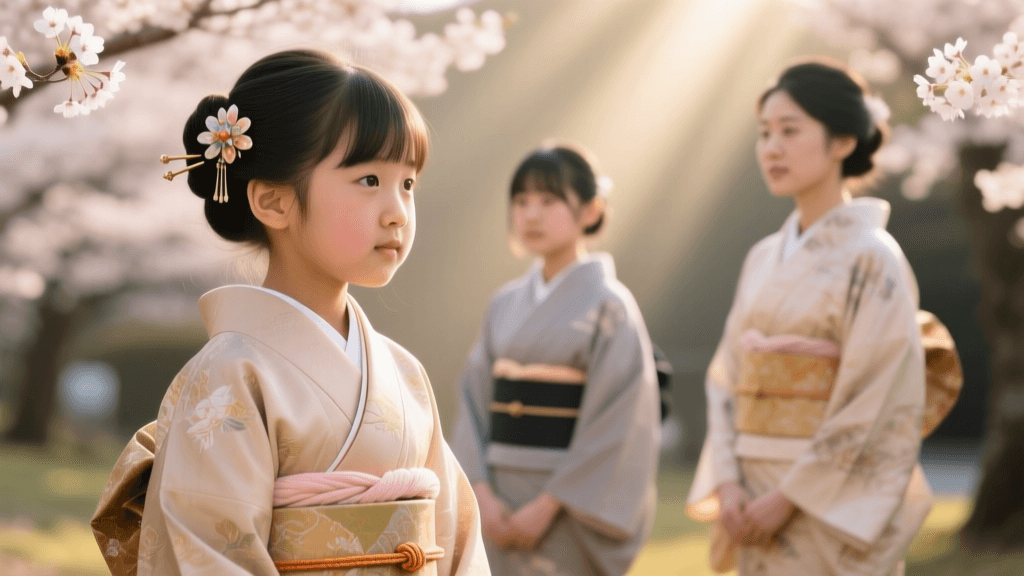
By age seven, a girl's body has matured enough to wear a standard kimono with a fully tied, structured obi, mirroring the dress of an adult woman. This transition symbolizes her entry into a more mature stage of childhood. The kimono sleeves are still relatively long, but the intricate obi knots—such as the fukura-suzume (puffed sparrow)—showcase the skill of the kimono dresser.
Seijin no Hi: The Coming of Age Ceremony
Perhaps the most famous and widely recognized kimono milestone is Seijin no Hi (Coming of Age Day), held on the second Monday of January. This national holiday celebrates those who have reached the age of majority, which was officially lowered to 18 in Japan a few years ago, though the traditional kimono celebrations remain firmly anchored to the 20th birthday. As noted by the Metropolitan Museum of Art's Heilbrunn Timeline of Art History, the visual distinction of youth in Japanese dress is most famously captured by the furisode.
The Furisode: Sleeves of Youth
Unmarried young women celebrate their 20th birthday wearing a furisode, a formal kimono characterized by its dramatically long, swinging sleeves. The length of the sleeve dictates the formality and the specific age bracket of the wearer:
- Ofurisode (Large Furisode): Sleeves measuring approximately 114 cm. This is the most formal tier, almost exclusively worn by brides or unmarried women at highly formal weddings.
- Chufurisode (Medium Furisode): Sleeves measuring around 100 cm. This is the standard choice for Seijin no Hi in 2026, offering a perfect balance of dramatic flair and manageable weight.
- Kofurisode (Small Furisode): Sleeves measuring about 85 cm. Rarely seen today, historically worn for slightly less formal occasions.
The vibrant patterns of the furisode—often covering the entire garment with lavish Yuzen dyeing and gold leaf accents—symbolize the wearer's eligibility for marriage and their vibrant youth. Once a woman marries, she traditionally cuts or folds the sleeves to create a tomesode, visually signaling her new marital status.
Men's Coming of Age Attire
While many young men in 2026 opt for Western suits for their Coming of Age ceremonies, those who embrace tradition wear a formal montsuki hakama. This ensemble consists of a solid black kimono adorned with five white family crests, paired with a stiff, striped silk hakama and a black haori jacket. The austerity and sharp lines of the men's formal wear provide a striking contrast to the explosive colors of the women's furisode.
Marriage and the Transition to Tomesode
Marriage represents a monumental shift in a Japanese woman's kimono wardrobe. The transition from the long-sleeved furisode to the shorter-sleeved tomesode is a profound cultural marker. The most formal garment for a married woman is the kurotomesode (black tomesode). It features a solid black background with five family crests and a continuous, elaborate pattern along the lower hem (eba-moyo). The black silk provides a dignified, grounding canvas that reflects the maturity and responsibilities of married life.
For the wedding ceremony itself, the bride may wear a shiromuku, an all-white ensemble symbolizing purity and her willingness to be dyed in the colors of her new family. During the reception, she often changes into an iro-uchikake, a heavily padded, brightly colored over-robe featuring opulent gold and silver embroidery. In 2026, bespoke iro-uchikake designs featuring non-traditional botanical motifs, such as magnolias and succulents, have become highly sought after by modern brides looking to personalize their heritage wear.
Later Life: Kanreki and Refined Elegance
As Japanese women enter their later years, their kimono choices shift toward understated elegance, prioritizing exquisite textile techniques over bold patterns. Older women frequently wear Edo komon (kimono dyed with microscopic, repetitive stenciled patterns that appear solid from a distance) or subtle shibori (tie-dye). The color palette matures into deep burgundies, forest greens, navy blues, and rich purples.
The Kanreki Celebration
The 60th birthday, known as Kanreki, marks the completion of a full zodiac cycle and symbolizes a rebirth. The traditional gift and garment for this milestone is the chanchanko, a red, padded, sleeveless vest. The color red is believed to ward off evil spirits and represents the return to the innocence of infancy, completing the sartorial circle of life. While the chanchanko is largely a symbolic, photographic garment today, it remains a beloved and joyful tradition in 2026, often paired with a dignified, dark-toned kimono underneath.
2026 Milestone Garment Comparison Guide
To summarize the complex rules of age-appropriate dressing, the following table outlines the primary garments, key features, and current market trends for each major life stage.
| Life Stage / Milestone | Age | Primary Garment | Key Features & Motifs | 2026 Market Trend |
|---|---|---|---|---|
| Miyamairi (Shrine Visit) | 1 Month | Ubugi / Iwatagi | Soft silk/cotton; cranes, turtles | Organic cotton blends for sensitive skin |
| Shichi-Go-San (Girls) | 3 & 7 | Hifu (Age 3) / Obi (Age 7) | Padded vest; bright florals, puffed sparrow knot | Vintage Taisho-era antique rentals |
| Shichi-Go-San (Boys) | 5 | Hakama & Haori | Family crests; kabuto, dragons, hawks | Earth tones (indigo, charcoal, emerald) |
| Seijin no Hi (Women) | 20 | Chufurisode | 100cm sleeves; full-body Yuzen dye, gold leaf | Neo-classic geometric and art-deco motifs |
| Seijin no Hi (Men) | 20 | Montsuki Hakama | Black silk, 5 crests, striped hakama | Custom silk weaving for unique hakama stripes |
| Marriage (Wedding) | Adult | Shiromuku / Iro-uchikake | Pure white; heavy embroidered over-robes | Non-traditional botanical embroidery |
| Married Woman (Formal) | Adult | Kurotomesode | Black silk, 5 crests, hem-only pattern | Sustainably sourced Nishijin-ori obi |
| Kanreki (Rebirth) | 60 | Chanchanko | Red padded vest; worn over dark kimono | Lightweight, modern thermal padding |
Conclusion: The Enduring Legacy of the Kimono
The kimono is far more than a beautiful garment; it is a meticulously coded system of social communication that guides an individual through the various chapters of life. As we observe the cultural landscape in 2026, it is clear that while the methods of production, rental logistics, and textile sustainability have modernized, the profound respect for age-appropriate dressing remains unbroken. For current travel and cultural immersion, the Japan National Tourism Organization's cultural heritage resources highlight how participating in or observing these milestones offers a deeply moving window into the Japanese soul. From the padded hifu of a toddler to the dignified black silk of a matriarch, the kimono continues to elegantly narrate the human experience.