2026 Kimono Guide: Birth, Coming-of-Age & Memorial Ceremonies
The Living Thread: Kimono in Japan’s Life Cycle Ceremonies
The kimono is far more than a static historical artifact; it is a living garment that breathes in tandem with the milestones of human life. In Japan, traditional clothing serves as a visual and spiritual anchor during the most profound family ceremonies. As we navigate the cultural landscape of 2026, the intersection of deep-rooted tradition and modern practicality has reshaped how families approach these garments. From the joyous shrine visits welcoming a newborn to the solemn grace of Buddhist memorial services, the kimono dictates the tone, respect, and aesthetic of the occasion.
According to comprehensive cultural overviews provided by Japan Guide's kimono resource, the rules of kitsuke (kimono dressing) remain strict, yet the 2026 market has introduced sustainable silks, modern rental logistics, and a revitalized vintage scene that makes participating in these traditions more accessible than ever. This guide breaks down the essential garments, etiquette, and 2026 market realities for Japan’s three major life-cycle ceremonies: birth, coming-of-age, and memorials.
Omiyamairi: Welcoming the Newborn
Approximately thirty days after a baby is born, families participate in Omiyamairi (or Miyamairi), a Shinto shrine visit to thank the deities for the safe delivery and to pray for the child’s health and longevity. The focal point of this ceremony is the infant’s attire, specifically the ubugi (inner kimono) and the hiromogi or uwagi (the outer wrap).
The Garments and Auspicious Motifs
The baby is typically dressed in a white silk ubugi, symbolizing purity. Over this, the hiromogi is draped. For boys, the outer wrap often features bold, dynamic motifs such as hawks, samurai helmets (kabuto), or dragons, rendered in deep blues, blacks, or rich greens. For girls, the designs lean toward floral patterns like peonies, cherry blossoms, or phoenixes, utilizing vibrant reds, pinks, and gold leaf accents.
In 2026, there is a distinct trend toward lightweight, breathable eco-silk blends for the hiromogi. Artisans in Kyoto and Kanazawa have begun utilizing advanced, cruelty-free peace silk that maintains the luxurious drape of traditional habutae silk while being significantly easier to clean—a major selling point for modern parents. The garment is draped over the baby, who is held by the paternal grandmother (or maternal, depending on regional customs), with the ornate back panel facing outward to display the family crest (kamon) and the primary motif.
2026 Sourcing and Rental Trends
Purchasing a high-end, hand-dyed Yuzen silk hiromogi can cost upwards of ¥150,000. Consequently, the 2026 rental market for Omiyamairi has exploded. Premium rental boutiques now offer complete Omiyamairi packages—including the baby’s wrap, the mother’s visiting kimono (homongi), and professional dressing services—averaging ¥45,000 to ¥65,000. Many families are also opting to upcycle vintage Showa-era baby wraps found in curated online antique markets, blending sustainability with profound sentimental value.
Seijinshiki: The Coming-of-Age Ceremony
Held annually on the second Monday of January, Seijinshiki (Coming-of-Age Day) celebrates young adults who have reached the age of majority. Although Japan’s legal age of adulthood was lowered to 18 in 2022, the cultural consensus by 2026 has firmly cemented the kimono celebration at age 20 (often referred to locally as Hatachi no Tsudoi). This is because 20 remains the legal age for drinking and smoking, and the visual spectacle of the furisode is deeply tied to this specific threshold of early adulthood.
Furisode: The Pinnacle of Unmarried Women’s Formal Wear
For young women, the furisode is the undisputed queen of the ceremony. Characterized by its dramatically long, swinging sleeves (ranging from 85cm to 114cm in length), the furisode signals that the wearer is unmarried and of age. In 2026, fashion-forward youths are moving away from the overly embellished, mass-produced polyester rentals of the early 2020s. Instead, there is a massive resurgence in Taisho Roman aesthetics—bold, high-contrast geometric and floral patterns from the 1920s—sourced from meticulously restored vintage silks.
The obi (sash) is tied in elaborate, voluminous knots at the back, such as the fukura-suzume (puffed sparrow) or tateya (standing arrow) styles. As noted in cultural analyses by The Kyoto Journal, the preservation of these complex tying techniques relies heavily on the new generation of kitsuke instructors who are leveraging social media to teach modern, ergonomic variations of traditional knots.
Montsuki Hakama for Young Men
While many young men in 2026 opt for Western business suits, those who embrace tradition wear a montsuki hakama. This ensemble consists of a solid black kimono adorned with five white family crests, paired with a stiff, pleated hakama skirt and a formal haori (jacket). The 2026 market has seen a rise in custom-tailored, wrinkle-resistant wool-silk blend hakama, offering young men a dignified, comfortable alternative to heavy, traditional stiff silks.
Hoyo and Shiki: Memorial and Mourning Ceremonies
In stark contrast to the vibrancy of birth and coming-of-age ceremonies, Buddhist memorial services (Hoyo or Shiki) demand strict adherence to somber, respectful attire. The kimono worn for these occasions is heavily codified, reflecting the mourner's proximity to the deceased and the time elapsed since the passing.
Mofuku: The Deepest Mourning
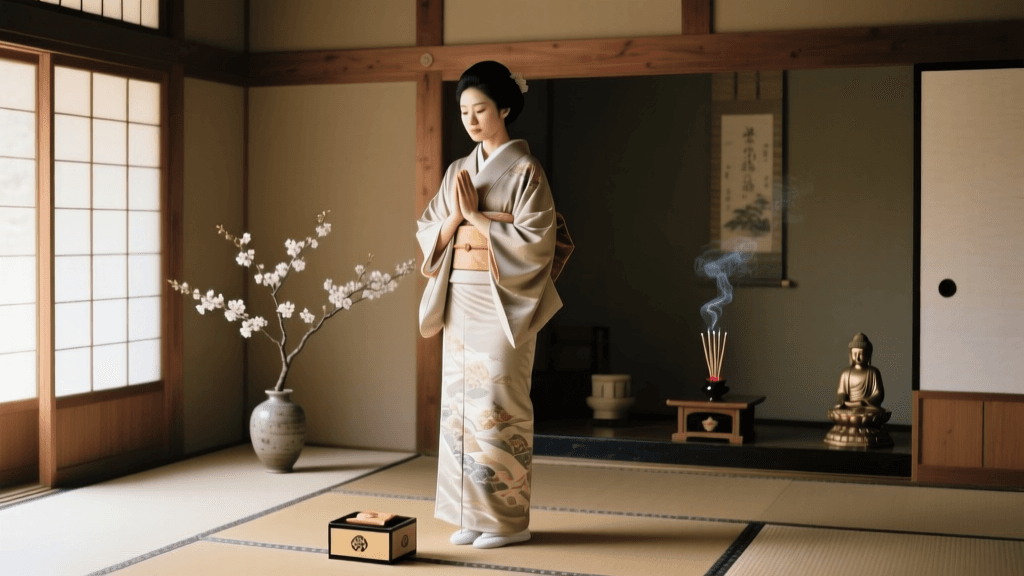
For the funeral and the immediate 49-day mourning period, immediate family members wear mofuku. This is a completely solid black kimono made of matte silk (typically chirimen or crepe silk, which absorbs light rather than reflecting it). It bears exactly five family crests (itsutsu-mon) placed on the back of the neck, both sleeves, and both sides of the chest. The obi is also black, woven with subtle silver or matte threads, and the undergarments (nagajuban) and socks (tabi) must be pristine white. In 2026, owning a personal mofuku is considered a vital adult responsibility in Japan, though high-end rental services remain available for extended family members.
Iromuji and Iro-Mofuku for Later Memorials
As time passes, the strictness of the dress code softens. For the first, third, seventh, and thirteenth-year anniversary memorials, attendees transition to iro-mofuku (subdued colors like charcoal, deep navy, or slate grey with five crests) or iromuji (solid, muted colors like plum, forest green, or mauve, bearing one to three crests). The obi transitions from black to subtle silver, gold, or muted brocades. The historical and spiritual context of these mourning transitions, detailed in encyclopedic records of Japanese life-cycle holidays, highlights how clothing acts as a public map of private grief and healing.
2026 Kimono Ceremony Cost & Sourcing Comparison
Navigating the financial aspect of traditional garments is crucial for modern families. The table below outlines the average 2026 market costs in Japanese Yen (¥) for the primary garments discussed, comparing bespoke purchases, modern rentals, and the thriving vintage market.
| Ceremony | Garment Type | 2026 Bespoke Purchase (¥) | 2026 Full Rental Package (¥) | Curated Vintage Market (¥) |
|---|---|---|---|---|
| Omiyamairi (Birth) | Hiromogi / Uwagi (Baby Wrap) | 120,000 - 180,000 | 35,000 - 50,000 (incl. mother's kimono) | 15,000 - 40,000 |
| Seijinshiki (Coming-of-Age) | Furisode (Women) | 350,000 - 800,000+ | 45,000 - 85,000 | 50,000 - 150,000 |
| Seijinshiki (Coming-of-Age) | Montsuki Hakama (Men) | 150,000 - 250,000 | 25,000 - 40,000 | 20,000 - 60,000 |
| Funeral / Immediate Mourning | Mofuku (Solid Black, 5 Crests) | 250,000 - 400,000 | 15,000 - 25,000 | Not Recommended (Hygiene/Custom) |
| Anniversary Memorials | Iromuji (Subdued, 1-3 Crests) | 180,000 - 300,000 | 20,000 - 35,000 | 10,000 - 35,000 |
The Rise of the 2026 Vintage Market
One of the most significant shifts in 2026 is the destigmatization of vintage kimono for celebratory events. Previously, wearing a secondhand furisode was sometimes frowned upon due to spiritual superstitions regarding the previous owner's energy. Today, driven by eco-conscious Gen Z consumers and the skyrocketing cost of new silk, vintage is celebrated. Specialized cleaning services in Tokyo and Kyoto offer shiminuki (stain removal) and toki-arai (complete un-stitching, washing, and re-tailoring), allowing a 1970s masterpiece to be resized and worn as if it were brand new.
Conclusion: Honoring the Past, Dressing the Future
The kimono remains an indispensable narrator of the Japanese family’s journey. Whether it is the protective white silk wrapping a newborn at the shrine, the sweeping, vibrant sleeves of a 20-year-old stepping into adulthood, or the quiet, matte black of a descendant honoring their ancestors, these garments carry the weight of generations. By understanding the nuanced etiquette and embracing the innovative, sustainable market options available in 2026, families can ensure these beautiful traditions continue to thrive, seamlessly weaving the past into the fabric of the future.