Handcrafted Geta & Zori Craft Guide 2026: Fit & Care
The 2026 Revival of Traditional Japanese Footwear
In 2026, the global appreciation for artisanal craftsmanship has sparked a massive renaissance in traditional Japanese footwear. Far from being relegated to museum displays or seasonal festival wear, handcrafted geta (wooden clogs) and zori (woven sandals) are experiencing a vibrant revival. Modern wearers are drawn to the tactile sensory experience they offer: the grounding scent of natural igusa (rush grass), the rhythmic karakoro sound of paulownia wood striking the pavement, and the ergonomic benefits of toe-gripping footwear. According to the Association for the Promotion of Traditional Craft Industries, domestic production of heritage footwear has seen a sustained year-over-year growth, driven by younger demographics seeking sustainable, repairable fashion alternatives to mass-produced synthetic shoes.
Whether you are attending a summer matsuri, practicing the tea ceremony, or integrating heritage pieces into a contemporary streetwear wardrobe, understanding the anatomy, fit, and care of these garments is essential. This comprehensive guide explores the artisanal techniques defining Japanese footwear in 2026.
The Anatomy of Heritage Footwear
To appreciate the craft, one must first understand the distinct structural elements that separate geta from zori. While both utilize the hanao (the thong strap), their bases serve entirely different functional and aesthetic purposes.
Geta: The Wooden Clog
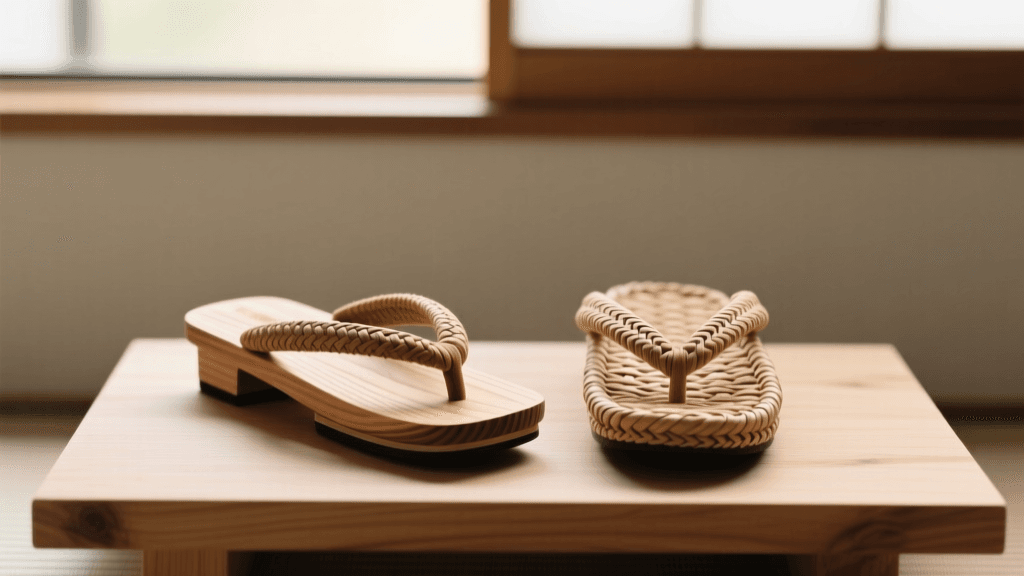
Geta are elevated wooden sandals characterized by their dai (the main wooden board) and ha (the supporting teeth underneath). The most common variety is the ni-ha (two-tooth) geta, which elevates the wearer above rain, mud, and snow, keeping the hem of a kimono or yukata pristine. The wood of choice for premium geta is Kiri (Paulownia). Paulownia is remarkably lightweight, resistant to moisture, and possesses a natural acoustic resonance that creates the iconic clacking sound. In 2026, sustainably harvested Tohoku-region paulownia is highly prized, with master carvers utilizing hand planes to shape the dai to the exact arch of the client's foot.
For those seeking a more dramatic silhouette, the tengu geta features a single, centrally placed tooth. Originally worn by ascetic mountain monks and kabuki actors, tengu geta require significant ankle strength and balance, making them a statement piece for advanced wearers.
Zori: The Woven Sandal
Unlike the elevated geta, zori are flat sandals. Historically crafted from woven straw, modern artisanal zori in 2026 are predominantly woven from igusa (soft rush), bamboo sheaths, or tightly wrapped wisteria vines. The base of a high-end zori is often layered with compressed cork or EVA foam beneath the woven exterior to provide shock absorption for urban walking. Igusa zori, particularly those woven in the Yatsushiro region of Kumamoto, are celebrated for their breathability and natural moisture-wicking properties, making them the premier choice for humid summer months.
The Golden Rule of Sizing: The Heel Overhang
The most common mistake international buyers make when purchasing Japanese footwear is selecting their exact Western shoe size. Western shoes are designed to enclose the foot, requiring extra room at the toe. Geta and zori, however, are open-toed platforms designed to be slightly smaller than the foot itself.
The traditional and correct fit requires the heel to overhang the back edge of the wooden or woven base by approximately 1 to 2 centimeters. This overhang prevents the heel of your foot from striking the ground and scuffing the pavement, which would prematurely wear down the wood or weave. Furthermore, a smaller base ensures that the hanao thong sits perfectly in the webbing of your toes without your toes extending past the front edge of the sandal.
| Western US Size (Women) | Western US Size (Men) | Foot Length (cm) | Recommended Geta/Zori Size (cm) |
|---|---|---|---|
| 6 - 6.5 | - | 23.0 | 22.0 - 22.5 |
| 7 - 7.5 | - | 24.0 | 23.0 - 23.5 |
| 8 - 8.5 | 6.5 - 7 | 25.0 | 24.0 - 24.5 |
| 9 - 9.5 | 7.5 - 8 | 26.0 | 25.0 - 25.5 |
| - | 9 - 10 | 27.5 | 26.5 - 27.0 |
Hanao Selection and Artisan Tying
The hanao is the Y-shaped strap that secures the foot to the base. In 2026, hanao customization has become a major trend, with artisans offering upcycled vintage silk, hand-dyed indigo cotton, and even modern geometric neoprene for contemporary styling. The placement of the hanao knot is crucial. On a perfectly fitted geta, the main knot (where the three straps meet) should sit snugly in the webbing between the big toe and the second toe. If the knot sits too far forward, it will cause blistering; if it sits too far back, the heel will slip off the base.
Master craftsmen use a specialized technique to pull the hanao through the three holes in the dai, securing it with a hidden knot underneath the wood. For adjustable geta, a small access panel on the bottom of the dai allows the wearer to tighten the straps as the cotton naturally stretches over the first few weeks of wear.
Maintenance: Preserving Paulownia and Igusa
Unlike synthetic footwear that is discarded when worn out, handcrafted geta and zori are designed to be repaired and maintained for decades. The Agency for Cultural Affairs in Japan heavily promotes the ethos of mottainai (avoiding waste), which is deeply embedded in footwear care.
Caring for Paulownia Geta
Paulownia wood is naturally pale and untreated to allow it to breathe. Over time, it will absorb moisture and darken. To maintain your geta:
- Dry properly: After wearing them in the rain, let them air dry in a well-ventilated, shaded area. Never place them near a direct heat source or in direct sunlight, as rapid drying will cause the wood to warp or crack.
- Sanding: Once a year, use a fine-grit sandpaper (around 400 grit) to gently buff the surface of the dai. This removes dirt, sweat stains, and restores the beautiful, pale blonde color of the wood.
- Replacing the Ha (Teeth): The wooden teeth will eventually wear down from friction against asphalt. Most artisan shops in Tokyo and Kyoto offer a resoling service where they attach new wooden or high-durability polyurethane caps to the teeth for a fraction of the cost of a new pair.
Caring for Igusa Zori
Woven rush grass is highly susceptible to mold if stored improperly.
- Brushing: Use a soft, dry bristle brush to sweep away dust and dirt from the woven crevices after each use.
- Storage: Store zori in a breathable cotton bag. Never store them in a sealed plastic bin or a damp closet. Include a small packet of silica gel or natural hinoki wood blocks in your storage area to absorb ambient humidity.
- Deodorizing: The natural igusa scent can fade over time. Lightly misting the base with a diluted solution of hinoki cypress water and letting it dry in the shade will rejuvenate both the scent and the antimicrobial properties of the weave.
Sourcing Authentic Footwear in 2026
When investing in heritage footwear, provenance matters. In 2026, the market is flooded with mass-produced, factory-molded imitations made from painted MDF (medium-density fiberboard) and synthetic vinyl. To ensure you are purchasing authentic, handcrafted pieces, seek out established ateliers in historic districts such as Asakusa in Tokyo, or the Gion district in Kyoto. Bespoke paulownia geta typically range from 25,000 to 45,000 JPY, reflecting the hours of hand-carving and the premium cost of sustainably sourced timber. Artisanal igusa zori generally start around 15,000 JPY.
By choosing handcrafted geta and zori, you are not merely buying a pair of sandals; you are participating in a centuries-old lineage of Japanese material culture. You are supporting the rural farmers who cultivate the rush grass, the foresters who manage the paulownia groves, and the master artisans whose hands shape the wood. Step into the rhythm of tradition, and let the karakoro sound guide your path.