The Ultimate Guide to Chinese Wedding Attire: Qungua & Xiuhefu
The Renaissance of Traditional Chinese Wedding Attire
The landscape of Chinese weddings has undergone a magnificent transformation over the past decade. While the Western white wedding gown remains a staple for the main banquet, modern Chinese brides are increasingly embracing their cultural heritage for the traditional tea ceremony and morning gate-crashing rituals. This revival is not merely a nod to nostalgia; it is a profound reconnection with centuries of textile artistry, regional customs, and deep-seated familial symbolism. According to cultural historians, the modern resurgence of Hanfu and traditional ceremonial wear reflects a broader movement among younger generations to reclaim and redefine Chinese aesthetics on their own terms.
For modern brides navigating the complexities of a multi-outfit wedding day, understanding the distinctions between the Qungua, the Xiuhefu, and the Qipao is essential. Each garment carries unique historical weight, specific tailoring requirements, and distinct price points. Whether you are sourcing a bespoke heirloom or renting a contemporary interpretation, this comprehensive guide will help you curate the perfect traditional Chinese wedding wardrobe.
Decoding the Bridal Wardrobe: Qungua vs. Xiuhefu vs. Qipao
The Qungua (Longfeng Gua)
The Qungua, often referred to as the Longfeng Gua (Dragon and Phoenix Jacket), is the quintessential Cantonese and Southern Chinese bridal garment. Originating from the Qing Dynasty, it consists of a two-piece ensemble: a structured, waist-length jacket (Gua) and a straight, A-line skirt (Qun). The defining characteristic of the Qungua is its incredibly dense embroidery. Traditional masterpieces are stitched with metallic gold and silver bouillon thread, creating a stiff, armor-like texture that signifies wealth and nobility.
The motifs are heavily symbolic. The dragon represents the groom and yang energy, while the phoenix represents the bride and yin energy. Together, they symbolize a harmonious and balanced marriage. Qungua are categorized by their embroidery density. The highest tier, known as Gua Huang, features 100% coverage of metallic thread, leaving no base fabric visible. Because of the painstaking hand-embroidery required, a bespoke Gua Huang can take over a year to complete and is often treated as a generational heirloom.
The Xiuhefu
Driven by the massive Hanfu revival movement, the Xiuhefu has become the most popular choice for brides across mainland China and the global diaspora. As noted by BBC Culture, the Hanfu movement has profoundly influenced modern ceremonial fashion, pushing brides toward historically inspired silhouettes. The Xiuhefu is heavily inspired by Ming Dynasty Hanfu, specifically the Aoqun (a long, flared jacket worn over a pleated skirt).
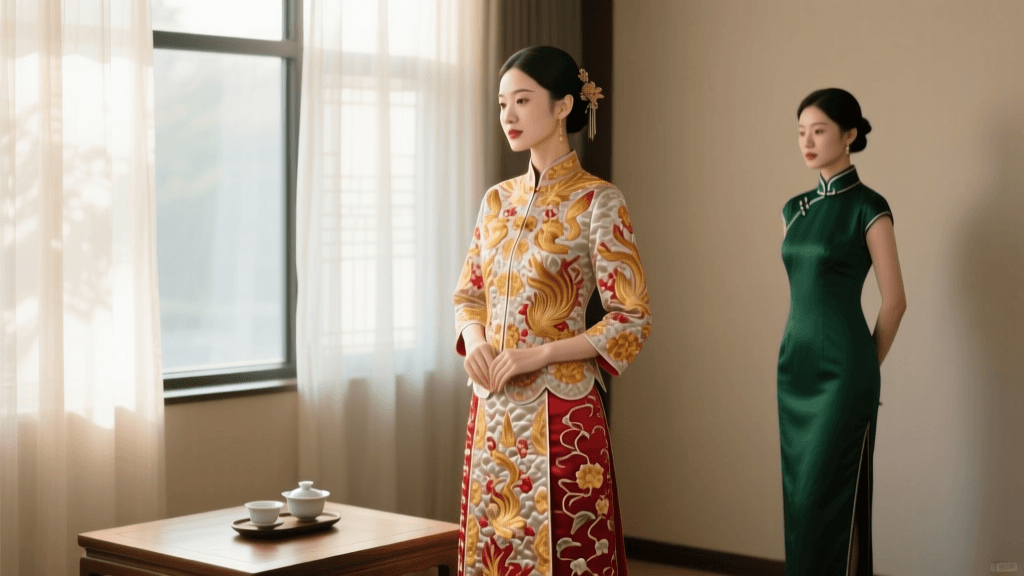
Unlike the rigid Qungua, the Xiuhefu is characterized by its flowing, romantic silhouette. It typically features a pleated horse-face skirt (mamianqun) or a sweeping A-line skirt, paired with a cross-collared or standing-collared jacket with wide, sweeping sleeves. The embroidery utilizes vibrant silk threads in shades of crimson, gold, and jade green, featuring motifs like peonies (wealth), lotuses (purity), and bats (good fortune). It is generally lighter and more comfortable than the Qungua, making it ideal for intricate photoshoots and active morning games.
The Modern Qipao (Cheongsam)
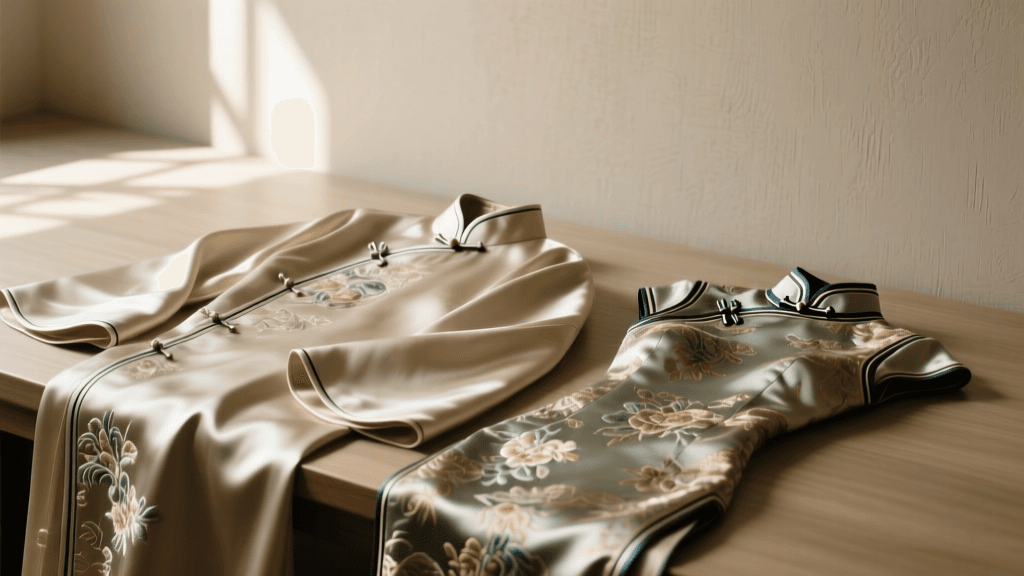
While the Qungua and Xiuhefu dominate the morning ceremonies, the Qipao remains the undisputed queen of the evening banquet and cocktail hours. Evolving in 1920s Shanghai, the Qipao is a form-fitting, one-piece dress characterized by a mandarin collar, asymmetrical frog fastenings, and high side slits. The Victoria and Albert Museum highlights the Qipao as a masterclass in the fusion of traditional Chinese tailoring with modern, Western silhouettes. For weddings, brides often opt for floor-length, heavily beaded, or embroidered silk Qipaos in deep reds, champagnes, or golds.
Comparison Chart: Choosing Your Ceremonial Garment
| Garment Type | Historical Origin | Key Features | Best Worn For | Est. Bespoke Cost (USD) |
|---|---|---|---|---|
| Qungua (Longfeng Gua) | Qing Dynasty (Southern China) | Two-piece, dense metallic gold/silver thread, stiff structure | Tea Ceremony, Ancestor Worship | $3,000 - $20,000+ |
| Xiuhefu | Ming Dynasty (Hanfu Revival) | Flowing Aoqun, wide sleeves, colorful silk embroidery | Morning Gate Games, Photoshoots | $1,500 - $5,000 |
| Qipao (Cheongsam) | 1920s Republic Era (Shanghai) | Form-fitting, mandarin collar, side slits, silk/satin | Evening Banquet, Toasting Guests | $500 - $2,500 |
Practical Guide: Timeline, Costs, and Sourcing
Planning a traditional Chinese wedding wardrobe requires meticulous timing, especially if you are opting for bespoke tailoring. The intricate nature of Chinese embroidery means that lead times are significantly longer than those for Western bridal wear.
- 12 Months Prior (The Qungua): If you desire a high-density Qungua with extensive hand-embroidery, you must begin consultations immediately. Master embroiderers in Suzhou and Guangzhou require 8 to 12 months to complete a single jacket. Expect to pay a 50% deposit upfront.
- 8 Months Prior (The Xiuhefu): Bespoke Xiuhefu garments require precise measurements and multiple fabric sourcing trips. Because the silhouette relies on draping and pleating, a minimum of three fittings are necessary to ensure the horse-face skirt falls perfectly.
- 4 Months Prior (The Qipao): A bespoke Qipao requires exact body measurements. Because the garment is unforgivingly form-fitting, schedule your final fitting no more than four weeks before the wedding to account for any last-minute weight fluctuations.
Renting vs. Buying
Not every bride wishes to invest thousands of dollars into a garment worn for only a few hours. Renting is a highly practical and popular alternative. Bridal studios in major hubs like Singapore, Kuala Lumpur, Vancouver, and Los Angeles offer comprehensive rental packages. A premium Qungua rental typically ranges from $300 to $800, while a high-end Xiuhefu rental costs between $200 and $500. When renting, inspect the lining for wear, check the condition of the metallic threads for tarnishing, and ensure the studio provides professional steaming prior to your wedding day.
The Tea Ceremony: Etiquette and Accessories
The traditional Chinese tea ceremony is the most sacred ritual of the wedding day, where the couple serves tea to their elders in exchange for blessings and gifts. Your attire must facilitate the physical demands of this ceremony, which involves repeated kneeling and bowing.
According to The Metropolitan Museum of Art, traditional Chinese dress is deeply intertwined with social rituals and familial hierarchy. When dressing for the tea ceremony, adhere to the following guidelines:
- Color Palette: Red is mandatory, symbolizing joy, luck, and prosperity. Gold and pink are acceptable accents. Strictly avoid black, white, and dark blue, as these are historically associated with mourning.
- Jewelry: Elders will gift the bride heavy gold jewelry, particularly the iconic Dragon and Phoenix bangles. Wear a Qungua or Xiuhefu with a structured collar or a slightly open neckline to display these bangles and gold necklaces prominently.
- Footwear: Traditional embroidered cloth shoes or low-heeled red silk pumps are preferred. High heels can make the traditional kneeling posture unstable and uncomfortable.
- Hair and Makeup: The Xiuhefu is traditionally paired with an elaborate updo adorned with gold hairpins, jade combs, and sometimes a miniature phoenix coronet (fengguan). Ensure your hairstylist is experienced in securing heavy traditional hairpieces.
'A marriage is not just the union of two individuals, but the weaving together of two family lineages. The garments worn on this day are the visual manifestation of that enduring bond.'
Groom's Attire: Completing the Picture
The groom's wardrobe, while less complex, must harmonize with the bride's choices. For the tea ceremony, the groom typically wears a Tangzhuang (a modern adaptation of the Qing Dynasty riding jacket) or a Changshan (a long, flowing scholar's gown). If the bride wears a heavily embroidered red Qungua, the groom should wear a matching red Tangzhuang with subtle gold dragon embroidery. If the bride opts for a Ming-style Xiuhefu, the groom may wear a corresponding dark blue or crimson scholar's robe with a structured hat, maintaining historical accuracy and visual balance in wedding photography.
Expert Tips for Preservation and Care
If you have invested in a bespoke Qungua or Xiuhefu, proper preservation is vital to ensure it can be passed down to future generations. The metallic threads used in Qungua are highly susceptible to oxidation and humidity. Never attempt to wash these garments at home. Seek out a dry cleaner who specializes in theatrical or historical textiles. For long-term storage, wrap the garment in acid-free tissue paper, place it in a breathable cotton garment bag, and store it in a cool, dark, and climate-controlled environment. Avoid plastic bags, which trap moisture and accelerate the tarnishing of gold and silver threads.
Conclusion
Selecting the perfect traditional Chinese wedding attire is a journey through history, art, and family heritage. Whether you choose the regal, armor-like majesty of the Qungua, the romantic, flowing elegance of the Xiuhefu, or the sleek sophistication of the Qipao, you are participating in a vibrant cultural renaissance. By understanding the historical context, budgeting appropriately, and respecting the intricate timelines of traditional craftsmanship, you will ensure that your wedding wardrobe is not only visually breathtaking but deeply meaningful.