Top Japanese Kimono Apprenticeships & Fashion Schools 2026
The 2026 Landscape of Japanese Fashion Education
The landscape of Japanese fashion education in 2026 represents a fascinating intersection of ancient preservation and cutting-edge innovation. As the global demand for sustainable, artisan-crafted garments continues to surge, Japan’s traditional clothing sector—centered around the kimono, yukata, and hakama—is experiencing a renaissance. For aspiring designers, textile artists, and cultural preservationists, understanding the pathways into this exclusive industry is critical. Whether you are drawn to the rigorous, master-led shokunin (artisan) apprenticeships in Kyoto or the avant-garde fashion institutes in Tokyo, the 2026 academic and vocational year offers unprecedented opportunities for both domestic and international students.
Historically, the transmission of garment-making skills in Japan was strictly confined to familial lines or closed guilds. Today, however, the aging population of master weavers and dyers has prompted a structural shift. Government-backed initiatives and private foundations have opened the doors of traditional workshops to a new generation of global learners. Simultaneously, modern fashion universities have integrated heritage textile modules into their standard curricula, ensuring that the techniques of the past inform the silhouettes of the future.
Traditional Shokunin Apprenticeships: The Kyoto Path
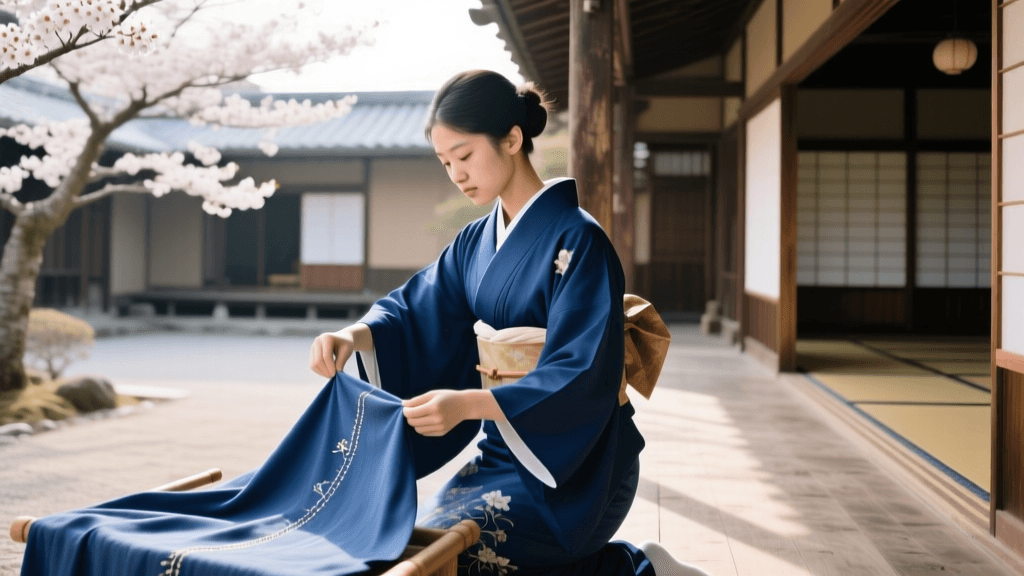
For those dedicated to the pure, unadulterated preservation of Japanese garments, the shokunin apprenticeship remains the gold standard. In 2026, the most sought-after apprenticeships are located in Kyoto’s Nishijin district (famous for Nishijin-ori brocade weaving) and the Kanazawa region (renowned for Kaga-yuzen silk dyeing). These apprenticeships are not merely educational; they are a profound lifestyle commitment.
An apprentice in a Nishijin weaving house typically commits to a three-to-five-year contract. The daily routine in 2026 remains fiercely traditional, beginning at 7:00 AM with the preparation of the silk threads and the meticulous cleaning of the wooden looms. The standard kimono bolt, known as a tanmono, measures exactly 38 centimeters in width and 12 meters in length. Mastering the tension required to weave a flawless tanmono without snapping the delicate silk warp threads can take up to two years of daily practice.
Financially, the 2026 apprenticeship model has evolved to support international and out-of-prefecture students. While historically unpaid, many guild-sponsored apprenticeships now offer a monthly living stipend of approximately 160,000 JPY to 180,000 JPY, alongside subsidized dormitory housing. In exchange, the apprentice is expected to assist the master with mundane tasks, from preparing natural dyes (like indigo and madder root) to maintaining the humidity-controlled environment of the studio.
Modern Fashion Institutes Bridging Past and Future
For students who wish to incorporate traditional Japanese garment construction into contemporary global fashion, formal university and vocational education is the ideal route. Japan boasts several world-class institutions that have updated their 2026 curricula to heavily feature heritage techniques.
Bunka Fashion College (Tokyo)
Bunka Fashion College remains the premier fashion institution in Asia. For the 2026 academic year, Bunka has expanded its "Traditional Garment Construction" elective, moving beyond basic yukata drafting to include advanced shibori (tie-dye) integration and zero-waste pattern making inspired by the straight-line cutting of historical kimono. The first-year tuition for the Garment Making course in 2026 is approximately 1,250,000 JPY. Students benefit from state-of-the-art digital textile printers that allow them to prototype traditional yuzen patterns before committing to costly hand-dyeing processes.
Kyoto University of the Arts
Located in the cultural heart of Japan, Kyoto University of the Arts offers a highly specialized Bachelor of Arts in Textile Arts. The 2026 cohort focuses heavily on the intersection of Zen spirituality and material culture, exploring how the sensory experience of wearing raw silk and hemp influences modern mindfulness practices. Tuition for international students hovers around 1,850,000 JPY annually, but the university offers robust portfolio-based scholarships that can cover up to 50% of these costs.
Comparative Analysis: Apprenticeship vs. Degree Programs
Choosing between a traditional workshop apprenticeship and a modern university degree depends entirely on your career objectives. The table below outlines the core differences for the 2026 enrollment cycle.
| Pathway | Duration | 2026 Est. Annual Cost (JPY) | Primary Focus | Best Suited For |
|---|---|---|---|---|
| Nishijin Weaving Apprenticeship | 3 - 5 Years | Net Positive (Stipend of ~1.9M JPY/yr) | Mastering wooden looms, silk tension, and guild etiquette. | Dedicated preservationists and master-weaver aspirants. |
| Kaga-Yuzen Dyeing Apprenticeship | 3 - 5 Years | Net Positive (Stipend of ~1.8M JPY/yr) | Natural dye chemistry, freehand brush painting on silk. | Textile artists focused on surface design and color theory. |
| Bunka Fashion College (Vocational) | 2 Years | ~1,250,000 JPY (Tuition + Materials) | Pattern drafting, contemporary integration, commercial fashion. | Aspiring commercial designers and brand founders. |
| Kyoto Univ. of the Arts (Degree) | 4 Years | ~1,850,000 JPY (Tuition + Studio Fees) | Conceptual design, art history, academic research, Zen aesthetics. | Academics, museum curators, and avant-garde artists. |
Step-by-Step Enrollment Guide for International Students
Navigating the Japanese education system as a foreign national requires careful preparation. According to the Japan Student Services Organization (JASSO), the 2026 visa regulations for cultural and vocational students remain stringent but accessible for those who meet the linguistic and financial criteria.
- Language Proficiency: While some university programs offer English tracks, traditional apprenticeships and vocational schools require a minimum of JLPT N2 (Japanese Language Proficiency Test). For university-level art history and textile theory courses, JLPT N1 is mandatory. In 2026, most institutions require official JLPT certificates issued within the last 24 months.
- Portfolio Preparation: Your portfolio must bridge cultural understanding and technical skill. For Bunka or Kyoto University of the Arts, prepare an A3 physical portfolio and a high-resolution digital PDF. Include 15-20 pieces that demonstrate an understanding of drape, structural integrity, and, ideally, a conceptual exploration of Asian heritage garments.
- The Interview Process: Apprenticeship masters conduct interviews that test resilience and humility as much as artistic talent. Expect questions regarding your willingness to perform repetitive tasks, such as washing silk in cold river water or sweeping the studio floors, which are considered foundational to Zen mindfulness and craft mastery.
- Visa and Financial Proof: You must secure a "Student" or "Designated Activities (Cultural Arts)" visa. For 2026, immigration requires proof of at least 2,500,000 JPY in a bank account to cover initial living expenses, even if your apprenticeship provides a stipend.
Essential Tools and Material Costs for 2026
Whether entering a school or an apprenticeship, students are often expected to procure their own specialized hand tools. The tactile relationship between the artisan and their tools is a cornerstone of Japanese craft philosophy. Below is a breakdown of essential starter tools and their 2026 market prices in Kyoto and Tokyo specialty districts like Kappabashi and Nippori.
- Bamboo Hera (Spatula): Used for applying resist paste in Yuzen dyeing and smoothing fabric. A professional-grade, hand-carved bamboo hera costs between 3,500 JPY and 8,000 JPY depending on the width.
- Shinshi (Bamboo Stretchers): Essential for keeping silk taut during painting. A set of 10 adjustable bamboo shinshi with steel pins retails for approximately 15,000 JPY.
- Sashiko Needles and Thimbles: For traditional quilting and reinforcement. A premium set of hardened steel sashiko needles and a leather yubinuki (thimble) costs around 4,500 JPY.
- Raw Silk Tanmono: For practice, students purchase unbleached, undyed silk bolts. In 2026, due to global supply chain shifts and a renewed focus on domestic sericulture, a standard 12-meter bolt of mid-grade domestic silk costs roughly 22,000 JPY to 35,000 JPY.
Preserving the Craft: The Future of Japanese Garments
The year 2026 marks a critical turning point for Asian traditional garments. The integration of 3D body scanning in modern fashion schools allows students to visualize how traditional straight-line kimono patterns drape over diverse, non-standardized body types, making the garment more accessible to a global audience. Meanwhile, the quiet, rhythmic clatter of the wooden looms in Kyoto’s Nishijin district serves as a reminder that true mastery cannot be digitized. By choosing to enter either the rigorous world of the shokunin apprenticeship or the innovative halls of Japan’s top fashion universities, students are not merely learning to make clothes; they are becoming the custodians of a living, breathing cultural heritage.