Japanese Jibata Looms & Hand-Weaving Methods Guide 2026
The Renaissance of the Jibata in 2026
In the landscape of global heritage fashion, the year 2026 marks a pivotal renaissance for traditional Japanese hand-weaving. As the slow fashion movement matures and consumers demand absolute transparency and artisanal authenticity, the rhythmic clatter of the jibata (traditional Japanese handloom) is experiencing a profound resurgence. Unlike modern power looms that churn out hundreds of meters of synthetic fabric per hour, the jibata requires a deeply physical, meditative connection between the weaver and the textile. Every pass of the shuttle (hi) and every strike of the batten (osa) is a testament to centuries of unbroken lineage.
Today, the preservation of these methods is not merely about museum curation; it is about active, living production. In 2026, top-tier weaving cooperatives have begun integrating NFC (Near Field Communication) threads directly into the selvedge of hand-woven obi and kimono bolts (tanmono). This allows buyers to scan the fabric and verify the exact artisan, loom type, and regional origin, safeguarding against machine-made imitations. For collectors, designers, and cultural enthusiasts, understanding the mechanics and regional variations of these looms is essential to appreciating the true value of Japanese textiles.
Anatomy of Traditional Japanese Hand-Looms
The Japanese handloom is a marvel of wooden engineering, designed to maximize tension control and pattern complexity without the need for electricity. While there are several regional variations, three primary looms dominate the traditional weaving landscape.
The Jibata (Standard Handloom)
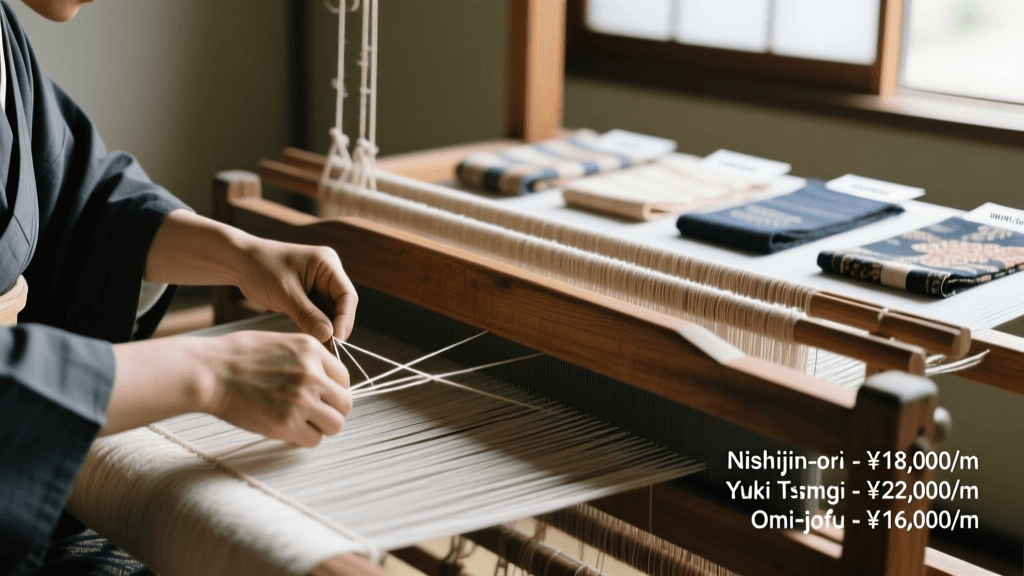
The jibata is the quintessential Japanese handloom. The weaver sits on a low bench, using their feet to operate treadles that raise and lower the harnesses, creating the shed (the space between warp threads). The weaver throws the shuttle by hand and pulls the batten toward their body to pack the weft thread tightly. The tension of the warp (tate-ito) is often maintained by a backstrap or a weighted beam system, requiring the weaver to use their core body weight to maintain consistent fabric density. This physical engagement results in a textile with a unique, slightly irregular texture that machine looms cannot replicate.
The Takabata (Drawloom)
Used primarily for complex brocades like Kyoto's Nishijin-ori, the takabata is a towering, multi-story drawloom. It requires an intricate system of harnesses and drawcords to lift individual warp threads, allowing for the creation of elaborate pictorial patterns, gold leaf integration, and floating weaves. Historically, this required two people: the weaver at the bottom and a drawboy at the top. In 2026, while some purists still use the manual soroban (abacus-like) cord system, many master artisans have retrofitted takabata with automated jacquard punch-card readers, though the shuttle is still thrown and beaten entirely by hand.
The Izari-bata (Sunken Floor Loom)
Common in rural weaving centers producing linen and ramie, the izari-bata features a sunken pit for the weaver's legs. This allows the weaver to sit at floor level while operating a larger, heavier floor loom. It is particularly favored for weaving wide bolts and heavy kasuri (ikat) fabrics, providing superior leverage for beating dense, stiff plant fibers into a cohesive cloth.
Comparative Analysis of Looms and 2026 Market Costs
Understanding the economic reality of hand-weaving in 2026 requires looking at the time investment and the resulting market value. The table below outlines the primary loom types, their best applications, and the current artisan commission costs for a standard kimono bolt (approx. 38cm x 12m).
| Loom Type | Primary Mechanism | Best Suited For | 2026 Artisan Commission Cost (per bolt) |
|---|---|---|---|
| Jibata | Treadle & Hand Shuttle | Standard silk, wool, and cotton kimono fabrics | ¥150,000 - ¥350,000 |
| Takabata | Drawloom / Jacquard Harness | Nishijin brocade, intricate obi, gold-thread work | ¥800,000 - ¥3,000,000+ |
| Izari-bata | Sunken Floor Treadle | Heavy ramie, linen, and wide kasuri patterns | ¥250,000 - ¥500,000 |
Mastery of Regional Hand-Weaving Methods
The loom is only half the equation; the regional methodology dictates the soul of the fabric. Japan's diverse microclimates and historical trade routes have birthed highly specialized weaving techniques.
Nishijin-ori (Kyoto): The Pinnacle of Brocade
Nishijin weaving represents the apex of Japanese textile luxury. The hallmark of Nishijin-ori is its pre-dyed yarns, woven into patterns rather than printed onto the surface. A specific sub-technique, tsuzure-ori (tapestry weave), is entirely unique. In this method, the weaver uses the edges of their fingernails, filed into small serrated ridges, to pack the weft threads so tightly that the warp threads become completely hidden. As of 2026, the Nishijin Weavers Association reports that fewer than fifty master weavers still practice pure fingernail tsuzure-ori, making these obi some of the most expensive and sought-after garments in the world.
Yuki Tsumugi (Ibaraki): The Warmth of Hand-Spun Silk
Recognized by the UNESCO Intangible Cultural Heritage registry, Yuki Tsumugi is a pongee silk woven from hand-spun silk floss. Unlike standard reeled silk, which is shiny and smooth, Yuki Tsumugi uses the irregular, matte fibers from broken or pierced cocoons. The weaver spins the thread by hand, moistening it with saliva to bind the fibers, resulting in a fabric that is incredibly lightweight yet possesses the thermal retention of wool. The kasuri (ikat) patterns are created by hand-tying thousands of microscopic knots along the warp and weft before dyeing, a process that takes months before the weaving even begins.
Omi-jofu (Shiga): The Breath of Summer
Woven in the humid region near Lake Biwa, Omi-jofu is a masterclass in ramie and linen weaving. The threads are split by hand using the weaver's fingernails and spliced together without knots. Woven on heavy izari-bata looms, the resulting fabric is stiff when new but softens beautifully with wear. The region is famous for its complex cross-kasuri patterns, where the dyed intersections of warp and weft must align with millimeter precision to form geometric or floral motifs.
Actionable Guide: Commissioning and Studying in 2026
For those looking to acquire or learn these traditional methods in 2026, navigating the artisan network requires specific knowledge of the Japanese craft ecosystem.
Commissioning a Custom Tanmono
If you wish to commission a custom bolt of fabric, you must account for the standard Japanese measurements. A standard tanmono is approximately 38 centimeters wide and 12 meters long, yielding enough fabric for one kimono with matching accessories. When approaching a weaving cooperative in Kyoto or Yuki City, expect a lead time of 6 to 14 months. Artisans in 2026 are heavily booked due to the renewed global interest in heritage crafts. Be prepared to pay a 50% deposit upfront, with the final balance due upon completion and inspection of the cloth. Always request the inclusion of the artisan's physical stamp (hanko) on the accompanying certificate of authenticity.
Where to Study and Experience Weaving
For enthusiasts wishing to understand the physical demands of the jibata, several municipalities offer immersive workshops. The Japan Kogei Association frequently sponsors open-studio events where the public can observe and briefly practice on modified practice looms. In Yuki City, the local municipal tourism board offers three-day intensive courses on silk floss spinning and basic jibata weaving, allowing participants to weave their own small table runners using authentic, locally sourced silk. In Kyoto, the Nishijin Textile Center offers daily demonstrations on the takabata, though hands-on weaving requires enrollment in specialized vocational programs like those at the Kyoto City University of Arts.
Preserving the Tactile Heritage
The survival of Japanese traditional looms and hand-weaving methods in 2026 relies on a delicate balance between uncompromising historical accuracy and modern economic sustainability. The physical toll of the jibata is immense; weavers often suffer from joint strain, requiring specialized ergonomic interventions that do not compromise the tension of the loom. Yet, the resulting textiles possess a life, a breath, and a tactile warmth that is entirely absent in mass-produced fabrics. By understanding the mechanics of the loom, the regional nuances of the weave, and the true cost of artisanal labor, collectors and cultural advocates can ensure that the rhythmic song of the wooden batten continues to echo through the ateliers of Japan for generations to come.