Sustainable Japanese Indigo & Madder Dyeing Guide 2026
The Renaissance of Kusaki-zome in 2026
As the global fashion and textile industries face increasingly stringent environmental regulations in 2026, the ancient Japanese art of Kusaki-zome (草木染め), or natural plant dyeing, has transitioned from a niche heritage craft to a cornerstone of sustainable textile production. Synthetic azo dyes, which have dominated the market for over a century, are now heavily scrutinized for their toxic effluent and microplastic pollution. According to the Ellen MacArthur Foundation, the shift toward circular fashion has accelerated the demand for biodegradable, non-toxic colorants that safely return to the earth at the end of a garment's lifecycle.
For modern artisans, eco-conscious fashion designers, and sustainable hobbyists, mastering Japanese natural dye plants offers a profound way to connect with Asian traditions while maintaining a zero-waste studio. In 2026, the focus is not just on the aesthetic beauty of these botanical dyes, but on closed-loop methodologies—ensuring that every drop of water, every plant scrap, and every mordant is utilized, composted, or safely neutralized.
Spotlight on Tadeai (Japanese Indigo) and Akane (Madder)
While Japan boasts hundreds of dye plants, two species remain the undisputed pillars of the traditional palette: Persicaria tinctoria (Tadeai, or Japanese Indigo) and Rubia argyi (Akane, or Japanese Madder). Both plants offer vibrant, colorfast hues when processed correctly, and both can be cultivated in small-scale or urban environments.
Cultivating Tadeai in Small Spaces
Unlike tropical indigo species, Japanese indigo is an annual crop that thrives in temperate climates, making it highly accessible for urban dyers in 2026. To cultivate Tadeai, start seeds indoors in early April. Use a well-draining soil mix comprising equal parts loam, compost, and perlite. Transplant the seedlings outdoors or to large balcony containers in May, ensuring they receive full sun and consistent moisture. The critical harvesting window occurs in late summer, just as the plant begins to form flower spikes but before the flowers fully open. At this stage, the indican (the precursor to indigo pigment) concentration in the leaves is at its absolute peak. Recognized by the Traditional Crafts of Japan (METI) initiative, the preservation of Tadeai cultivation techniques is vital for maintaining the living heritage of regions like Tokushima.
Harvesting and Processing Akane Roots
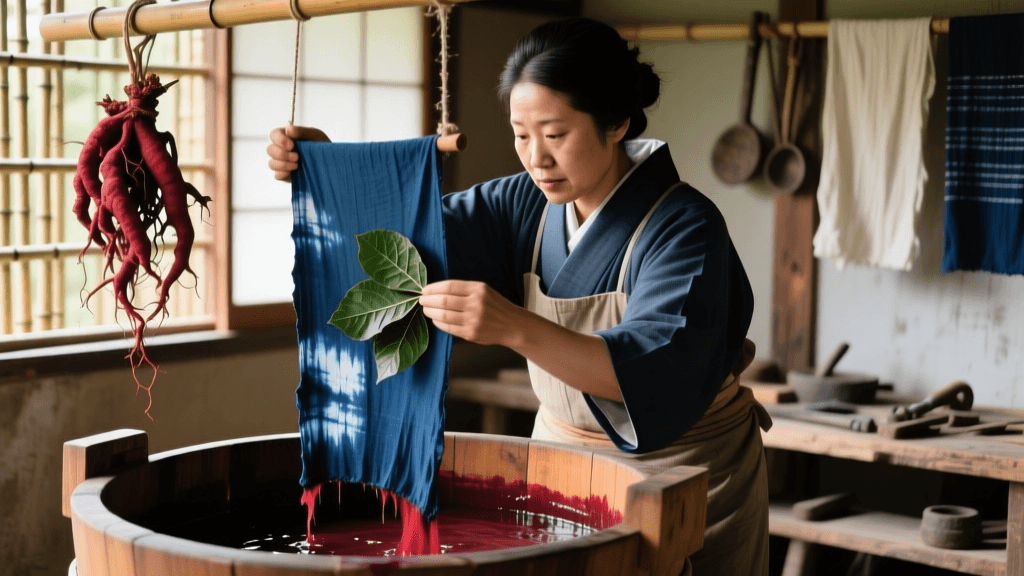
Akane requires patience. This perennial madder species must grow for a minimum of three years before its roots are harvested to ensure a high concentration of alizarin, the primary red pigment. When processing Akane in a 2026 eco-studio, temperature control is paramount. To extract the brilliant, cool-toned reds and avoid the muddy brown hues caused by munjistin (a secondary pigment), the roots must be simmered strictly between 60°C and 70°C (140°F–158°F). Never allow the dye bath to reach a rolling boil. Strain the liquid through unbleached muslin, and reserve the spent root material for a secondary, lighter extraction or for composting.
Closed-Loop Mordanting: Ditching Toxic Heavy Metals
Historically, natural dyers relied on heavy metal mordants like chrome, copper, and tin to bind pigments to fibers. Today, these are recognized as environmental hazards. The 2026 standard for sustainable Kusaki-zome utilizes bio-mordants and recycled mineral mordants that are safe for the soil and waterways. The Agency for Cultural Affairs, Japan emphasizes that adapting traditional crafts to modern ecological standards ensures their survival and relevance.
| Mordant Type | Source / Preparation | Environmental Impact | Best Fiber Affinity |
|---|---|---|---|
| Soy Milk (Bio-Protein) | 1 part organic soy milk to 5 parts water | Zero toxicity; adds nitrogen to compost | Cellulose (Cotton, Hemp, Linen) |
| Recycled Iron Water | Rusted iron nails soaked in water and vinegar | Low impact; utilizes upcycled scrap metal | Protein & Cellulose (Saddens colors) |
| Acorn Tannin | Foraged fallen acorns, boiled and strained | Regenerative foraging; fully biodegradable | Cellulose (Acts as a natural binder) |
| Alum (Potassium Aluminum Sulfate) | Recycled from exhausted dye baths via evaporation | Moderate; safe in small doses, recyclable | Protein (Silk, Wool) & Cellulose |
Step-by-Step: The Zero-Waste 1-2-3 Indigo Vat
For modern dyers seeking a reliable, low-toxicity method to reduce indigo without using harsh synthetic chemicals like sodium dithionite, the '1-2-3 Vat' is the gold standard in 2026. This method uses fructose (or henna) as the reducing agent and calcium hydroxide (pickling lime) to create the necessary alkaline environment.
Measurements for a 10-Liter Vat
- 1 Part Indigo: 50g of high-quality, finely ground Japanese Indigo powder (or extracted Tadeai paste).
- 2 Parts Calcium Hydroxide: 100g of food-grade pickling lime.
- 3 Parts Fructose: 150g of crystalline fructose (available from baking suppliers or winemaking shops).
- Water: 10 liters of warm water, heated to exactly 50°C (122°F).
The Reduction Process
- Slake the Lime: In a separate glass jar, mix the calcium hydroxide with a small amount of warm water to form a smooth slurry. Pour this into your main 10-liter stainless steel dye pot.
- Add the Sugar: Stir in the fructose until completely dissolved. The fructose will act as the oxygen scavenger, removing oxygen from the water so the indigo can dissolve.
- Incorporate the Indigo: Place the indigo powder in a small muslin bag and submerge it in the liquid. Gently massage the bag to release the pigment, avoiding splashing (which introduces unwanted oxygen).
- Rest and Reduce: Cover the pot tightly and let it rest in a warm environment (maintaining 45°C–50°C) for 24 hours. The liquid should turn a deep, yellowish-green, and a coppery, oily scum (the 'indigo flower') will form on the surface. This indicates the vat is fully reduced and ready for dyeing.
- Dyeing: Wet your pre-mordanted fabric, squeeze out excess water, and gently submerge it into the vat for 10 minutes. When you pull the fabric out, it will be yellow-green. As it meets the oxygen in the air, it will magically oxidize into a brilliant, deep blue. Repeat this dip-and-oxidize process 3 to 5 times for a rich, colorfast navy.
Water Conservation and Effluent Management
A truly sustainable dye studio in 2026 does not pour alkaline, chemical-laden water down the drain. The 1-2-3 indigo vat is highly alkaline (pH 10-11). When the vat is finally exhausted and no longer yields blue pigment, it must be neutralized before disposal. Add white vinegar or a citric acid solution to the spent vat water until the pH drops to a neutral 7.0, which you can verify using standard litmus paper.
Once neutralized, this water is rich in calcium and trace organic compounds. It is exceptionally beneficial for watering acid-loving plants in your garden, such as azaleas, hydrangeas, and blueberries. The spent indigo sediment at the bottom of the pot can be dried and added directly to your compost bin, completing the closed-loop cycle. By integrating effluent management into urban gardening, modern Kusaki-zome practitioners ensure that their craft nourishes the environment rather than depleting it.
Sourcing Ethical Fibers for Natural Dyes
The sustainability of your final garment relies equally on the substrate you are dyeing. In 2026, pairing natural dyes with conventionally grown, pesticide-heavy cotton defeats the purpose of the eco-friendly vat. Always source GOTS-certified (Global Organic Textile Standard) organic cotton, hemp, or linen for cellulose fibers. For protein fibers, seek out Ahimsa (peace) silk, which allows the silkworm to emerge from the cocoon naturally before the silk is harvested, or ethically sourced, non-mulesed merino wool. These fibers not only absorb botanical pigments more vibrantly but also align with the holistic, life-respecting philosophy inherent in traditional Japanese textile arts.
Conclusion
The practice of Japanese natural dyeing is no longer just a preservation of the past; it is a vital, forward-looking solution to the textile industry's ecological crisis. By mastering the cultivation of Tadeai, the precise temperature extraction of Akane, and the closed-loop chemistry of the 1-2-3 vat, artisans in 2026 are redefining what it means to create beautiful, lasting color. Embracing these eco-friendly methods honors the deep Asian traditions of Kusaki-zome while actively participating in the regeneration of our planet's ecosystems.